 Riders Preferred Membership
 Log In
 Shop by Vehicle
 Track Order
 Contact Us
I still remember coming home from a ride in my second season of motorcycling and realizing something had clicked in my head. For the first time, I wasn't thinking, "Thank goodness we made it home." I was thinking, "When can I ride again?"
That shift from mild anxiety to pure pleasure transformed riding from something I wanted to learn into a true passion.
How it started… with a few spills
I came to motorcycling later in life. Not in my 20s or 30s, but later still. I've noticed that many new riders, especially in my age group, give it up after a season or two, sometimes sooner. It makes me wonder whether they never quite crossed the threshold from new-rider nerves to real confidence and enjoyment.
When I decided to move from pillion to pilot, I signed up for the Motorcycle Safety Foundation's introductory half-day lesson, followed by the full basic licensing course. I got a perfect score on the written exam and gave myself an unofficial B- in riding, meaning I could handle a motorcycle in a parking lot. As an educator, I've always been a good student, so I kept practicing and listening to advice from experienced riders, including my husband and long-time riding friends. I bought cones and chalk, watched videos, and read books. I returned again and again to a nearby high school parking lot and familiar practice routes until new skills began to feel more natural.
I also took a few minor spills. That's not unusual for beginners; many studies show that about 50% of riders in the first five months are in a single-vehicle crash, and those with under two years of experience are up to four times more likely to crash than more experienced riders.
One incident was entirely my fault, too much front brake on a slippery surface. Instead of turning home, I noted the broken clutch lever, felt the bruise forming on my thigh, and kept riding. Another time, a garbage truck forced me off the road and into a forsythia bush. After a reluctant ambulance ride and an X-ray, I had a scratched chin, a swollen toe, and a good story. I rode a different bike the next day.
The adage about getting back on the horse rings true to me. But let's face it. Falling from a motorcycle, even at low speeds, hurts. I've seen other adult beginners decide not to get back on after ending up on the ground. One Florida study found that only 27% of injured riders returned to motorcycling after healing. Understandably, some began to question whether the risks were worth it, especially those balancing work and family responsibilities. I acknowledge that fear, and I respect riders who choose to step away. My response, though, was different. After my mishaps, I didn't want to stop riding; I wanted to become a better motorcyclist.
Training plus experience count
I agree with the voices that say you shouldn't ride if you're scared. But I was never rattled enough to quit. Instead, I kept looking for ways to improve. Off-road riding, track days, and parking-lot practice became part of my riding season. The forever-student part of me knew that building the right muscle memory would matter as I continued to ride.
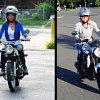
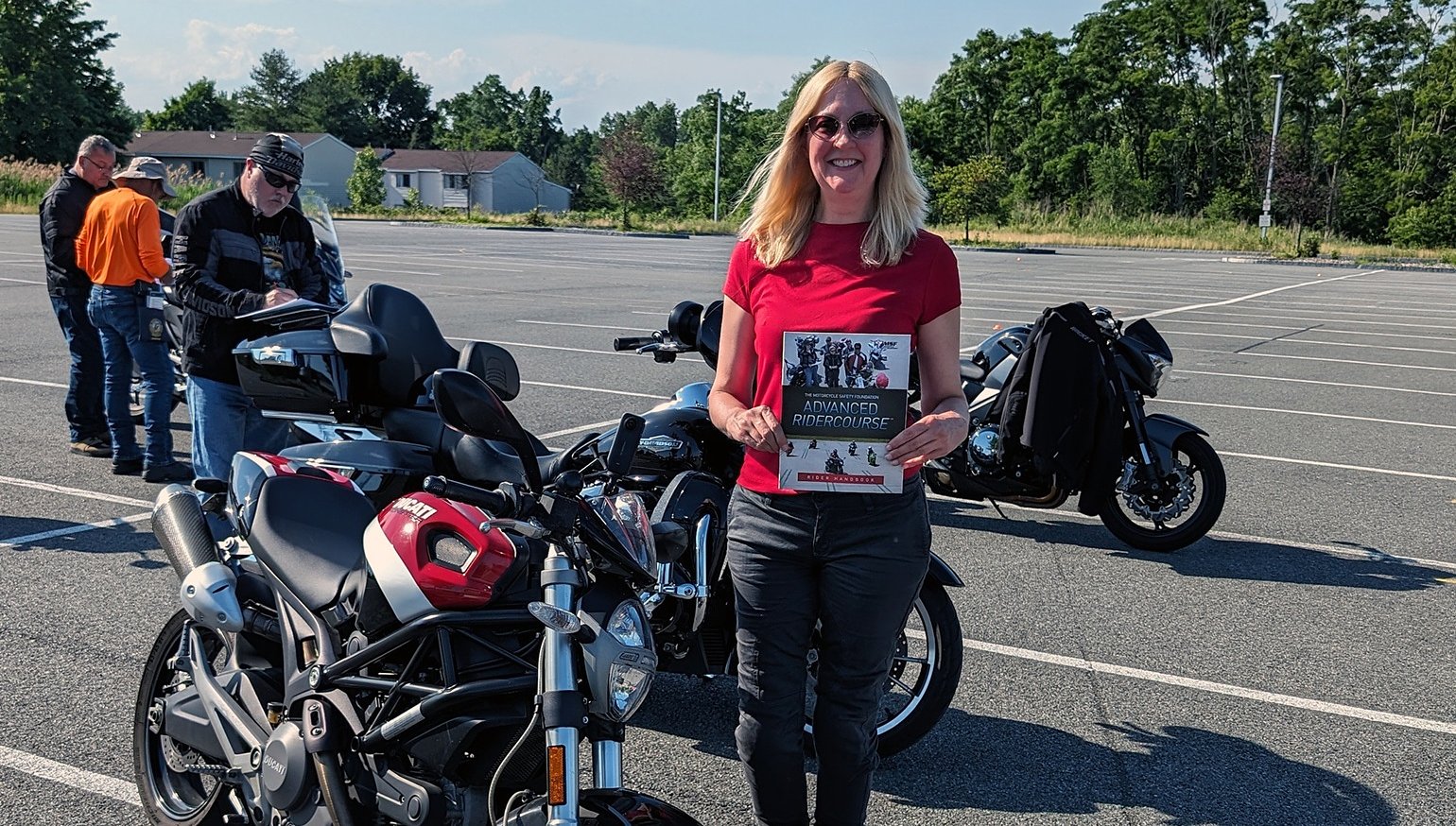
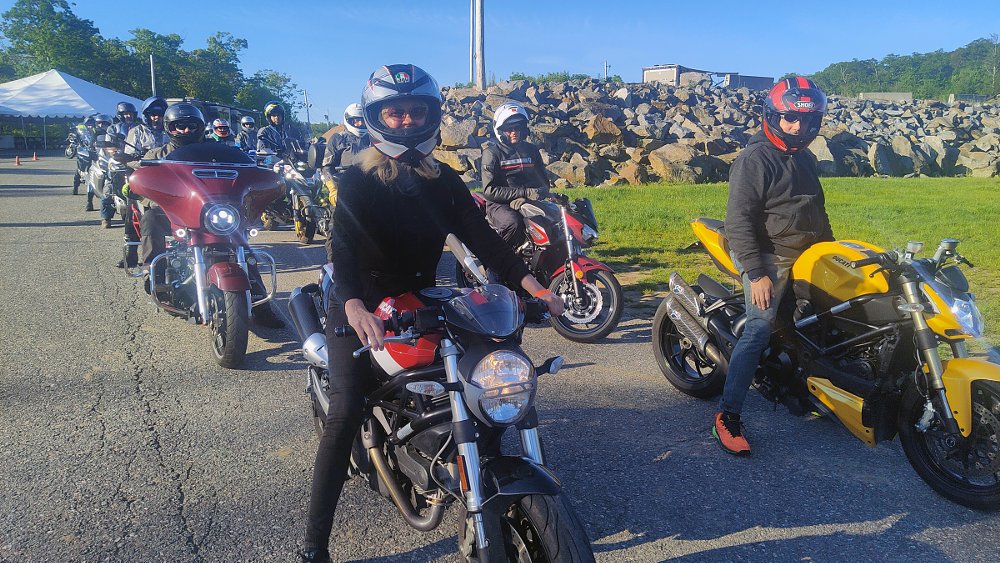
I pursued my ongoing education, which continues to this day. I took group courses, including the MSF Advanced RiderCourse (in the top photo) and a non-sport-bike training day with Ken Condon at the track. Private coaching with BMW Academy and sheADV coach Cassie Maier, and Italian racer and team owner Federico Mandatori, filled in other gaps, along with several classroom and observation sessions at rallies, dealer events, and an off-road club. After each experience, I focus on practicing what I have learned until it becomes instinctive.
A six-day road rally in Italy, the Motogiro d'Italia, was where the training stopped feeling theoretical and became directly applicable. There, I faced what one researcher calls "Oh, shit" moments, close calls that force your training and instincts to take over and that, afterward, leave you more confident in your abilities. Navigating through Italian traffic, successive hairpin turns, and rough road surfaces no longer seemed as difficult. Ultimately, there's no substitute for experience. The only way to gain it is to keep practicing and riding.
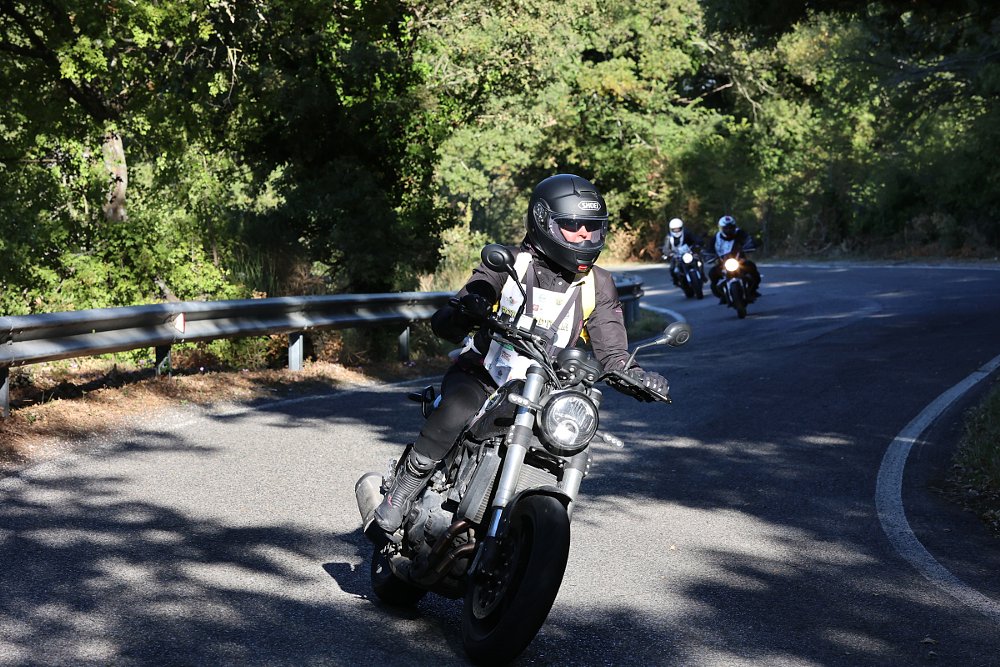
Experience matters on a motorcycle. A recent study supporting graduated licensing in North Carolina, similar to systems in many European countries, found that crash rates dropped by 42% for new riders under 22 and by 28% for new and returning riders over 50 when experience doubled. Prior driving experience or long-dormant riding skills can help older riders, but they don't replace time in the saddle coupled with a focus on continual improvement.
Size matters even if you're a grown-up
In Italy, where I now ride regularly, new riders typically start on 50 cc machines and progress through a tiered licensing system. Larger motorcycles over 500 cc are only available after years of riding or at a later licensing age. This approach shows that skill builds gradually, not all at once, which is reassuring for adult learners. Starting small and working my way up to a bigger machine made sense to me. My older motorcycling friends had done this when they learned to ride in the 1970s and '80s.
That idea stood in contrast to most of my classmates in the basic license course, who ranged from high school students to middle-aged adults. Between drills, we discussed the motorcycles we hoped to buy. Many were already thinking of starting on a 600 cc machine or larger. The assumption was that anything smaller would quickly become boring.
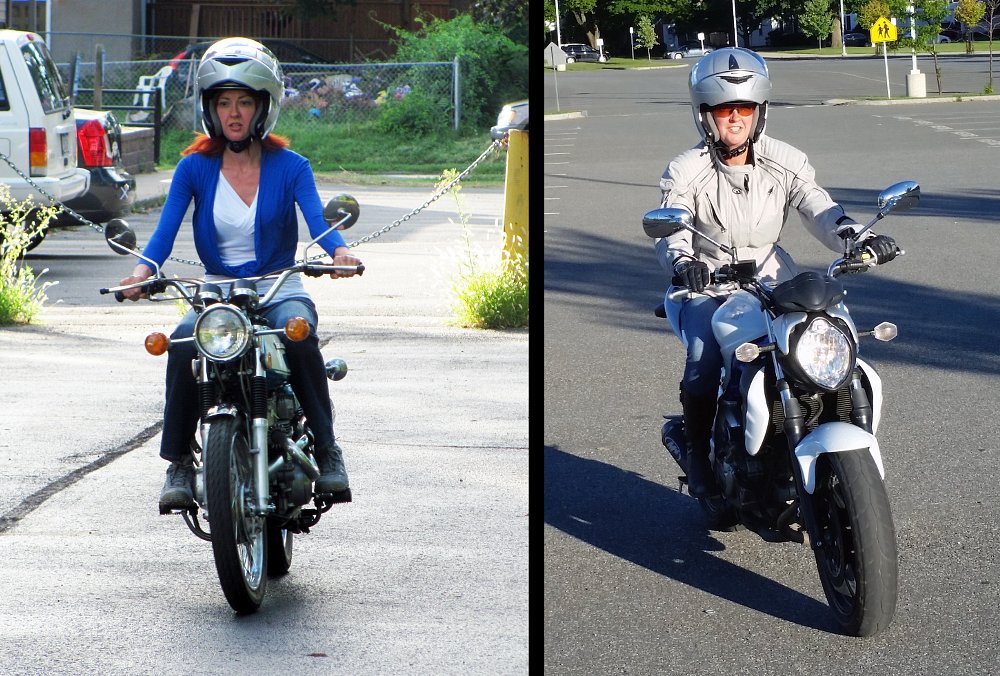
I didn't think that way, but I didn't have a specific motorcycle in mind at first, just something vintage, without a lot of power, and not too expensive. Not long after, my husband found my 1974 Honda CL200. Within a season, I also bought a used Suzuki Gladius (SVF650), though I kept the CL and still ride it often.
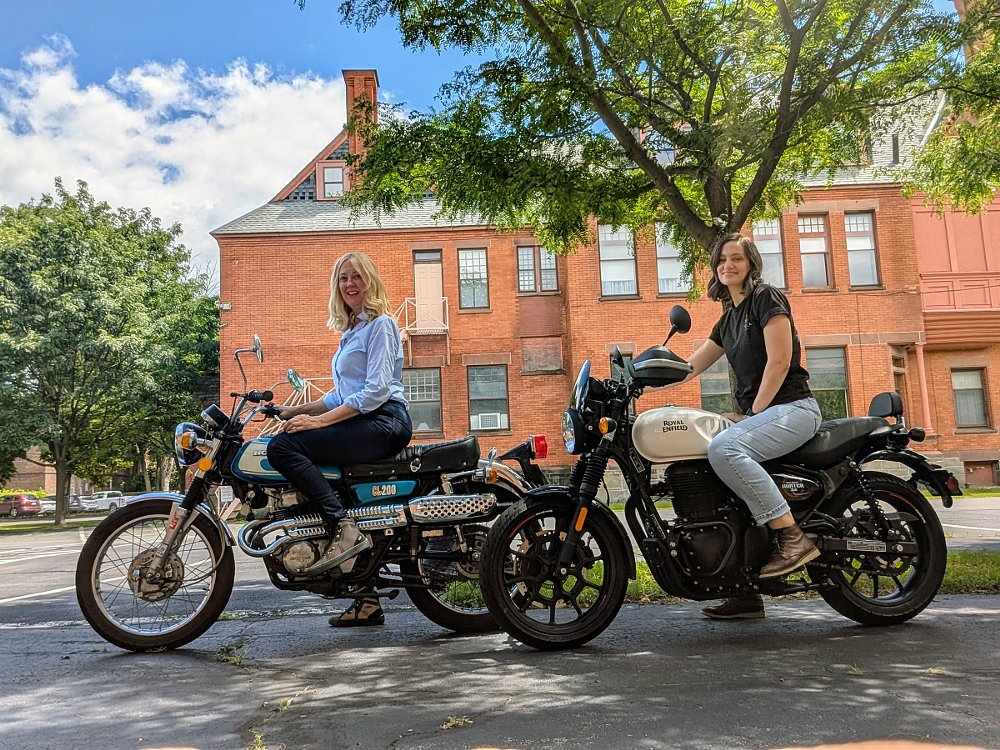
My first longer trip with riding friends was on the Gladius. It was both forgiving and fun. I kept putting in as many miles and hours on it as I could, and more often than not, I came home mentally grading my performance, usually earning a B or B+.
Then, one day, I got home and realized something had shifted. I wasn't thinking about what I could have done better. I wasn't replaying the ride or correcting mistakes in my head. I just felt joy, and it finally clicked that riding should, in fact, be joyful. And it can be that while I continue to learn.
Image Gallery