 Riders Preferred Membership
 Log In
 Shop by Vehicle
 Track Order
 Contact Us
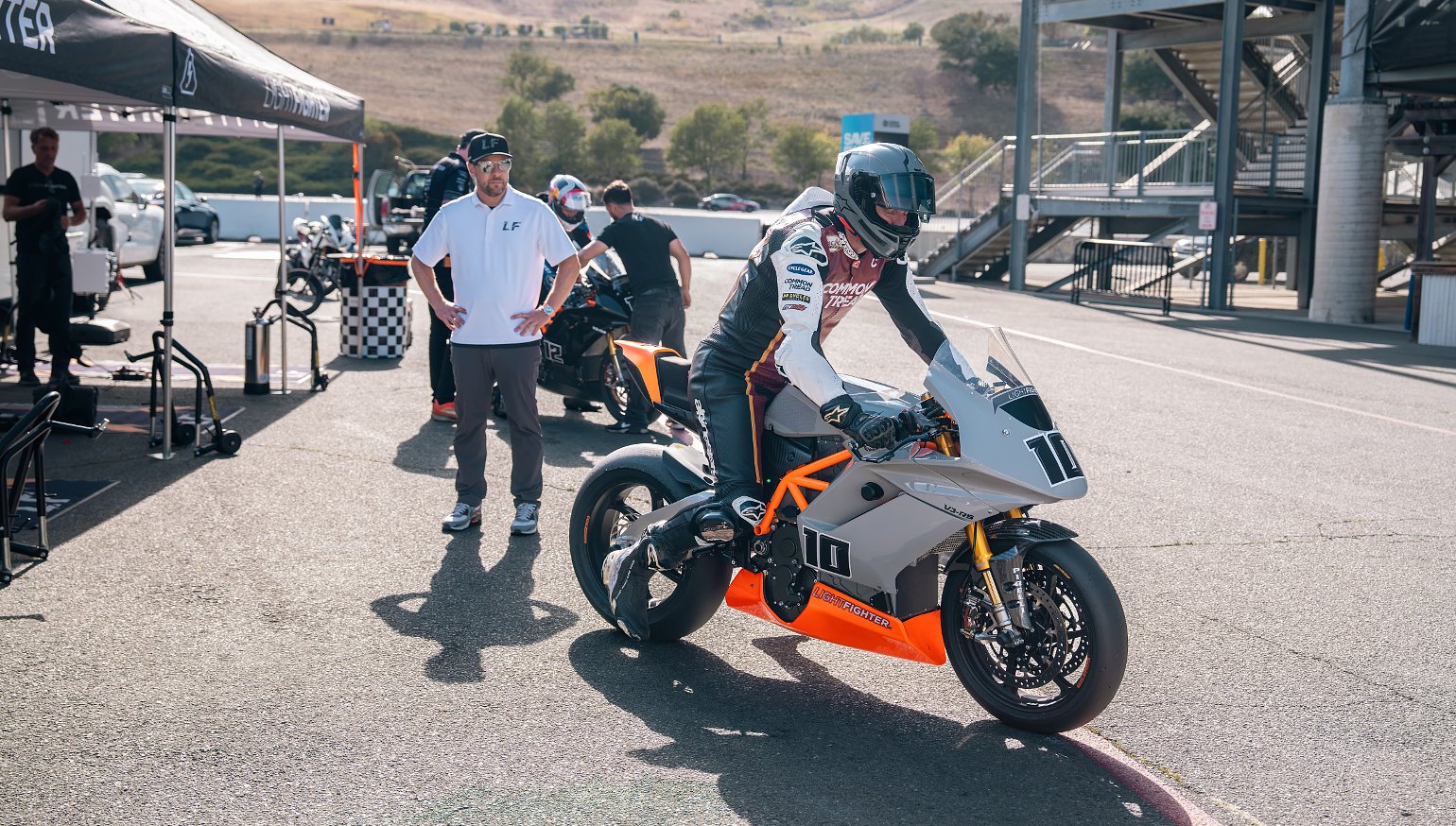
To win races, a motorcycle has to go around a track fast. To win over customers who want to go fast, a motorcycle has to do so much more than that.
For people to desire a fast motorcycle, it has to look fast and to feel fast. It has to inspire confidence when it’s going fast, and when it’s stopped it ought to inspire confidence to go faster next time. Plus, everyone has to agree that it’s fast, so that everyone can agree that it’s cool, so that everyone can be impressed when they see it, so that they want to ride one or have one.
On the surface, the goal of the Lightfighter racing project is to be objectively fast. Not just fast for an electric bike, but fast compared to anything else available. If it can achieve that, or even get close, there’s a chance that all of those other things will fall into place. Mechanically, it's a pretty steep hill to climb. Culturally, it’s arguably an even bigger challenge.
Life of Brian
If there’s anyone who is familiar with all of those challenges, it’s Brian Wismann. Over the course of more than 15 years in the motorcycle industry, he has led engineering teams at Brammo Motorsports and Zero Motorcycles, as well as being involved with racing efforts at the Isle of Man and Pikes Peak. In 2018 he started a side project: a motorcycle built for closed road courses, powered by batteries and motors he had already spent years studying.
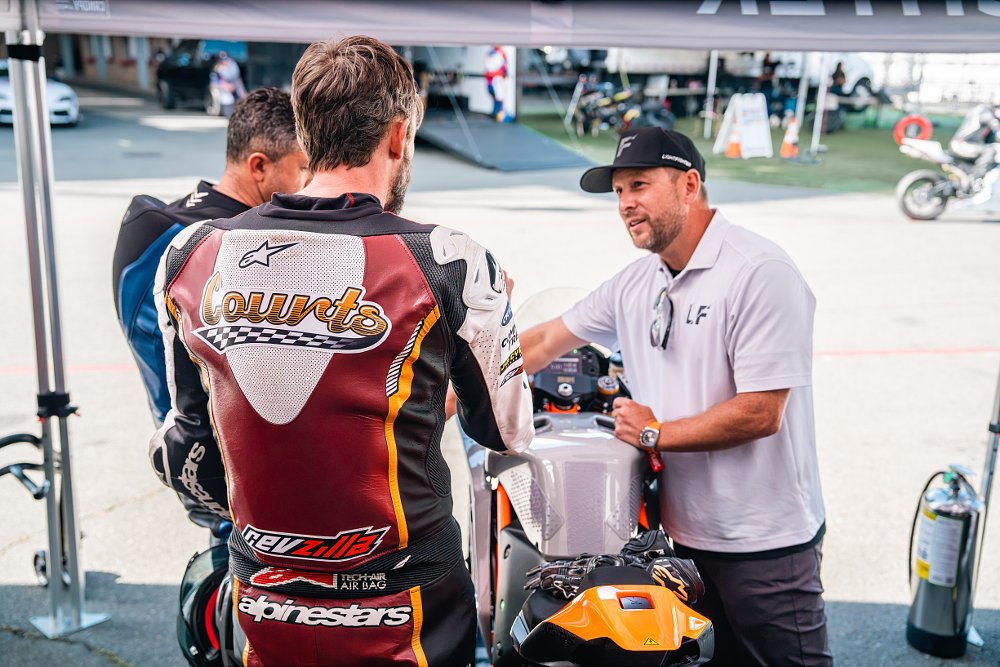
In some ways, a track-only electric motorcycle is similar to a purpose-built racer with a combustion engine or many other motorbikes — a telescopic fork up front with a single shock in the rear, and then some sort of twin-spar frame holding the power source. Predictable enough, it seems.
But, what Wismann realized is that road-going electric motorcycles are virtually always designed around the battery or batteries, in order for the final version of the machine to be light, efficient, or convenient enough to fit into a gas-powered world. “If you want to have cost parity,” said Wismann, “you have to dumb down the true potential of electric motorcycles.”
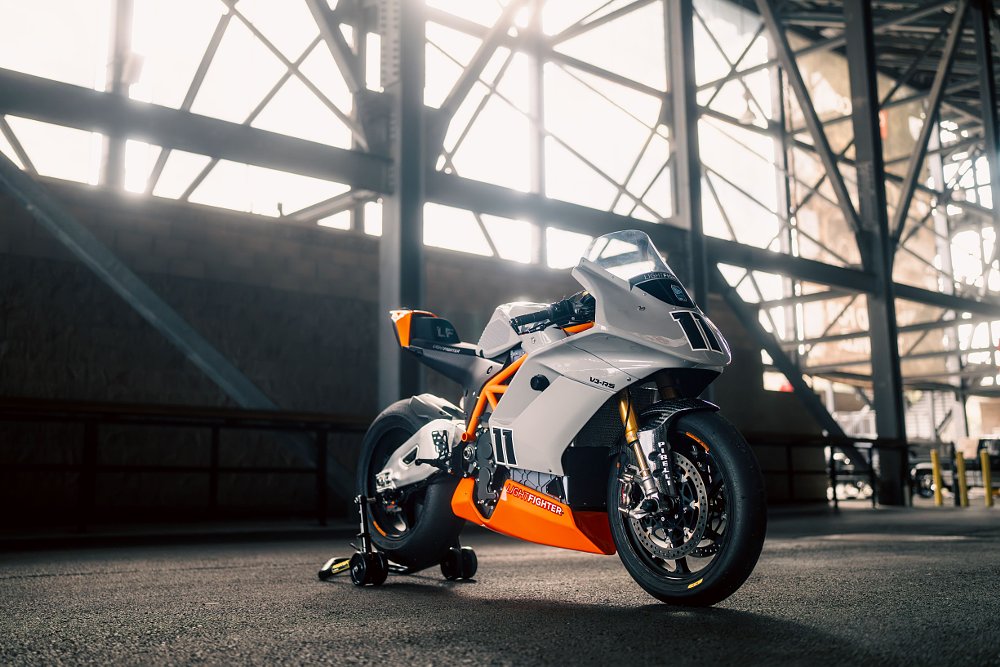
If it’s built for the track, and cost parity is ignored, there's potential for the paradigm to shift. The riding is in short sprints, and then there’s plenty of time to recover, which means the battery can employ design characteristics that ignore many of the hurdles of road-going vehicles. Electric technology can be more visceral, in Wismann’s opinion, when speed is the only problem it is trying to solve, and it’s a space that hasn’t been explored as thoroughly.
With Lightfighter, Wismann and his team adopted a “geometry first” design ethos. In other words, start with measurements for wheelbase, rake, trail, swingarm angle, et cetera, that everyone already knows will work in a performance riding package, and build an electric powertrain into that model. Back in 2018, Wismann and his team essentially copied chassis geometry from a Yamaha YZF-R1 as a starting point for the Lightfighter.
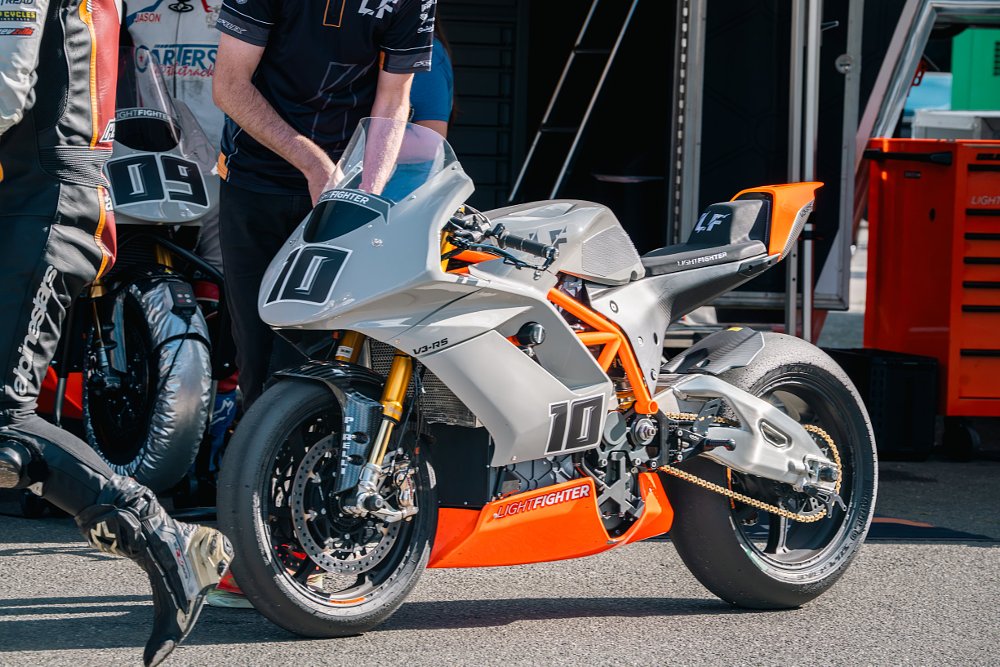
After years of development and gaining momentum, Wismann quit his full-time job at Zero and put all of his eggs in the Lightfighter basket in the spring of 2025. The bike is now on its third version (hence V3) and is fairly refined, with a spec sheet that reads like a fairly typical, compact sport bike. A tubular-steel trellis frame holds the 16.2kWh lithium-ion battery and a liquid-cooled Parker interior-permanent-magnet motor.
Over time, the R1 geometry has been tweaked — the Lightfighter now has a little more rake and slightly less trail in the front end, as well as a longer shock. The V3-RH is the Hooligan-spec machine, free of bodywork and with a flat handlebar; the V3-RS has full bodywork and clip-on handlebars, a la Supersport. Wismann says the bikes weigh between 420 and 430 pounds, depending on exact equipment and specification. In showroom-motorcycle terms, that’s a little heavier than a Kawasaki ZX-4RR and a bit lighter than a Yamaha YZF-R9.
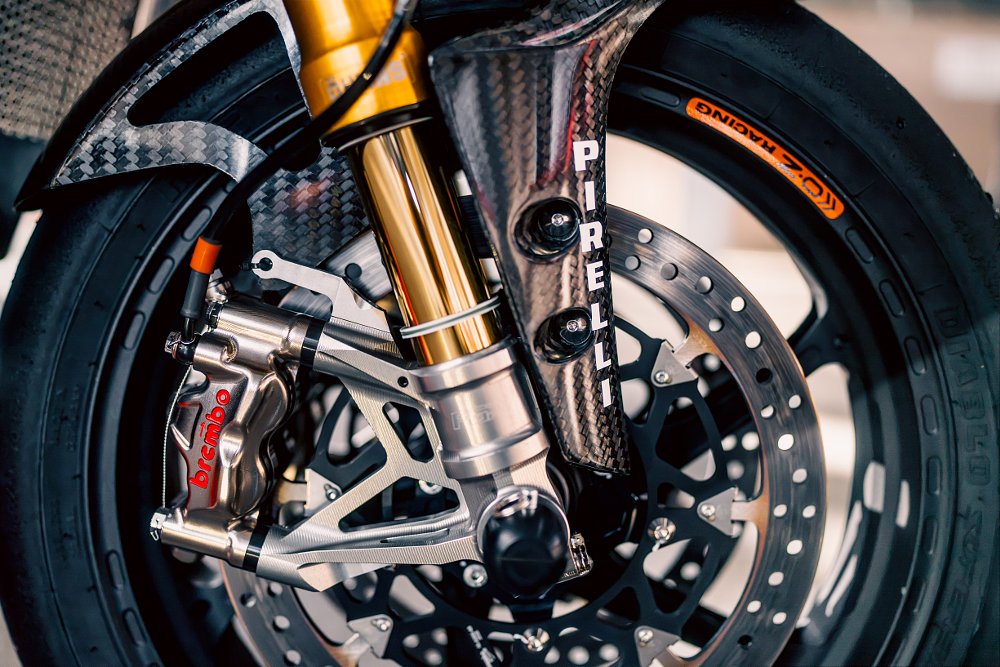
Except, unlike small or midsize sport bikes, the Lightfighter claims 150 horsepower and 120 foot-pounds of torque. It’s a potent package, and one that Wismann and his team have taken to the national stage, competing with the RH version in the MotoAmerica Mission Super Hooligan National Championship beginning in 2026. Race fans will know that Lightfighter pilot Josh Herrin secured the team’s first national podium at Barber Motorsports Park earlier this year.
At the same time that professional racers are riding the chassis to the ragged edge and pushing the powertrain to failure, Lightfighter has begun offering test rides to consumers, as well. The company figures putting enthusiasts in the saddle and letting them experience the bike for themselves offers valuable feedback from everyday track-day riders, and will move the public one step closer to believing in the potential of a track-only electric motorcycle.
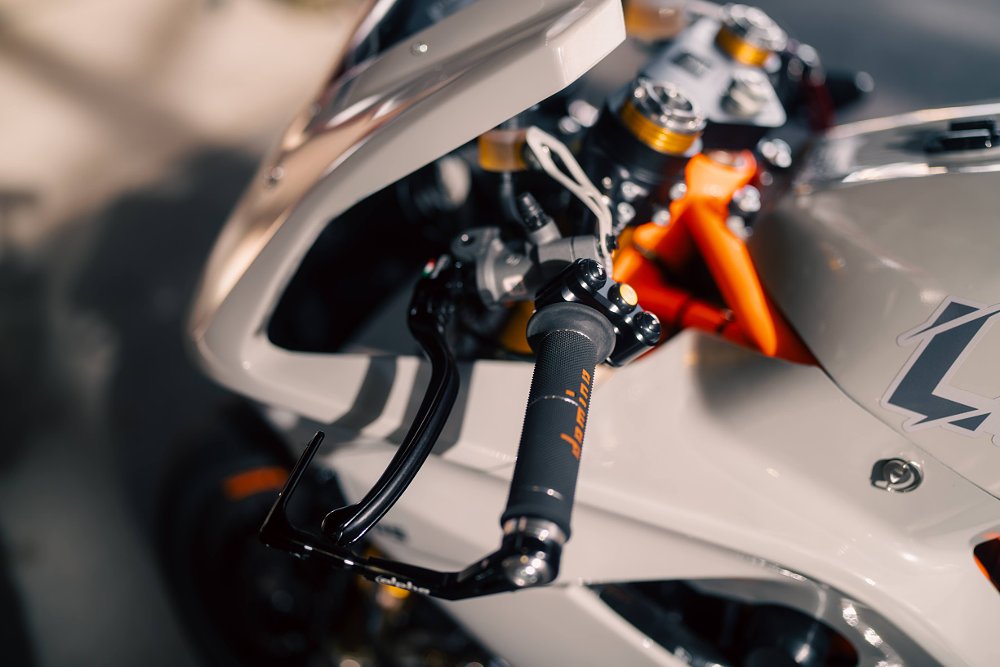
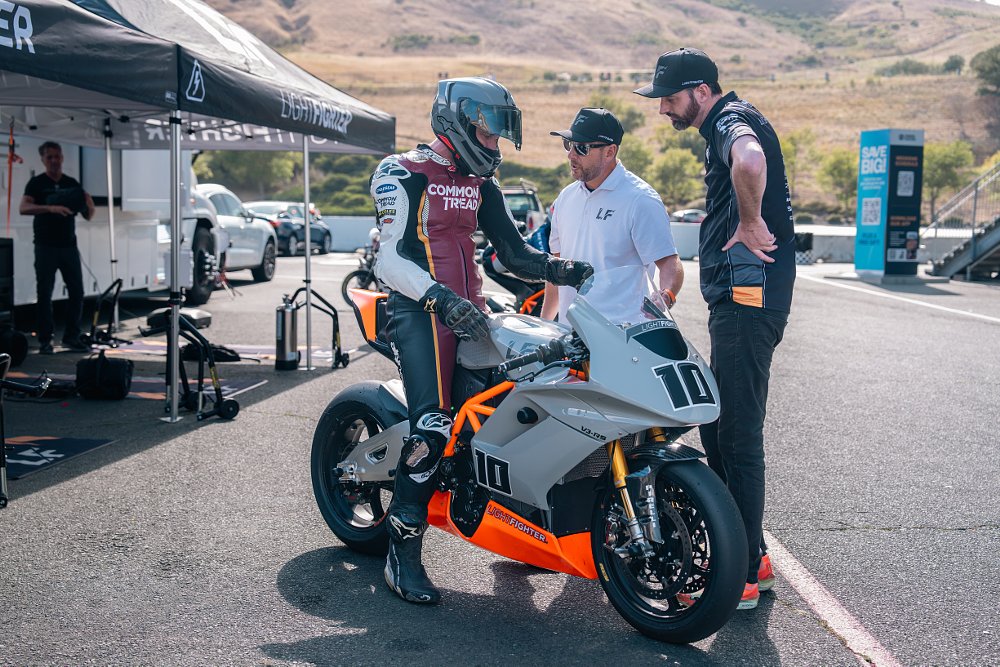
When the Lightfighter demo truck parked just north of San Francisco at Sonoma Raceway a few weeks ago, I took the opportunity to spend one session on the RS and another on the Hooligan-ready RH.
Something completely different
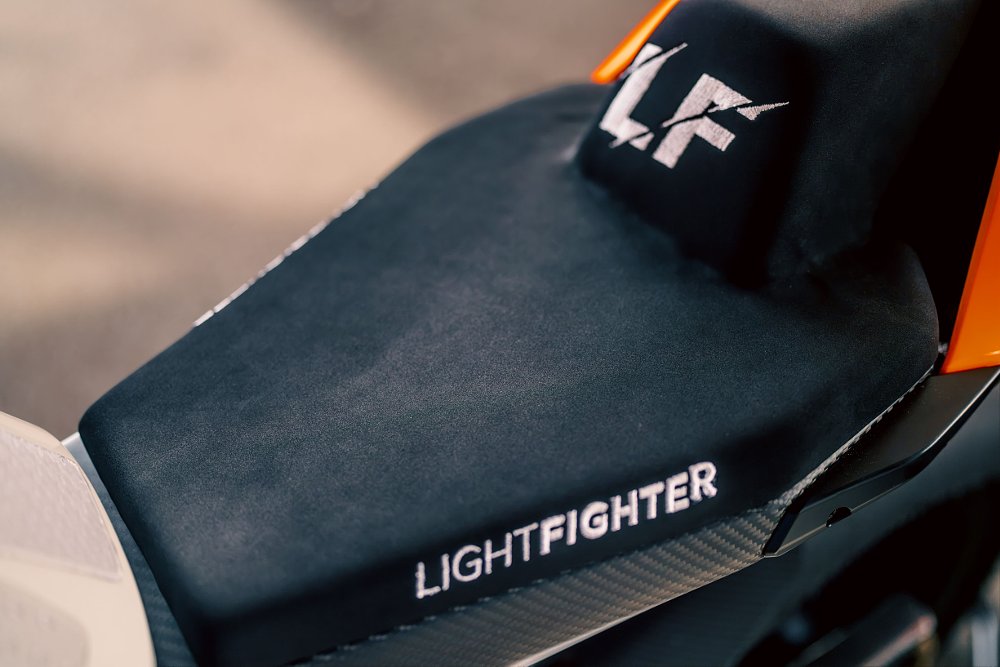
Hopping on board the Lightfighter V3 will feel awkward to anyone who hasn’t been on a pure-bred track machine. The seat felt taller than the 32.5 inches listed on the spec sheet and and it's also narrow, made out of stiff, grippy foam that is common for saddles in race paddocks. Hand grips, too, are thin and firm — wider set and much higher on the RH with a full handlebar. The battery can be just about any shape the team dictates, and because it’s fairly tall and skinny, the bike feels noticeably narrow between the knees.
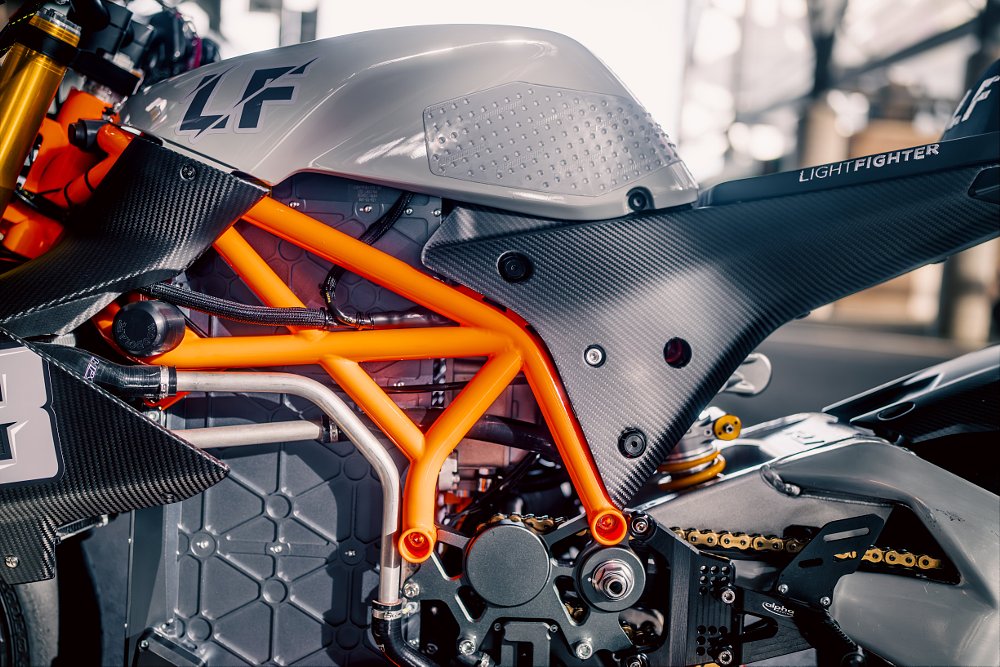
“Taut” is the other word that came to mind. The Lightfighter has the look of an Olympic athlete, with only bones and muscle to be seen under the skin. It’s reminiscent of most purebred race bikes I have ridden, except one thing: Normally, on a bike where the front brake lever is firm, the seat is hard, the suspension is stiff, and the bodywork is thin, there’s also the rhythmic racket of a high-compression engine and a racing exhaust. The V3-RS swept me out of the paddock and down pit lane smoothly and in virtual silence.
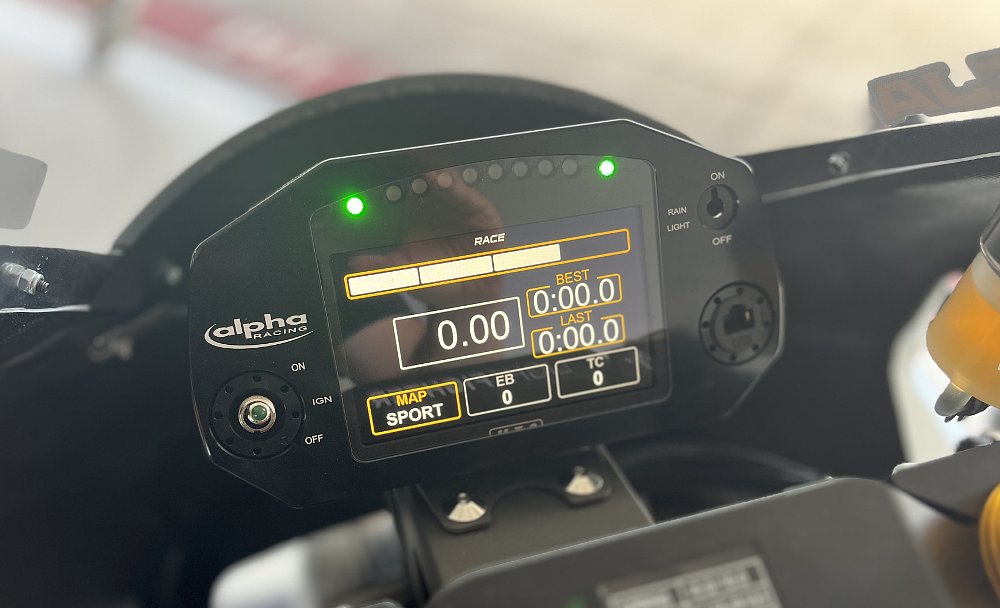
At paddock speeds, the riding experience is a basic blend between severe, race-ready ergonomics and a magic-carpet powertrain. There are a handful of power modes, including one for pit speeds, one labelled “Warm-up” which I didn’t try, a “Twins” setting that mimics the approximate power of a MotoAmerica Twins Cup racer, “Sport” which is a bit faster, and “Max” that unbridles all 150 claimed horses.
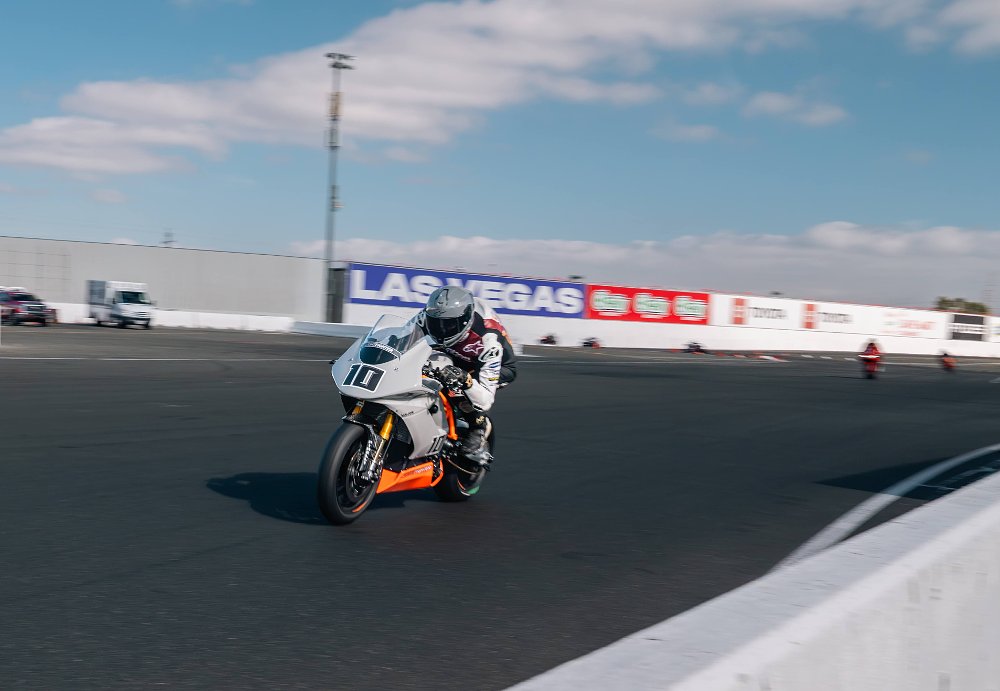
I started in Twins but completed less than a lap before I wanted more. My test bike had Pirelli slicks freshly unwrapped from tire warmers, and I was looking at the undulating curves of Sonoma Raceway kissed with afternoon sun, so I did my best to ask questions of the Lightfighter right away.
The maximum power available is robust but not overwhelming, even through Sonoma’s famously relentless twists and turns. Likewise, the brakes bite hard enough to make you wince at first, but I adapted quickly to their extremely linear stopping power. There’s no ABS plumbing to sully the feel and hardly any free play in the lever. What you squeeze is what you get.
To put it another way: With the benefit of high-quality components, sticky tires, and plenty of thrust on tap, a lot of the feelings when riding the Lightfighter at speed were familiar to other race machines I’ve ridden. Then again, any track-riding enthusiast knows that the powertrain doesn’t just provide power. The gas-powered engine on any other machine also influences braking, turning, and practically any other movement the motorcycle is asked to make.
To that end, Wismann was quick to point out that there are some obvious gains on an electric race bike. For example, the gyroscopic inertia of a crankshaft spinning inside the cases of an ICE motorcycle is simply gone, so the Lightfighter can dive toward apexes and change direction without fighting those forces.
In practice, the theoretical benefits of the electric Lightfighter turned a little bit mysterious, for a few reasons. First of all, basic direction changes, which on a racetrack often happen as quickly as possible, felt strange. There’s no wild instability or questionable feel — the Lightfighter is surefooted and loves to lean into a corner — but the action of moving from full-lean left to full-lean right offers a unique sensation.
It could be that a crank spinning inside an engine case creates forces that the rider has to counteract, and not having those forces to fight is technically better, but also it can also feel weird. It reminded me of a race I did years ago with a vicious tailwind down the front straightaway; by the time I was halfway through the braking zone there was no windblast hitting my body. In some ways it was calm and quiet, but it was also distracting.
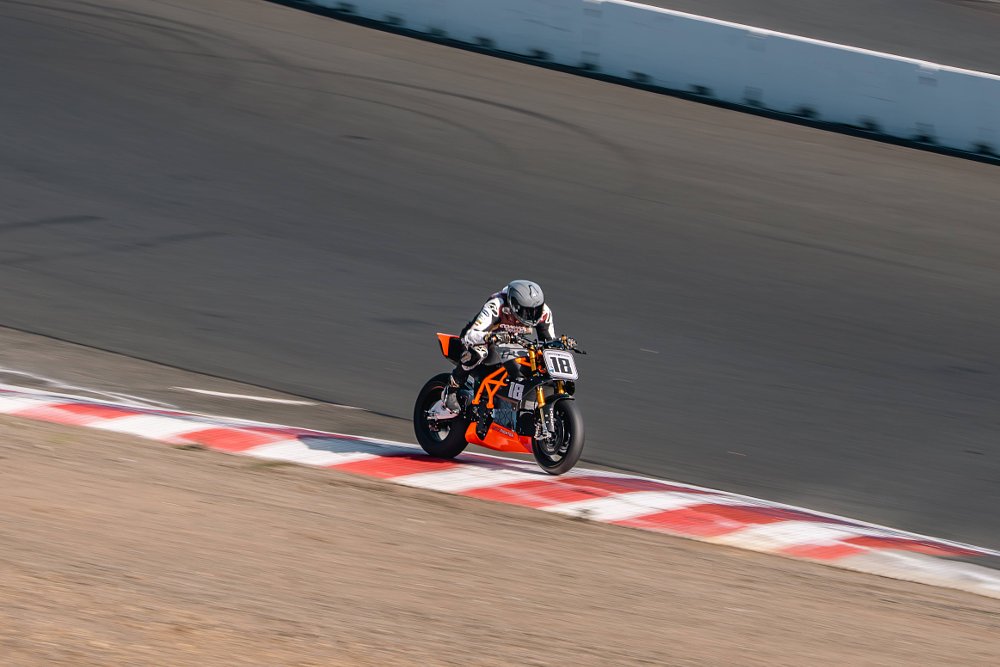
The second nuance that struck me in the Lightfighter’s engineless track attack was deceleration. Part of my struggle was based simply on perception. Because there is no appreciable noise or vibration from the motor, like we’re all used to hearing and feeling from a combustion engine, I had to decide how fast I was entering a corner based mostly on sight.
Unfortunately, the human eye and brain aren’t inherently good at perceiving the difference between, say, 45 mph and 48 mph, and those few miles per hour can have a big impact at the apex of a corner. There are a few scraps of audio to help, like wind noise around the helmet or the whine of the chain, but I felt surprisingly lost. Entering slow corners at a fast pace was harder for me than going into fast corners, probably because there’s a little more leeway in entry velocity at higher speeds.
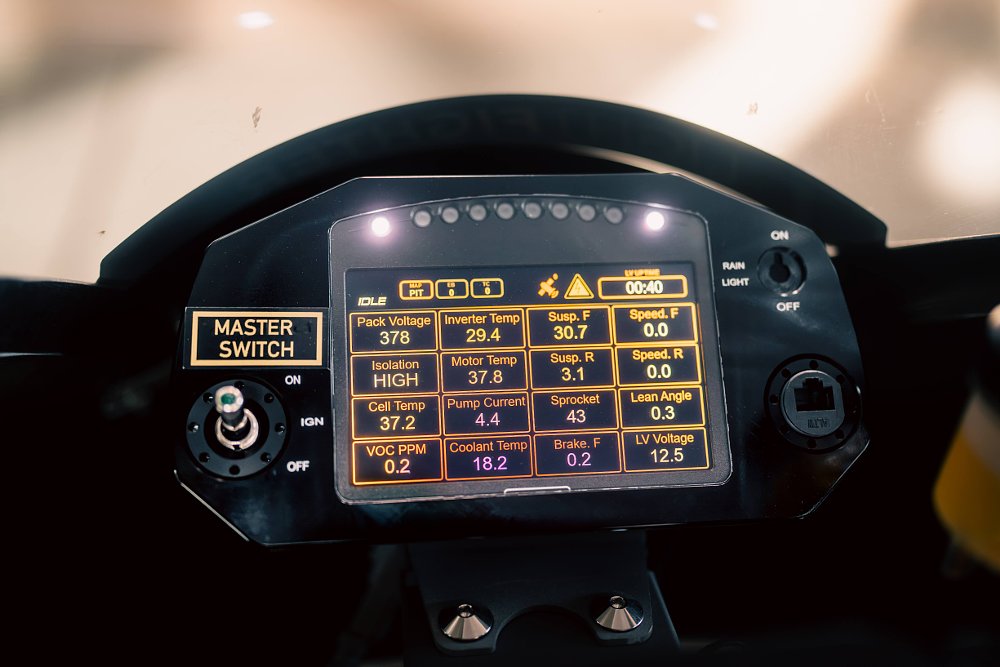
The other wrinkle in maximum deceleration was the way the electric motor slows the rear wheel. Regenerative braking is common in electric powertrains and easy enough to adjust, but it’s much trickier at closed-course speeds. Understanding how much braking force is being offered by the rear wheel is crucial for confidence. Initially, the “engine” (motor) braking felt appropriate. When I eventually braked hard enough to lift the rear contact patch off the ground, the rear wheel slowed down very quickly with no resistance, and when it touched down again I found myself sliding more than a rider with my skill level ought to be.
I also wished that there was more motor braking available later in deceleration, when I was almost to the apex of the corner. When I complained about all of this, Wismann said that Josh Herrin noted the same thing and asked for more motor braking closer to the corner as well, but that programming hadn’t been made available to demo models yet. Small steps can make big changes, just like every racing motorcycle.
The Holy Grail
If this feels like a long list of critiques, I promise that it isn’t. While the few little issues I found were prominent for me, and admittedly tricky to solve, the fact that I was comfortable enough to approach some of the limits of my riding ability is a compliment in itself. Most motorcycles, electric or not, don’t offer enough precision and potential for this kind of criticism. The Lightfighter isn’t flawless but it’s closer than most motorbikes come, regardless of propulsion.
To give a little more perspective, and because it’s the only topical comparison I have to make, I can tell you that I rode a Ducati Streetfighter V2 for four sessions at Sonoma Raceway before climbing aboard the Lightfighter. My best lap time around Sonoma that day on the Streetfighter V2 was around 1 minute, 52 seconds, and my fourth flying lap on the Lightfighter V3-RS was a 1:47.5.
The Streetfighter V2 has excellent brakes and high-quality suspension — not nearly as fancy as the Lightfighter's kit, but practically comparable — and I felt I pushed about as hard on both bikes, albeit for more laps on the Ducati. But, there are more caveats in the comparison than similarities. The Streetfighter claims about 30 fewer horsepower than the Lightfighter and was on hypersport street tires instead of pre-warmed slicks.
Even so, I think it’s pretty clear that if I had time to pull some compression damping out of the Lightfighter’s fork, fiddle with the regen braking, and just learn how to ride it properly, I’d be going faster still. And that, remember, is the goal here: fast. Not just fast for an electric bike, fast compared to established, reliably high-performance motorcycles.
It’s only fair to circle back to what I said earlier about cost parity being ignored, because the Lightfighter is an expensive motorcycle to engineer and to build. Each bike (still fewer than 20 ever made) is built in Lightfighter facilities in Oregon and California, using high-spec race components and processes that sometimes have to be invented rather than copied. That means it’s a very expensive bike to own, if that’s what you want. Technically, bikes are for sale with the fairly eye-watering price tag of $80,000, though Wismann admits that selling bikes isn’t really the goal yet. “If someone really wants to own a bike,” he said, “I want them to come to us to have a conversation.”
Full-day, arrive-and-ride rentals are available for $1,950, which includes hospitality at the track, riding data analysis, and a team to take care of the bike. For the Lightfighter team, that feels like a more logical step. “I don't want to be lumped in with vaporware companies,” Wismann said with a shrug. “I’m not going to promise that we’re going to go into production, and have 1,000 units for sale for $20,000.”
So, on the one hand, if someone simply wants to ride around a track for the sake of doing it, there are clearly cheaper options. A Ducati on street tires being five seconds slower for less than a quarter of the price might feel like a steal. Then again, the Lightfighter isn’t really about bang for the buck. The team's focus is on the bang — to make a bike so good at going around a race track that people don’t care about where the power comes from or how much it costs. For now.
Based on my experience, it seems that the Lightfighter is, indeed, objectively fast. That other thing, the part where motorcycling culture accepts it as a cornerstone of performance, where riders covet it, lust after it, and dream about the color scheme, I guess we can’t say when that will happen. It might arrive in less time than I thought. Not unlike the end of my lap on the Lightfighter itself.
| 2026 Lightfighter V3-RS/RH | |
|---|---|
| Price (MSRP) | ~$80,000 |
| Drivetrain | Parker GVM210-100 Interior Permanent Magnet motor; liquid-cooled motor and inverter, shared radiator |
| Claimed power | 150 horsepower / 112 kW |
| Frame | Steel-tube trellis |
| Claimed range | 12 laps / 28 miles (Laguna Seca) |
| Claimed battery capacity | 16.2 kWh nominal |
| Claimed charge time | Full charge in 75 minutes (off-board 13.2 kW rolling charge station) |
| Front suspension | Öhlins FGR 262 fork, adjustable for spring preload, compression and rebound damping; 5.1 inches of travel |
| Rear suspension | Öhlins TTX YA468 shock, adjustable for spring preload, compression and rebound damping; 4.5 inches of travel |
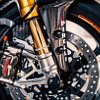
| Front brake | Brembo GP4-RX two-piece calipers, 320 mm T-drive HPK discs |
| Rear brake | Brembo P2 34 mm two-piece caliper, 240 mm Superbike Unlimited disc |
| Rake, trail | 24.5 degrees, 3.9 inches |
| Wheelbase | 56.1 inches |
| Seat height | 32.5 inches |
| Tires | Pirelli Diablo Superbike slick; 120/70R17 front, 200/65R17 rear |
| Claimed weight | ~430 pounds |
| Available | Now |
| Warranty | N/A |
| More info | lightfighter-racing.com |