

 Membership
 Riders Preferred Membership
 Shop by Vehicle
 Track Order
 Contact Us

I own and ride a motorcycle that I've had for over 40 years. That kind of intimacy with a bike will clearly reveal any bike's strengths, weaknesses and, if it has them, maddening faults. Of course, with 40 years to work on stuff, the maddening faults can usually be excised with a little cash and well informed turning of wrenches.
Testing new motorcycles is different.
Some new motorcycle product roll-outs organized by the manufacturers give the writer as little as 50 to 60 miles of regimented group riding to form an opinion. I don't know about you, but 60 miles isn't even enough for me to find out what all of the buttons do, much less come to an understanding of the bike.
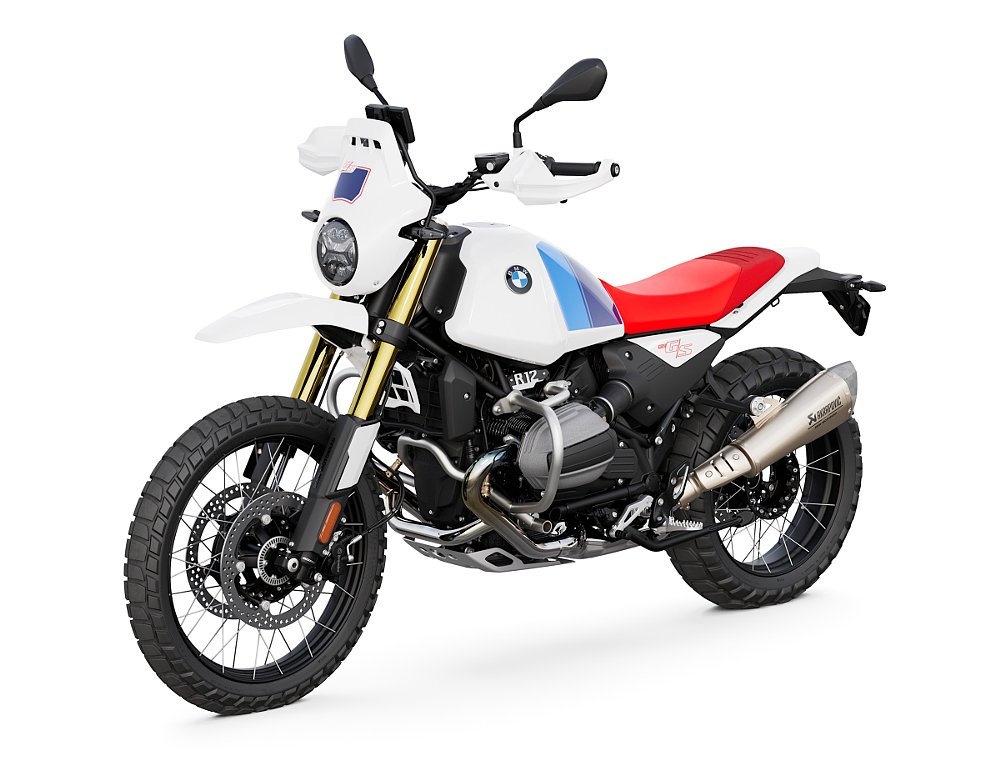
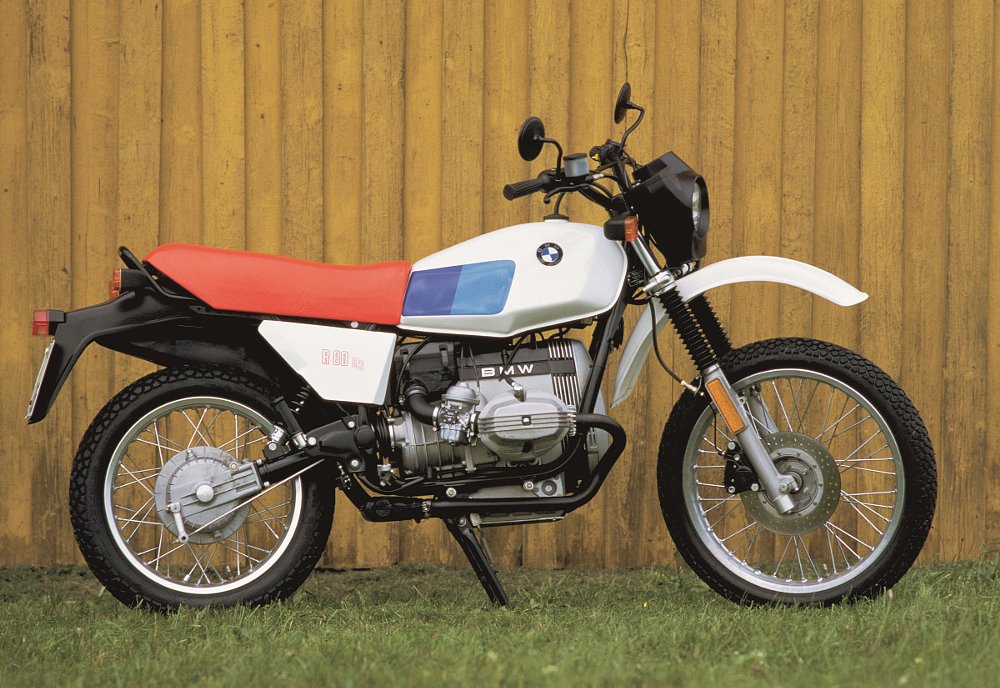
I've been interested in BMW's new R 12 G/S — part of the company's Heritage line — since it was first announced over a year ago. This new G/S is intended to recall the original, the 1981 R80 G/S, which was the world's first street motorcycle with off-road capability. It was the precursor to today's popular adventure-touring class.
The motorcycle world has changed a lot in nearly five decades and those adventure-touring motorcycles have gotten bigger and much more complex. But now, BMW believes that a motorcycle that appears to be a simpler, less technological motorcycle is one that will appeal to riders. When BMW found out that I'd converted my old motorcycle to 1973 International Six Days Trial specifications for use on the Backcountry Discovery Routes, they were interested to hear what I thought of their new Heritage G/S.
Editor's note: You can read the full, unabridged account of Greg's multi-day trip on the PA Wilds BDR-X at his website, Rolling Physics Problem. Here's part one. You can get an idea of the route from the BDR trailer video below. A longer video is also available on YouTube.
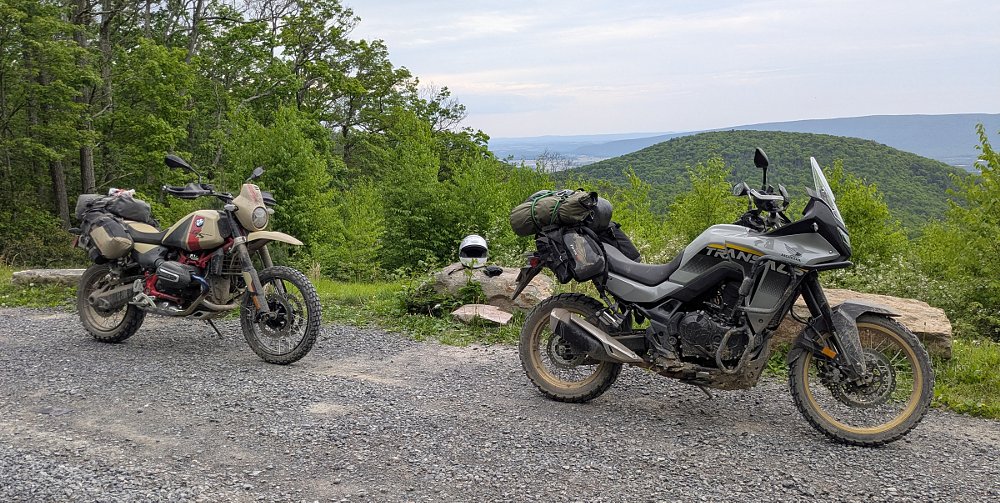
Zack Courts already wrote a fine review of the R 12 G/S, including some off-road use. But I wanted to get under the skin and find out what the G/S was really like to live with, out in the gravel, dirt, rocks, and mud that are currently my favorite places to ride and find respite from the modern world. So I set out with my riding buddy, Triumph Paul, for a week and more than 500 off-road miles in the wilderness of north-central Pennsylvania on the PA-Wilds Backcountry Discovery Route (BDR-X) to do just that.
Boxer power ain't what it used to be
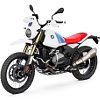
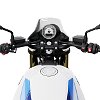
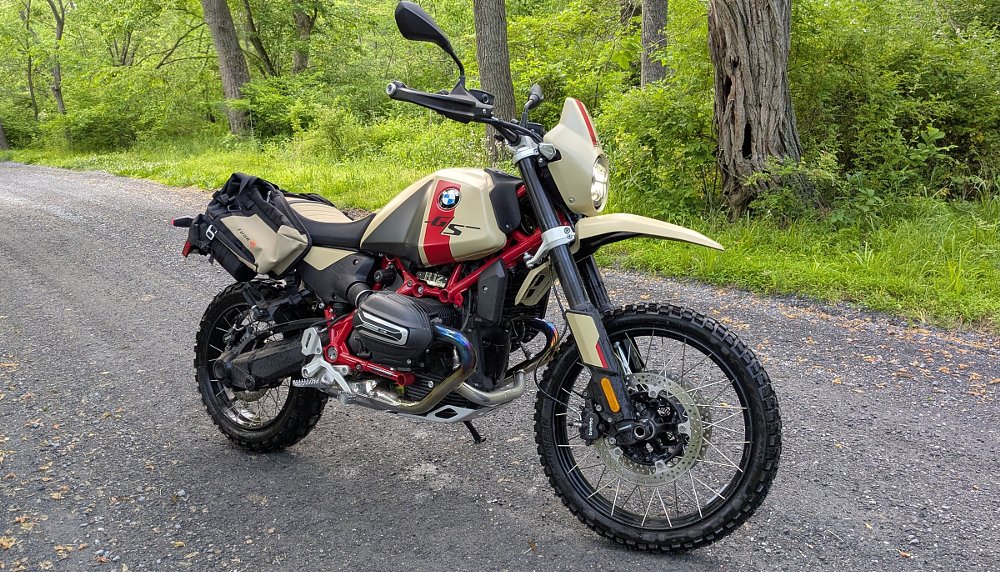
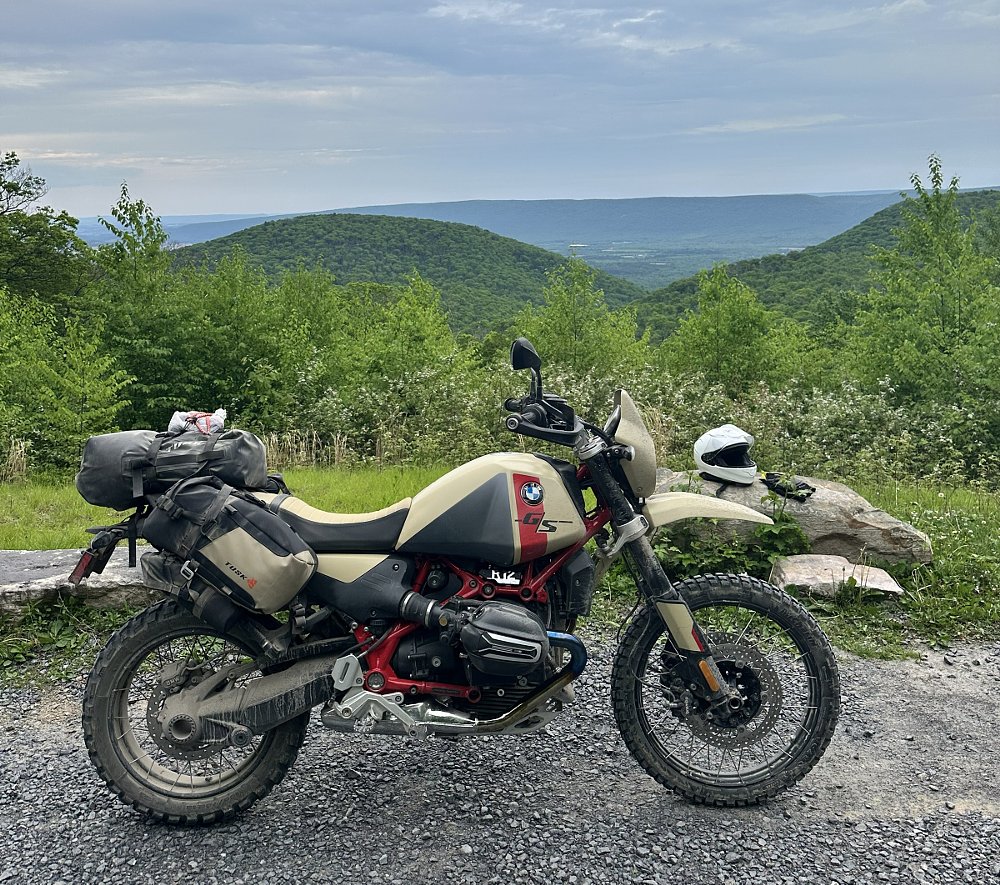
The basics were covered in the previous review, but just to set the stage: Powering the R 12 G/S is the most developed air-cooled boxer BMW ever sold to the public, the previous-generation "Camhead," with 1,170 cc of displacement, overhead cams, and four valves per cylinder, making 109 horsepower and 85 foot-pounds of torque. For the record, that's more than double the output of the original R80 G/S's engine. The new G/S also has the traditional shaft final drive and comes with a steel trellis frame — painted bright red on my example — a 45 mm fully adjustable inverted fork and monoshock from Marzocchi, Brembo brakes, and a full suite of off-road options, including spoked rims that enable tubeless tires, Michelin Anakee Wild full off-road tires, a larger 18-inch rear wheel, handlebar riser, enduro footpegs, and a flat, one-piece "Enduro" saddle. This G/S also has a single, round analog instrument that features a small three-line LCD display, designed to allow access to the bike's rider aids and electronic systems.
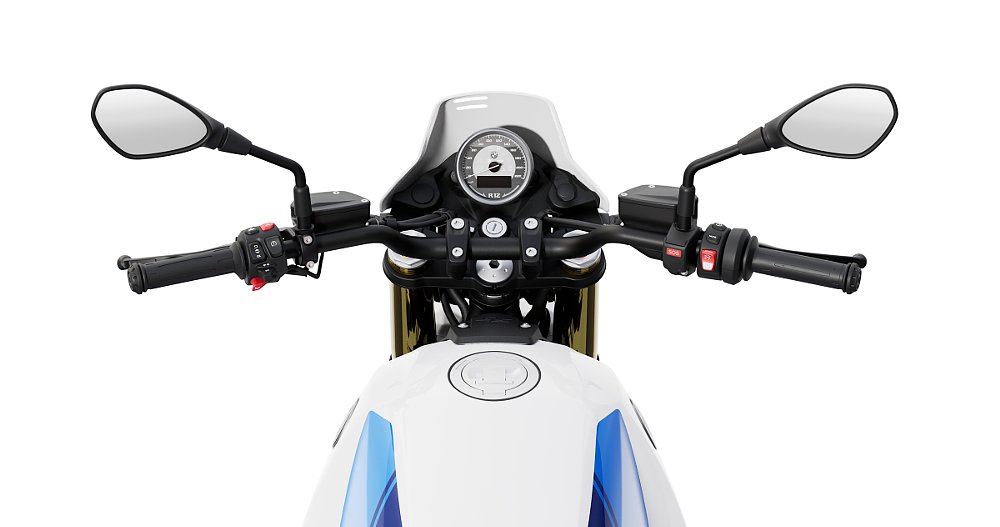
On the pavement, to get to the beginning of the 500-plus-mile off-road route, the G/S's engine is front and center. Tremendous torque is available at any engine speed, which is good, because the single instrument's default display doesn't include a tachometer. It is possible to select a numeric tach from the display options, but it is much more difficult to see than an analog tach, so I just stopped worrying about it. At 65 or 70 mph, the counterbalanced boxer is smooth, with just enough of a rumble to let you know that there's some internal combustion involved. Even in sixth gear, passing power is more than adequate to dispatch any troublesome traffic. A downshift or two makes things happen exceedingly quickly.
On Section Four of this BDR-X route, we encountered a difficult section called Flat Hollow. Flat Hollow ended with the steepest uphill grade I've ever seen that wasn't on a competition hillclimb course. My approach speed was slower than optimum, but after a few milliseconds of gut check, I gave the bike some whip. The G/S's boxer delivered its customary punch, and made that hill seem absolutely trivial, accelerating all the way up in a shower of stones. Nowhere in over 800 miles of off- and on-road riding did I ever want for instantly available power.
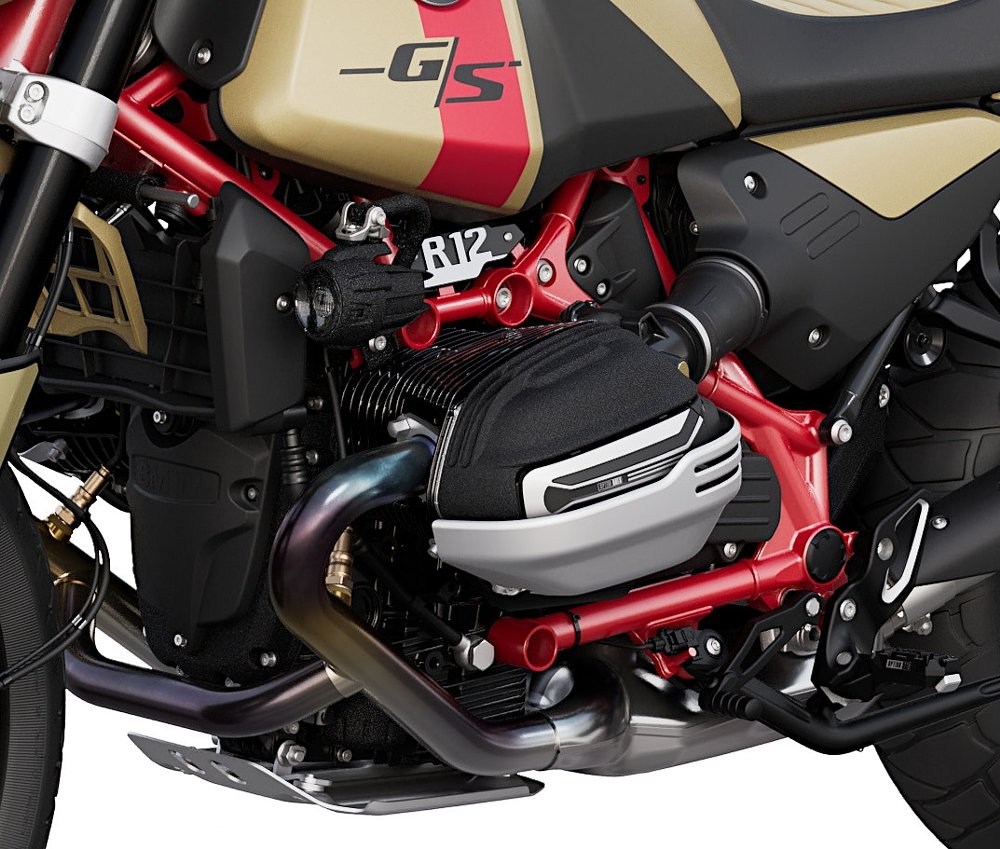
The bike's gearbox was an enormous improvement over the long-throw boxes of BMW's past — tight and slick-shifting. Overall, the entire driveline was really a revelation. The amount of play in the gearbox and shaft final drive was so miniscule that it felt like the throttle grip was directly connected to the rear contact patch. Folks who have only ridden chain-drive bikes off-road might find the boxer G/S experience something very different.
The R 12 also has a bi-directional quickshifter, or Shift Assist Pro in BMW speak. Such a system could be useful in a bike ridden on the track, or as an aid to keeping tired hands from having to do too much clutch work, but in operation, I found it really disconcerting. Only in the case of higher gears and higher road speeds did it operate with anything that didn't feel like evidence of mechanical carnage in progress. I did try to find cases where I thought it served a purpose on a big dual-sport, but eventually came back to appreciate just how smooth and skilled my years of shifting boxers had made me.
Many sections of the PA-Wilds BDR-X are slower-speed sections where more care is required due to dynamically changing and challenging trail conditions. On warmer days, one can't help but notice some heat coming off the cylinders, a phenomenon that is much less pronounced on vintage boxers. This is a result of simple physics — 50 horsepower makes heat, while the G/S's 109 horsepower makes more than double that heat. At lower engine speeds in the technical sections, the engine tended to become heat-soaked. It never overheated but sometimes pinged in complaint to throttle requests.
Also of concern on the trail is the G/S's single-plate dry clutch. Following the Open Source Mapping App's off-road tracks is a little challenging at times, resulting in more than the usual number of U-turns to return to the track. Every time I had to do this I was smelling burned clutch after I completed those maneuvers. I wasn't using a lot of throttle, nor was I slipping the clutch excessively. Now perhaps after the driveline is fully broken in that behavior will improve, but it still points to a potential fragility that is concerning.
Putting the G/S (and its clutch) to a stiffer test
On our second full day off the pavement, Paul and I successfully wrapped Section 2, which was our second BDR-X Section. After coming down a very steep grade, we exchanged the mandatory "end of section" high five in a gas station in the town of Renovo, which sits in a deep valley by the west fork of the Susquehanna River. We exchanged some greetings with a youngster who worked there and seemed surprised that his pumps were an notable off-road-riding waypoint.
We ran up the road through town, and stopped for some rest and route consultation in the parking lot of the Renovo Visitors Center. At about 2 p.m. on a Tuesday, the Visitors Center… was closed. Most of Renovo, it seemed, appeared pretty economically depressed. The only business we'd passed that was displaying signs of life was a dog wash. Paul and I did some cursory internet examination of our food and lodging options, which consisted of — shockingly — two dive bar/motel combinations. One looked too sketchy for words and the other was in the process of being rebuilt. The currently not-yet-paved parking lot looked tougher than some of trail sections we'd just ridden. We ducked into the tavern portion of that business to grab some food and plan our next play.
After a PA-Wilds Standard Salad — which is to say cheese and croutons camouflaged with iceberg lettuce — and too bready a tavern pizza, Paul and I agreed to try to do another 50 miles or so of trail which would get us up to Wellsboro and the Grand Canyon of Pennsylvania. It was early enough in the day that we had minimal risk of being caught out after dark, and it would allow us to push a few more miles into this riding day, which would pull them from the days to follow, and make it more likely we could be back at home by the weekend.
It seemed like such a sensible decision at the time.
Leaving Renovo, Paul and I climbed the mountain at the end of town and ran into something we hadn't anticipated. About three corners past the summit, the trail ahead turned to the longest, straightest, most deeply rutted stretch of clingy, ugly mud I'd ever encountered on a trail. Most times, there's a line that one can choose that will either sidestep or minimize the difficulty. Not here. From treeline to treeline there was no option. It was mud or death.
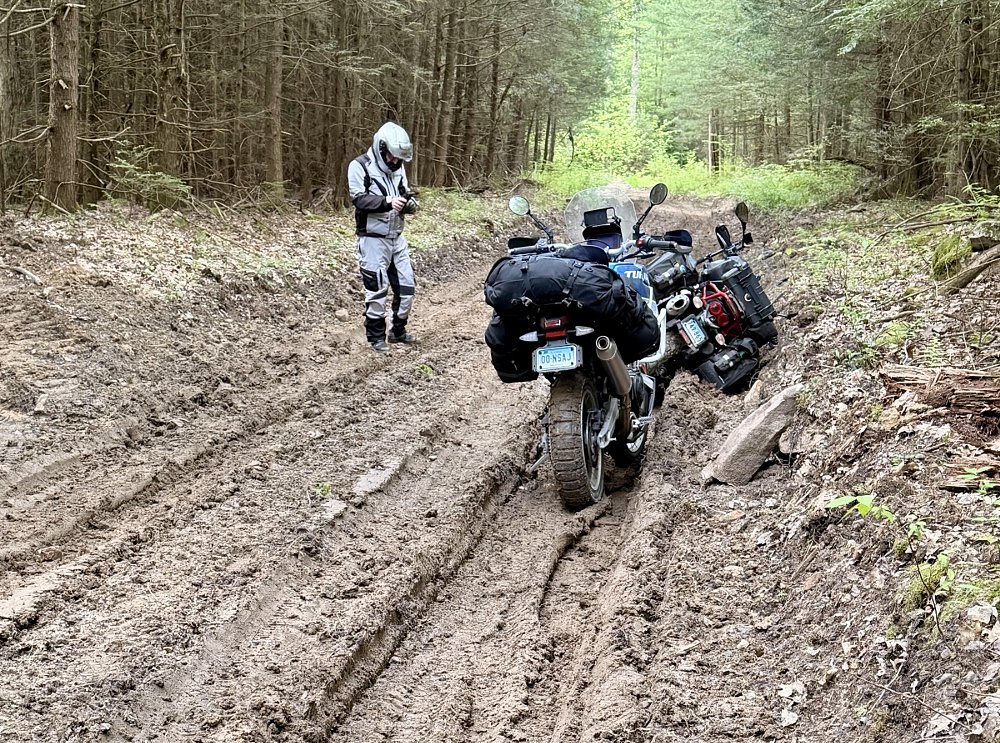
After Paul, who is a confident rider, hooked a footpeg on his Honda Transalp in a more-than-foot-deep rut and executed an unplanned loss of forward motion and stylish dismount, I experienced a crisis of confidence. I had two or three thoughts. The first was about the clutch having to do multiple, high-effort starts in this muck. The second was the possibility of this surface lasting for many, many miles, and us potentially not making it down the mountain before dark. And the third was the potential to have to right this 528-pound motorcycle — perhaps multiple times — while standing on a surface that offered almost no traction.
None of these thoughts were good thoughts.
After a brief pep talk worthy of Vince Lombardi, I helped Paul push off his Transalp, and walked back to the G/S as I watched him successfully slither through the foot-deep muck. After 75 yards or so, he found a dryer spot to set the TA's stand, and clumped back to where I was trying to convince myself of my ability to execute what I'd just seen.
I powered up the G/S, Paul gave the rear of the bike a hearty shove, and then I worked on developing my required new skill. Once back in motion, the G/S's ridiculous torque and Anakee Wilds worked in my favor. I did spend a lot of bandwidth steering the front wheel back under the bike, but I stayed in motion and upright.
It was far from pretty to watch, but it worked.
We ended up having to ride — with feet serving as outriggers and working with the clutch engaged and using the engine torque in low gear to maintain steady headway — for at least four or five miles before we finally came back to more normal trail conditions. The G/S's clutch survived, neither of us fell again, and eventually my confidence level returned to normal.
So how does she handle?
The PA-Wilds BDR-X has miles and miles of twisty gravel tracks that follow the many streams that characterize the region. The behavior of the R 12 G/S on these rolling, curvy forest roads was a pleasant surprise. Far from being an overpowered handful, the G/S was a little trail kitten, with all the balance and stability of my older boxer, while taking advantage of the generous torque that the engine provided. The rider's positioning was optimum for riding standing up — at least for a five-foot, eight-inch rider — and changes of direction were as simple as weighting a footpeg. Fitted with full knobbies, I never felt the bike put that front wheel out of place on any normal riding surface.
I ran most of the roads in the Rothrock State Forest in third gear and quickly got into a relaxed trail rhythm that really felt like dancing — give back a little throttle to set up for the next turn, shift my weight to the inside peg, and once on the desired line, open the throttle back up. Feeling a tad feisty? Open the throttle a little more, and the R 12 sets a perfect slide on the exit, partially due to the bike's inherent boxer balance, and partially due to the inertial-measurement-unit-equipped, off-road-optimized traction control. You can, if you like, do this all day.
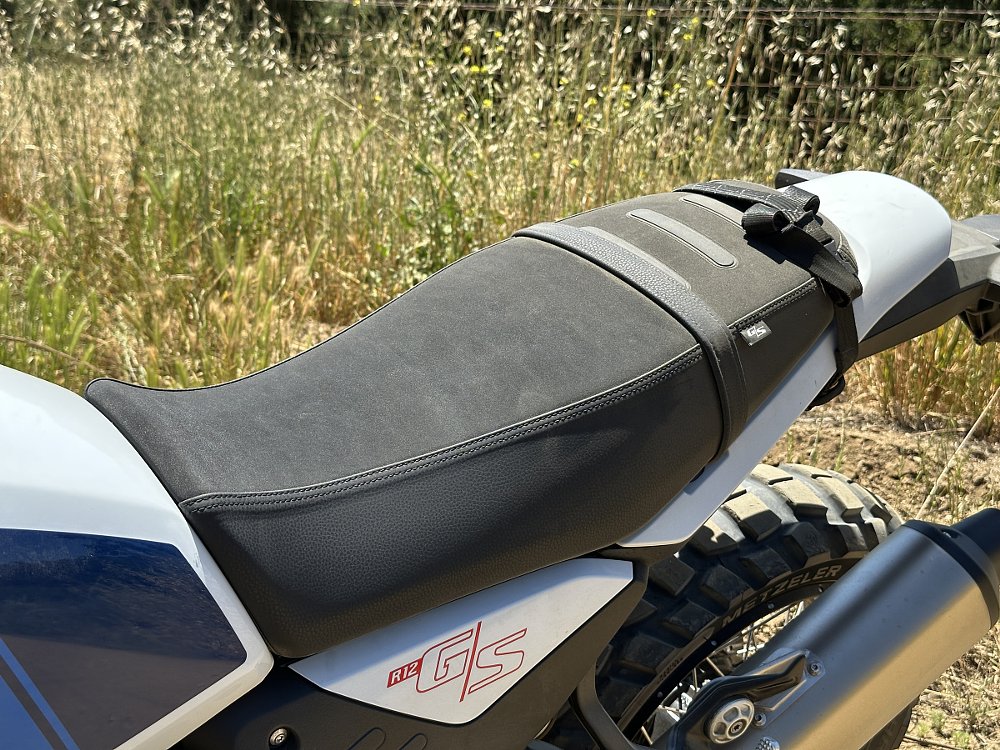
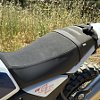
I have to single out the optional BMW Rallye seat for praise. Many stock saddles are thinly disguised torture devices, but this one is firm, supportive, and makes it possible for the rider to move around easily in challenging terrain.
I'd spent a few days after I picked up the bike from BMW dialing in the suspension, cutting preload and compression damping to improve compliance on tougher trails. This was time well spent, another lesson that was pounded in like a tent peg when riding though Flat Hollow. Flat Hollow is a narrow path, likely an early-19th-century wagon trail that looks like it's been about 200 years since its last maintenance. The Hollow is dark and spooky with a surface that looks like someone made an earnest attempt to level it with large, rounded, flat stones sometime in the early 1800s. Today, though, those large stones are separated by deep chuckholes that are sometimes filled with muddy water. Better still, the trail heads up the mountain following some sections where the rock route is hanging off the side of the ridge with a steep drop off to the left. These are very relaxing riding conditions.
We Eastern off-road riders might not have rock gardens, but these are pretty close.
This little piece of trail, occurring just before the end of the ride, had a great deal more texture than anything we'd ridden during the past week. My previous riding groove, fortunately, wasn't harshed by the increase in the challenge level. I just kept my speeds appropriate for the surface, kept my head up, and worked to pick the best of the many bad lines that the trail had available. The G/S, to its credit, soaked up most of the big hits, and never touched down any hard parts. For a big, heavy motorcycle, the behavior of the chassis and suspension, even in the most challenging of conditions, exceeded my most hopeful expectations.
Onboard tech: What you see and what you get
I hate to rain on BMW's parade, but as much as the designers want your brain to conclude that this is a simple, classic motorcycle, nothing could be further from the truth. The R 12 G/S is a fully modern, tech-heavy motorcycle. One just needs to look beneath the surface to find it. Some of the tech, like the lean-angle-sensitive stability-control system, encompassing multiple power, traction, and ABS settings, is well-nigh miraculous. After hitting a section of trail in Black Moshannon State Park after a frog-strangling thunderstorm, Paul and I found a rocky section of trail that had temporarily been turned into a shallow stream. Imagine a descent where the riding surface was comprised of round river stones that were under water. Paul dropped in with about a 15-yard lead and started to pick his line through the stones and down the hill.
It became quickly obvious to me that my rate of descent was just the tiniest bit faster than Paul's and I was using up the safety buffer between our bikes. I was riding in Enduro Pro mode, which turns off rear ABS and dials back traction control intervention. I rested a single finger on the front brake lever, hoping to be able to slow things down just enough for us to hit the bottom with some space between us. I'm not sure what the rear brake was doing, but I could clearly hear the G/S's ABS modulator under the seat going nuts trying to keep the front from locking on the wet stones that apparently had roughly the same friction coefficient as your favorite ski slope. Still, both of us stayed upright, we avoided banging bars or other hard parts, and there would be no need for an early afternoon coffee to remain alert.
BMW's traction control and ABS get a grade of 11 out of 10.
Less appreciated was BMW's Keyless Ride system. The Keyless Ride uses a radio frequency fob that the bike detects to enable powering up and starting. In some circumstances, I can see how not having to produce the key out of one's pocket to start the bike might be convenient, but after one trail stop I went to power up the bike and got an error message that the key had not been detected when I was seated on the bike. This scenario happened three or four times during the week-long trip. On trails that might be 30-plus miles away from the nearest thing remotely like civilization, these glitches were anxiety-producing in the extreme. Given that the fob contains a physical key, which one must use to unlock the gas cap or lock the bike's fork, but which does not work to start the bike, I really have a tough time figuring out what problem this is intended to solve, especially if it isn’t 100% stone reliable. I did eventually figure out if I used the fob's "battery check" button — when I pressed it, the speedo needle on the bike moves — then the bike would at least detect the key, but still.
Also on the "thumbs down" side of the scale was the optional Hill Start Control. When the motorcycle comes to a stop on an incline, Hill Start Control automatically activates the rear brake while the motorcycle is stopped. When starting up again, the brake stays engaged until enough engine speed and clutch engagement are detected to make the bike move, and then the brake is released.
My first concern is that this takes far more power and clutch slip than I would normally use on a start. Remember the smell of toasted clutch in the morning? The second is that the system also has a tendency to kick in at times when it creates more trouble than help. Have to turn around on a tight trail after missing a turn? Hill Start Control will lock the rear brake when you need to roll the bike backwards with your legs. Need to make some fine adjustments when parking? Same deal. Supposedly you can override the system by applying the brake for three seconds, but I found the override to be somewhat undependable. I ended up disabling the system and never missed it.
The analog-appearing single instrument uses its three-line digital display and some "idiot lights" to communicate error conditions from the bike's digital systems. Shared with all BMW motorcycles are the service reminders designed to strongly encourage one to take the bike into the dealer for routine service. BMW had performed the mandatory break-in service at U.S. headquarters before I picked up the bike. During that service, though, the service reminders had not been reset using BMW's service computer system. Halfway into the trip, when I exceeded the programmed mileage limit… the instrument spat out a numbered error and the international-standard warning symbol — a yellow triangle with exclamation mark — the "yip!". A yip! indicates a hazardous condition and can't be cleared from the display by the rider.
Along with the other data that the three-line display provides, the R 12 G/S also has a tire pressure monitoring system. I wholeheartedly approve of the safety impacts of such systems. The system's ability to provide early warning from a puncture when cruising at high speed can save lives. On the G/S, though, the default values in the system are designed for on-road operation. It's customary for riders in off-pavement environments to lower their tire pressures to produce more traction and compliance. Normal advice is for a 15% to 25% reduction in cold pressures. In the case of the R 12 G/S, a 15% reduction is enough for the system to be outside of compliance and it will trigger a numbered critical error every time the system arms, firing off another yip!.
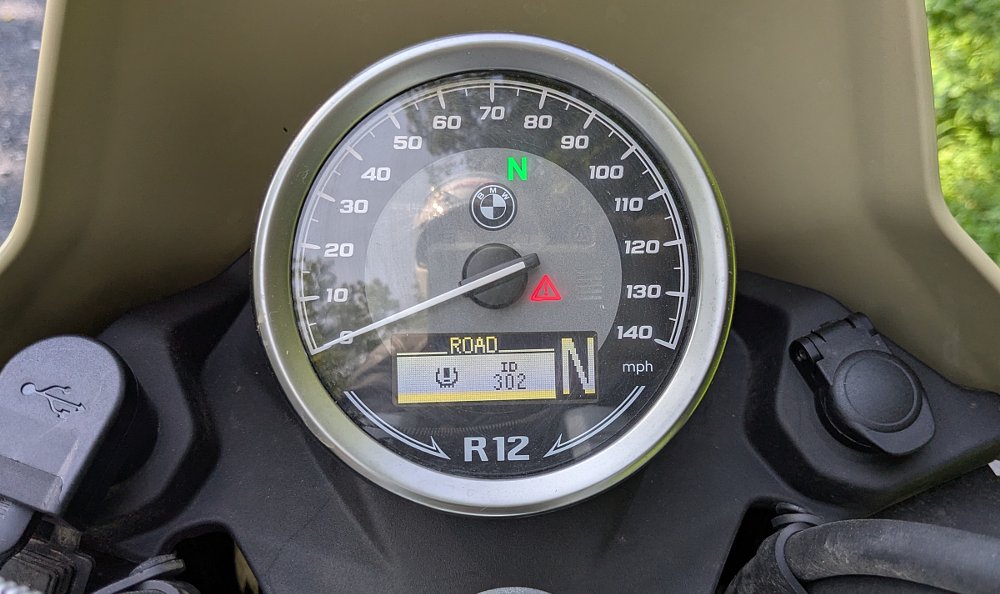
Fortunately, as someone who has owned more than one modern BMW, I have the Motoscan smartphone app, which allows owners to access and reset most configurable errors and reminders on their BMW motorcycles via a Bluetooth-connected OBD-II interface. I reset the service indicator myself upon my return to my home shop and toolbox. Further research reveals that Motoscan can also be used to adjust the tire pressure system's thresholds, so I have another tiny project for my list. If you don't have Motoscan, both of these things require a trip to the dealer.
The G/S's Enduro Pro traction mode, intended for off-pavement riding, turns off the rear ABS, which frees up the rider to slide the rear tire in the dirt. Good design, good feature. Except that having the ABS off is one of the critical failures that produces another yip! symbol. Guess who rode around for 500 miles of trail with the bike insisting I'd placed myself at grave risk.
The G/S also includes two electronic trip meters. The second of the two trip meters automatically resets itself every night when the bike is parked. On the BDR-X's longest section, 165 miles, I demonstrated that the bike's four-gallon fuel tank is a concern for folks who are overlanding when I came to the first fuel station 28 miles into my reserve with no way — other than mental mathing — to predict my range remaining because the second trip meter reset itself the previous evening. This is also a feature that can't be reconfigured to operate the way a mechanical one does, and I can't think of a single reason why I'd want my trip meter to ever do this.
Why do I dwell on all these software features? Every single time I would start the bike, it would list all of the error codes associated with all of these error conditions, and I'd have to acknowledge all of them to gain access to a clear instrument display. The rider can't clear the yip!, of course, so I just had to learn to ignore them, which is the exact opposite of the behavior BMW's engineers (and lawyers!) would like to encourage.
There's no going back
The R12 G/S is an objectively better ride in almost every measurable way than the classic bikes it wants to call to mind. The dynamic behavior of the motorcycle in challenging off-road conditions, given its size and weight, is a revelation. The bike's electronic stability controls make riding safer and far more enjoyable. There's more power, more throttle response, more suspension stroke, more ground clearance, and way more brakes than an R80 could ever have hoped for, all provided with a driveline that is far more precise and direct than any R80 ever was. The riding experience is several levels of magnitude better than that of the R80 G/S the R 12 G/S is supposed to remind us of.
But, while the machine wants its user to believe it is just the rider and two cylinders versus the world, the bike's own electronics do everything possible to destroy that illusion.
"How motorcycles used to be" really is a place to which no one can go back.
Unless you still have one of those old motorcycles to ride.
| 2026 BMW R 12 G/S | |
|---|---|
| Price (MSRP) | $23,240 (as tested) |
| Engine | 1,170 cc, air-and-oil-cooled, eight-valve, horizontally opposed twin |
|
Transmission, final drive |
Six-speed, shaft |
| Claimed horsepower | 109 @ 7,000 rpm |
| Claimed torque | 85 foot-pounds at 6,500 rpm |
| Frame | Steel-tube trellis |
| Front suspension | Marzocchi 45 mm fork, adjustable for spring preload, compression and rebound damping; 8.2 inches of travel |
| Rear suspension | Marzocchi shock, adjustable for spring preload, compression and rebound damping; 7.8 inches of travel |
| Front brake | Brembo two-piston calipers, 310 mm discs with linked ABS |
| Rear brake | Brembo two-piston caliper, 265 mm disc with linked ABS |
| Rake, trail | 26.8 degrees (26.9 degrees with 17-inch rear wheel)/4.8 inches |
| Wheelbase | 62.4 inches (62.2 with 17-inch rear wheel) |
| Seat height | 35.2 inches (33.9 inches without Enduro package, 34.4 inches with Enduro package and standard seat) |
| Fuel capacity | 4.1 gallons |
| Tires | Michelin Anakee Wild, 90/90-21 front, 150/70R18 rear |
| Measured weight | 528 pounds |
| Available | Now |
| Warranty | 36 months |
| More info | bmwmotorcycles.com |