 Riders Preferred Membership
 Log In
 Shop by Vehicle
 Track Order
 Contact Us
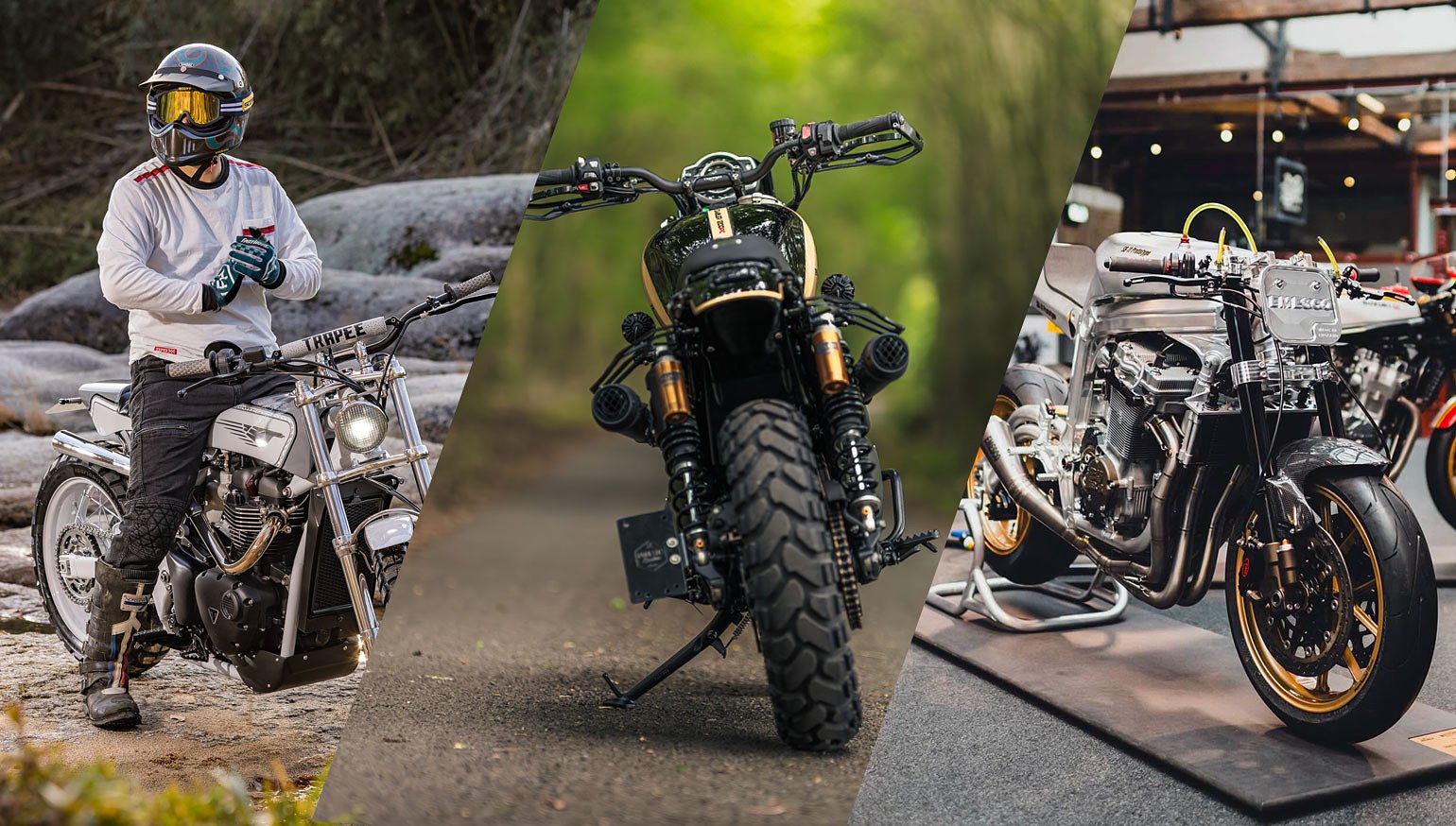
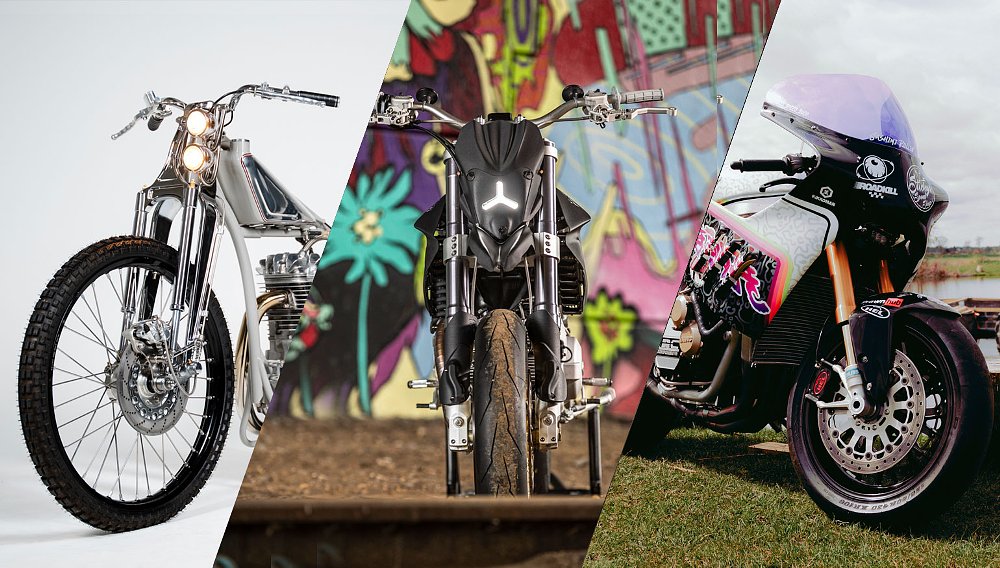
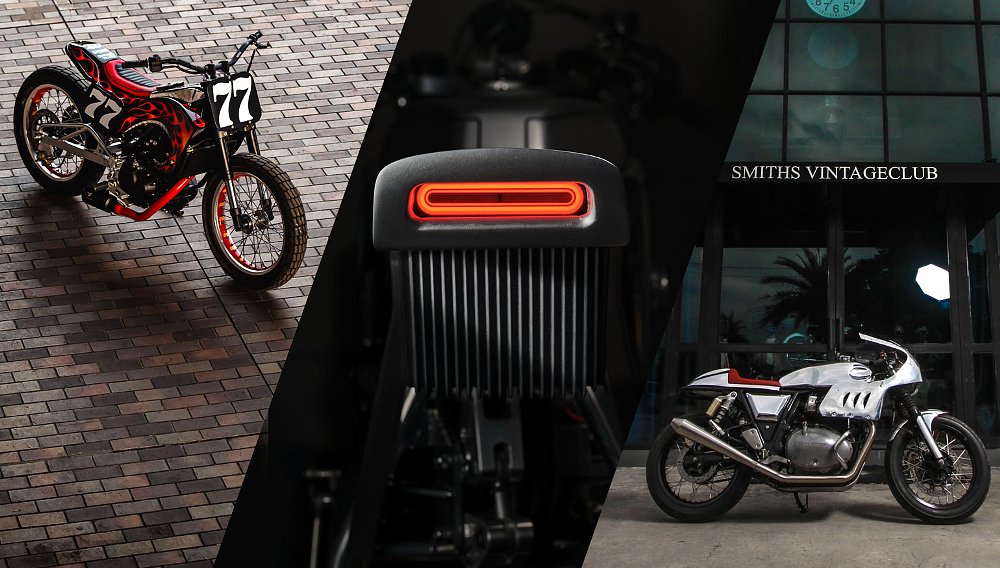
This month we have two bikes custom-built in Britain, plus one British bike modified in Japan.
First up we have a Triumph Scrambler 1200 by Poulson Creative that has a clever trick up its sleeve. We follow that up with a bonkers Suzuki GSX-R1100 hooligan bike by Superbike frame builders EMESCO Designs. And to close out this edition of the Custom Roundup, Kengo Kimura of the Japanese workshop Heiwa Motorcycles demonstrates how to turn a modern scrambler into a vintage desert sled.
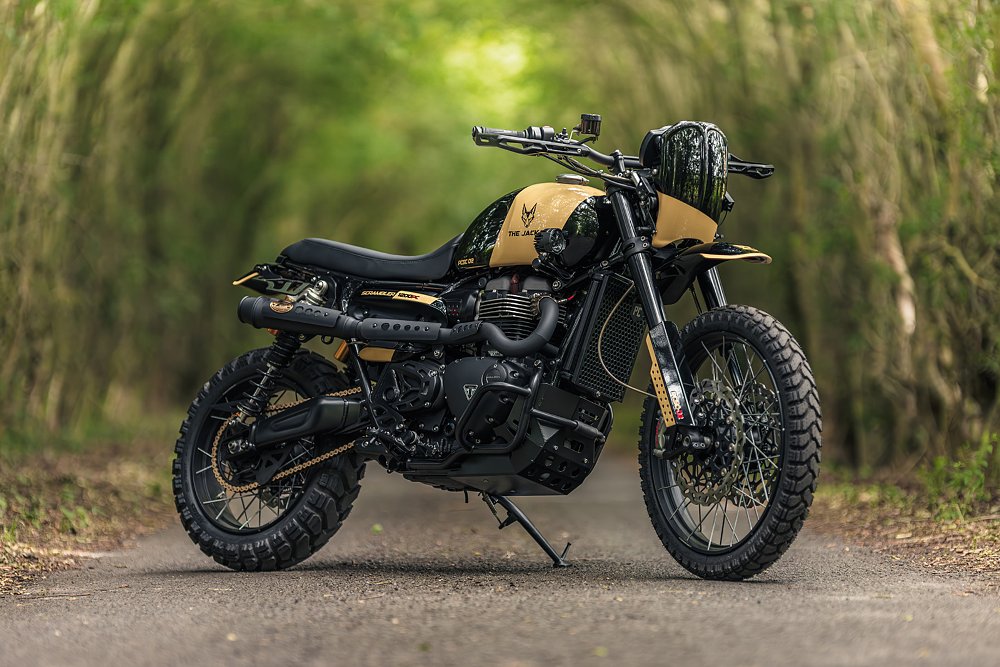
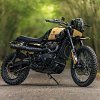
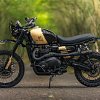
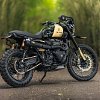
Poulson Creative "The Jackal" Scrambler 1200XC
Poulson Creative (Instagram) is a UK-based motorcycle workshop, retail store, and café created to bring the motorcycle community together. Owned by ex-marketing and sales exec Stuart Poulson, it was designed to be the type of place where he always wanted to hang out. Now 8 years old, Poulson Creative has a team of dedicated staff, a loyal local following, and an impressive portfolio of custom motorcycles.
Each year, Stuart sets aside time to create one or two in-house customs to showcase his team's talent and skills. Their latest work, "The Jackal," does exactly that.
For Stuart, this project was designed to fulfill a long-standing desire dating back to his youth. "I love scramblers and off-road riding and have always wanted to build a badass scrambler," he says. "The Jackal was conceived with a clear objective: to create a motorcycle that fully embraces the 1200 Scrambler's off-road heritage whilst adding versatility to transform it into a capable adventure-style bike for longer journeys."
The Jackal started life as a Triumph Scrambler 1200 XC, chosen for its more accessible seat height and blacked-out fork. It was the ideal starting point for Stuart's scrambler/adventure hybrid project, but there was a lot of work to do before it matched his vision. The project began with a team brainstorming session that resulted in a clear concept. And with the Bike Shed Show in London fast approaching, they also decided to add a trick feature that would help the Jackal stand out from the crowd.
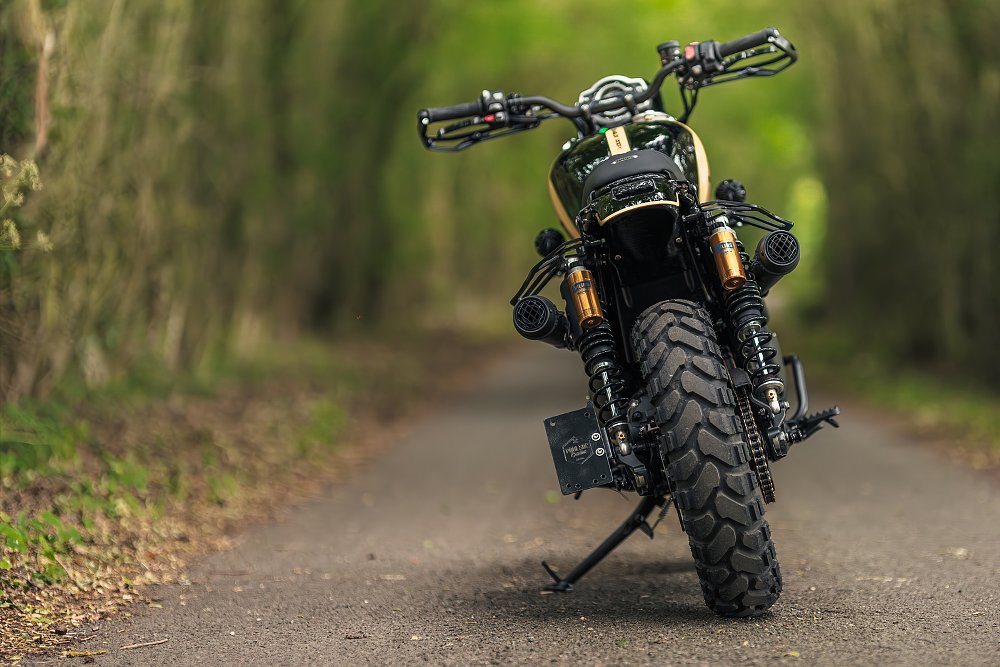
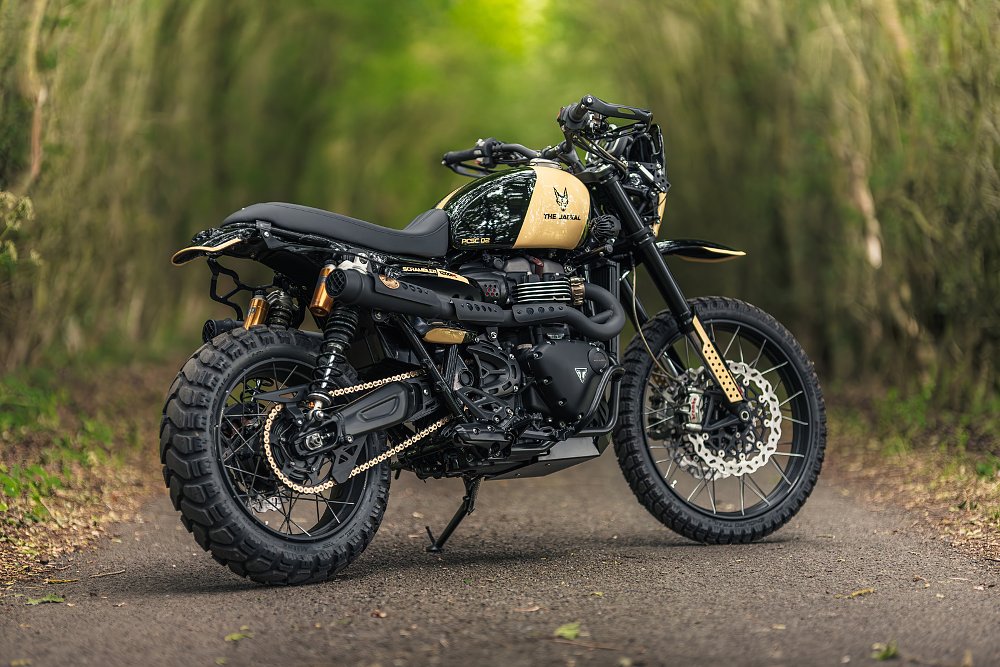
The first step of the build was to address the Scrambler's handling. To step things up in the rear, the factory suspension has been swapped with fully adjustable Öhlins shocks. Braking power has been upgraded with Galfer wave discs at both ends, while Mitas Enduro Trail rubber improves off-road surefootedness. The Scrambler's lighting has also been heavily revised. The turn signals are Kellermann Bullet Atto LED units, and auxiliary lighting comes courtesy of SW-Motech.
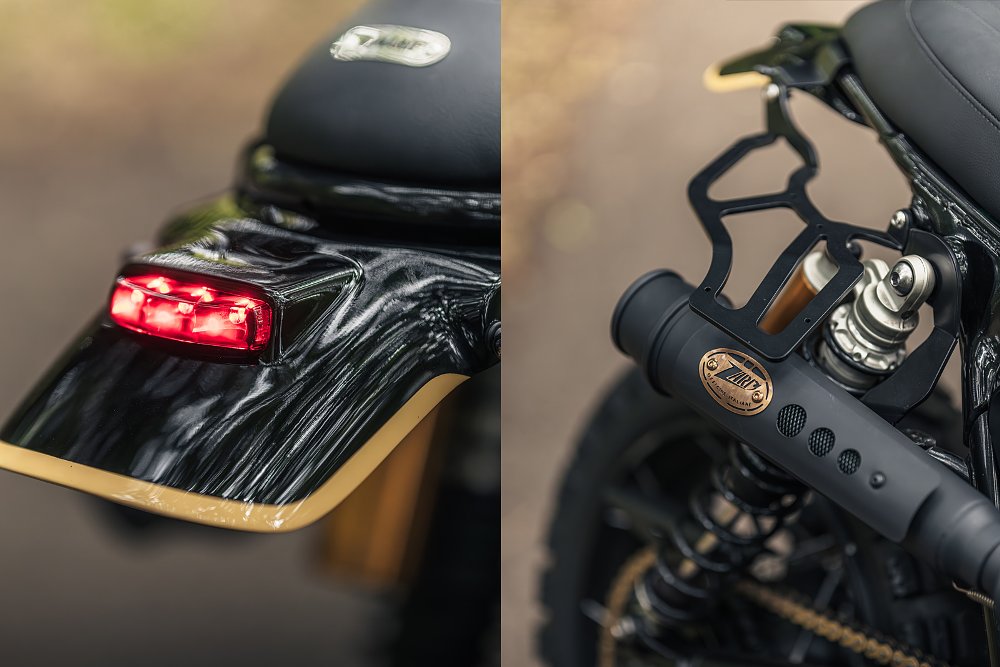
Black played a big part in Poulson's concept for this Scrambler. So they've added a plethora of blacked-out components. These include Patagonia Rally crash guards, a Tamarit Scrambler seat, duckbill rear fender, pannier bracketry, a DID gold-and-black chain, sprockets, and handguards. Several existing parts on the bike were also powdercoated black and a Zard two-into-two shotgun exhaust in black was added to give the bike a suitably aggressive sound.
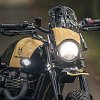
Achieving this look wasn't just a matter of bolting on aftermarket components. The Poulson team also created several one-off parts to bring it to life. These were mainly changes to the bodywork and included things such as the duckbill front fender, fork guards, radiator guard, chain guard, and the laser-etched ignition and clutch covers. The pièce de résistance here, though, is the bike's bespoke windscreen.
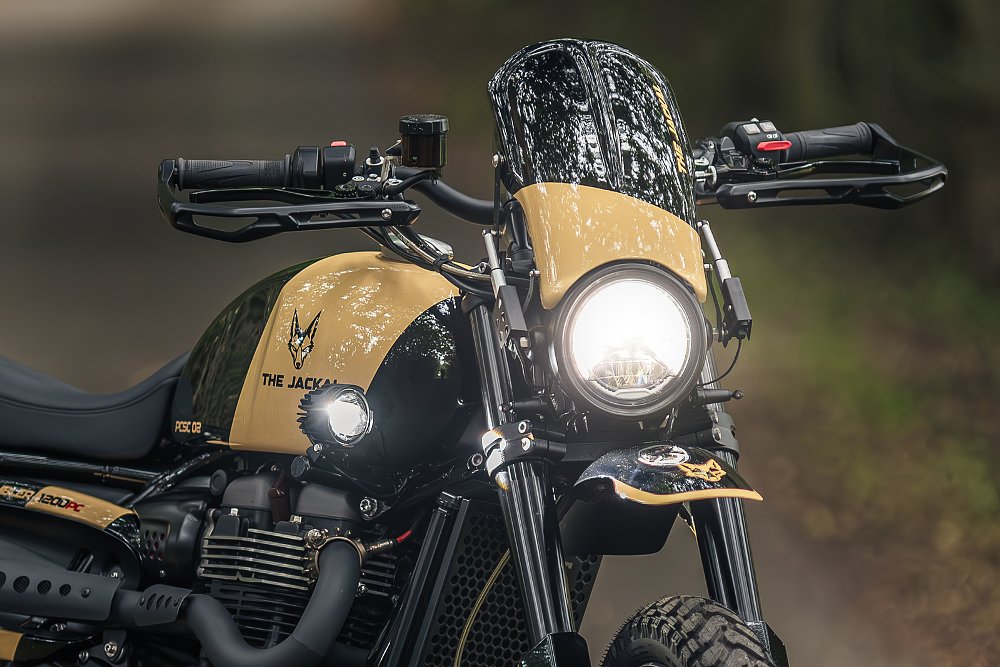
Actuated using a control switch integrated into the existing switchblocks, the windscreen can lower or rise as required. This allows the rider to lower the screen over the headlight, protecting it from damage for off-road riding and then raise it again on the highway to provide light and a bit of wind protection.
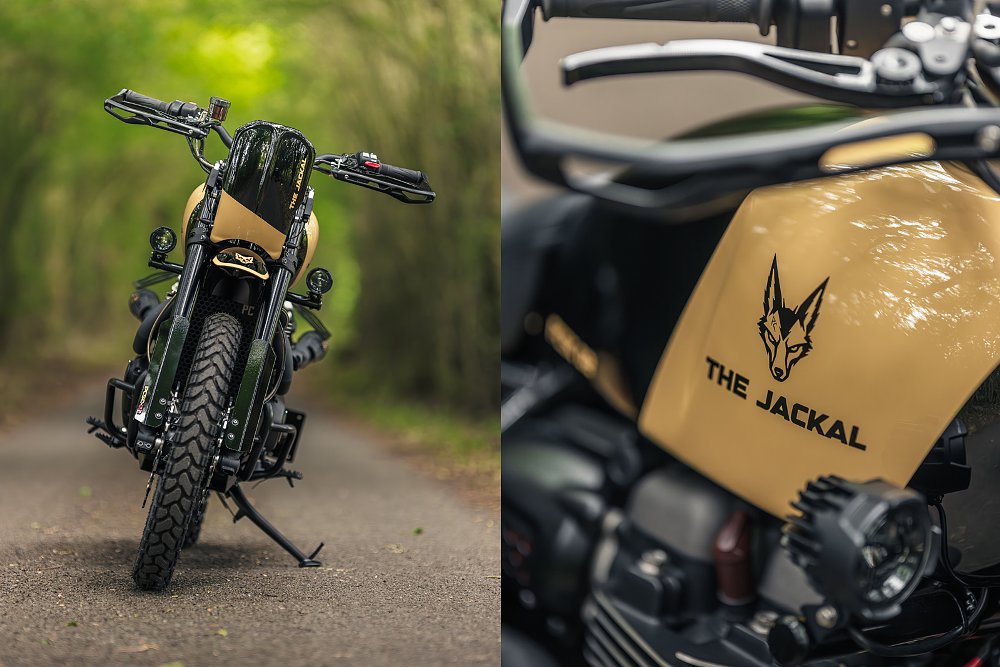
With the Jackal's mechanical and fabrication work complete, the final piece of the puzzle was its paintwork. The new color scheme uses sand tones over a black base, drawing inspiration from Dakar and British military livery.
The Jackal made its public debut at the 2026 Bikeshed Show in London a mere five weeks after the project began. That's almost as impressive as the motorcycle itself and a credit to Stuart and the Poulson Creative team.
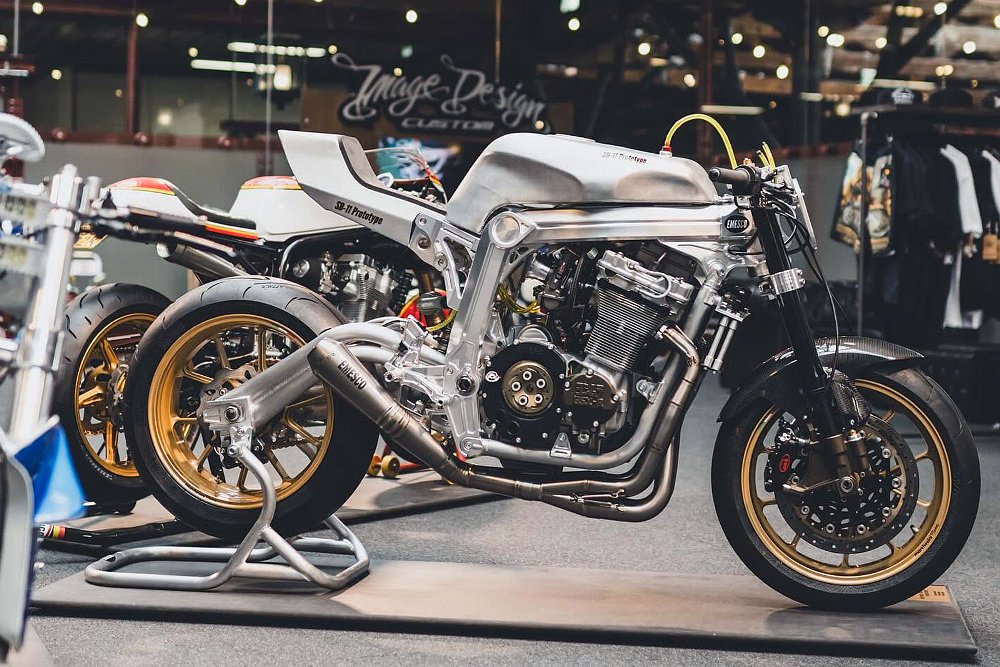
EMESCO Designs "SB-11 prototype" GSX-R1100
From watching drag races with his dad and grandfather as a boy to becoming a chassis mechanic for British Superbike teams, Matthew Walker clearly inherited the motorcycle gene. Today, he runs EMESCO Designs (Instagram) with his brother, Sam, fabricating frames and components for World Superbike, World Supersport, British Superbike, and Isle of Man TT machines.
With such extensive knowledge of motorcycle handling and performance, what kind of motorcycle would someone like Matthew choose for himself? The answer is none other than Suzuki's legendary GSX-R1100, but this Gixxer is anything but stock.
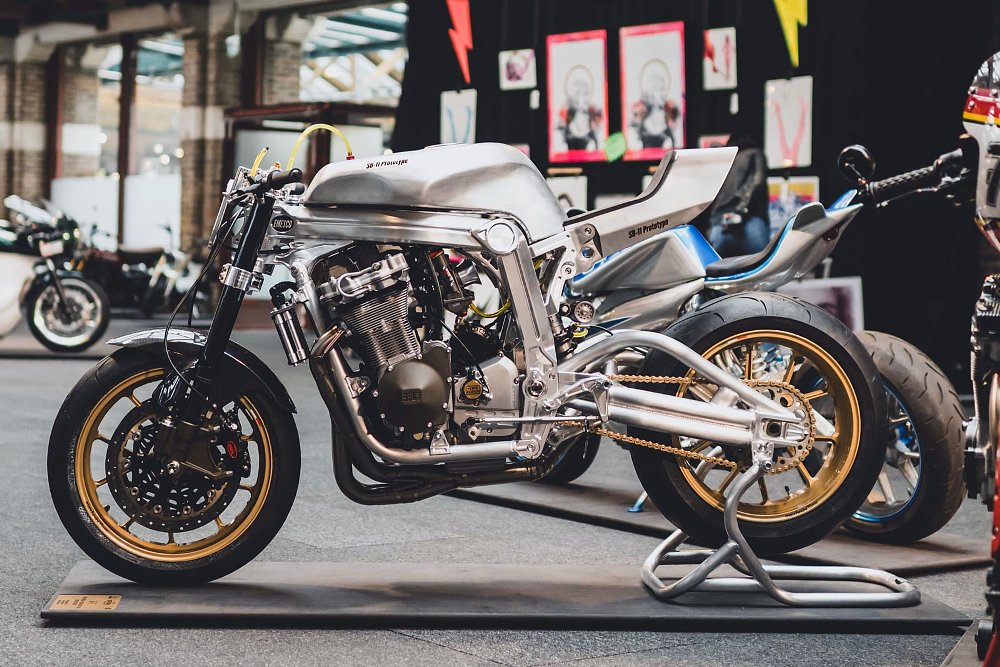
Given Matthew's expertise, it goes without saying there's no shortage of custom modifications on this bike. In fact, aside from the engine, almost everything on the bike was either fabricated or handpicked by the brothers to deliver the kind of performance you'd expect from a workshop that works with Superbikes.
"We wanted to build something unique, with MotoGP-quality performance but the retro muscle-bike look of the '90s," says Matthew. Taking cues from Guy Martin's Pikes Peak race bike and Moto2 machines, Matthew and Sam devised a plan to build a motorcycle that could take the top step of the podium should MotoGP ever introduce a Hooligan class.
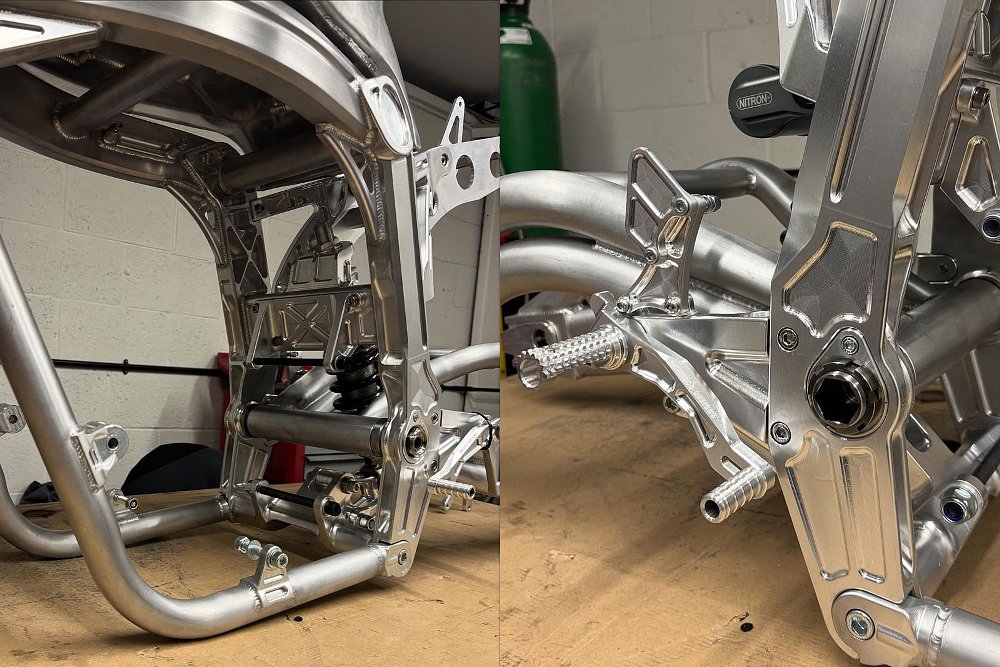
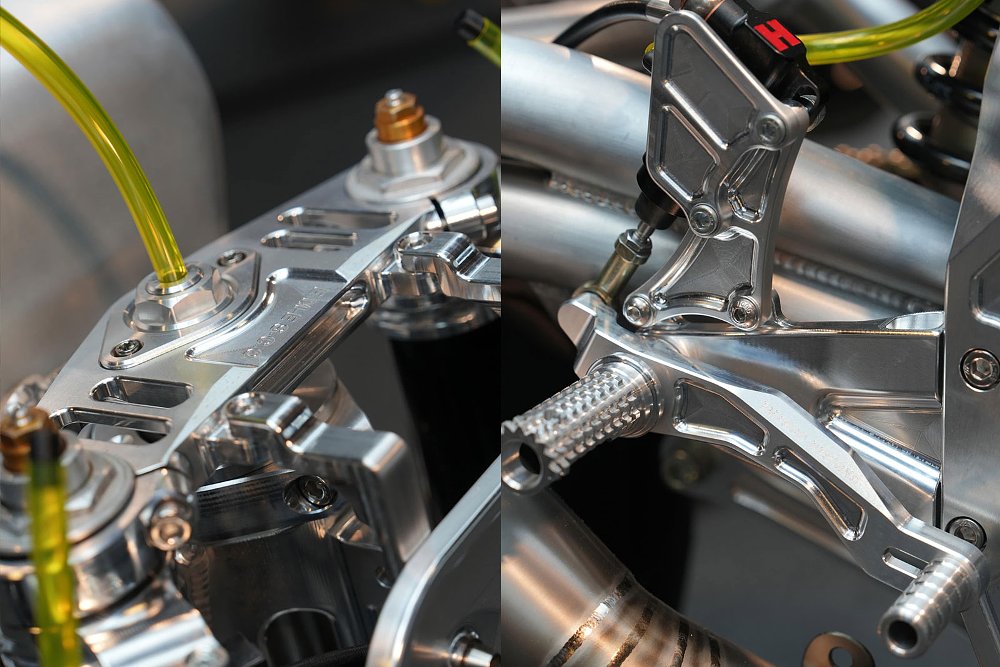
Naturally, the Walkers began this project with the development of a chassis. Drawing on their extensive experience, the brothers used a five-axis CNC to mill the bulk of the structure from billet aluminum. The CNC components were then welded together with a selection of handmade pieces to form the final structure. To complete the frame, more bespoke components were fabricated using similar methods, including the swingarm, subframe, yokes, suspension linkages, and engine mounts.
The extensive use of aluminum continued with a set of clip-on handlebars and rearsets. Using coachbuilding techniques, a tail unit and fuel tank were shaped by hand and a milled race number plate completes the race-bred aesthetic.
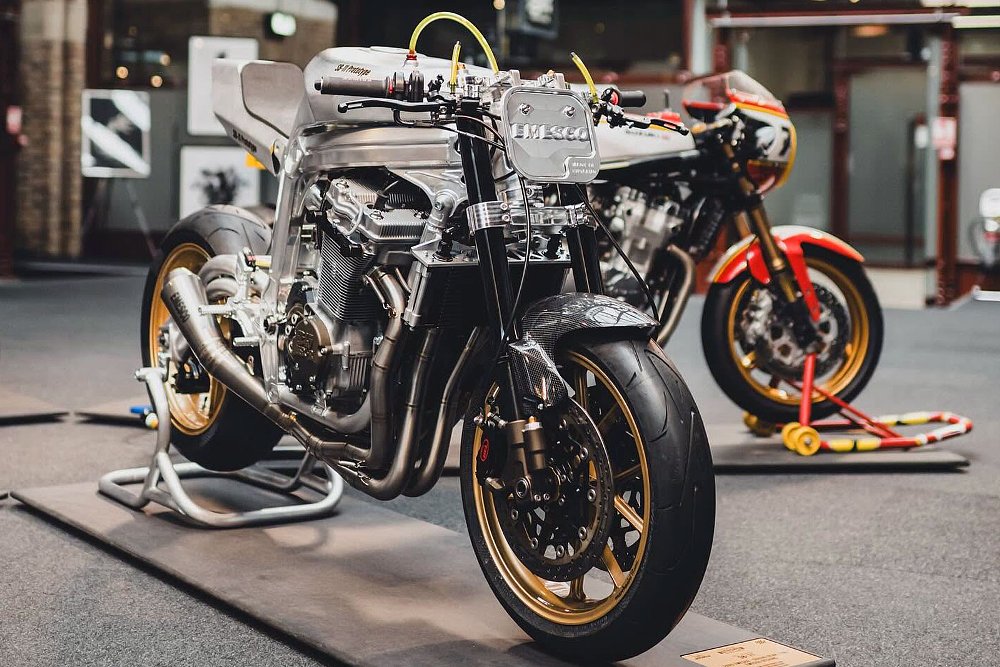
Although few would ever consider a GSX-R1100 underpowered, for the Walkers project, it simply wasn't enough. To remedy that, engine capacity has been increased to 1,340 cc, with performance pistons, Carrillo rods, double valve springs, a set of Yoshimura TMR carbs, and a custom four-into-one exhaust. Then, to ensure the handling was also up to spec, the Walkers put together a handling package that uses a fork from a Yamaha YZF-R6, a Nitron rear shock, and lightweight Marchesini wheels.
The result not only looks incredible, but with 180 horsepower pushing just 155 kilograms (342 pounds), there's no denying this is one hell of a hooligan.
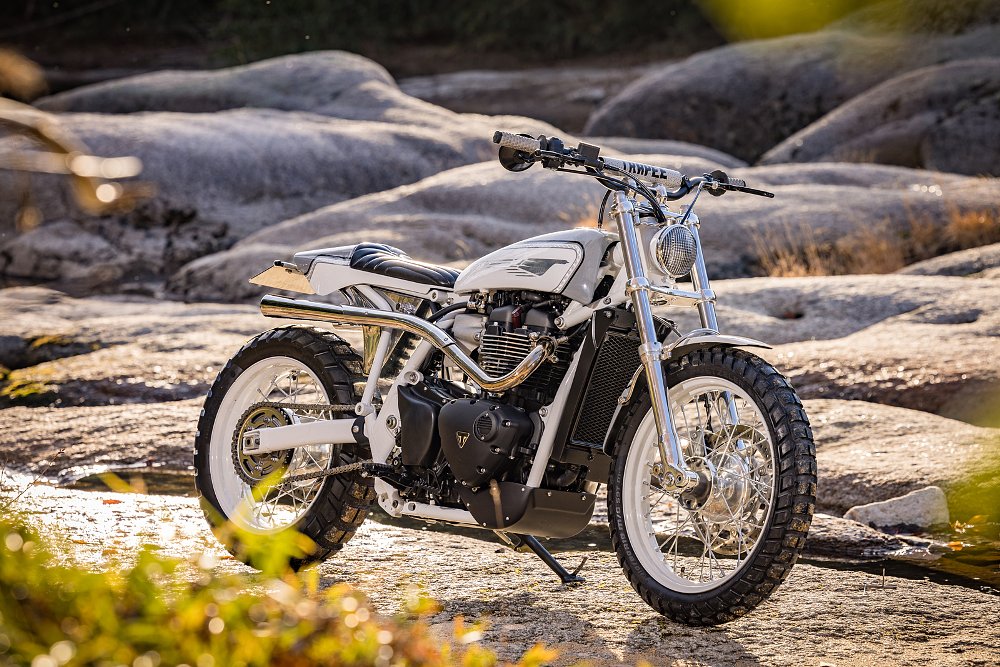
Heiwa "Trapee" Triumph Street Scrambler
Japan has produced more than its fair share of world-class motorcycle builders, but few have developed a style as instantly recognizable as Kengo Kimura. Since opening Heiwa Motorcycles (Instagram) in 2005, Kimura-san has built a reputation for creating motorcycles that look deceptively simple, yet boast extraordinary levels of craftsmanship. His work has earned him international acclaim, including Best of Show wins at the prestigious Yokohama Hot Rod Custom Show and invitations from both BMW and Triumph to apply his style to their latest models.
The Heiwa workshop is located just outside Hiroshima, where Kimura-san works his magic. Many of his customers want street-legal customs, but every now and then a client comes along looking for something a cut above the rest. This time around it was the owner of a 2024 Triumph Street Scrambler with his heart set on making an impact at the 2025 Mooneyes Yokohama Hot Rod Custom Show. Kimura-san gladly obliged.
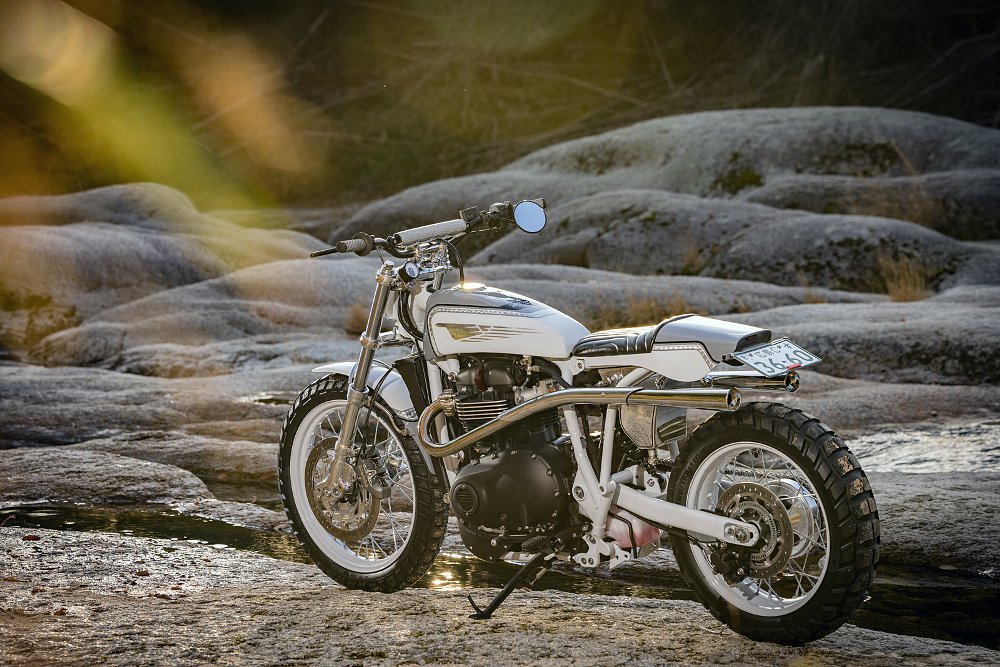
Unlike many other builders, Kimura-san does not lay down a concept to work from when building his motorcycles. Instead he envisions a design in his head, allowing for a more organic build. For this project, which he coined "Trappy," his goal was to give the Triumph a look more akin to vintage scrambler styling, but applying that approach to a modern water-cooled machine was no mean feat.
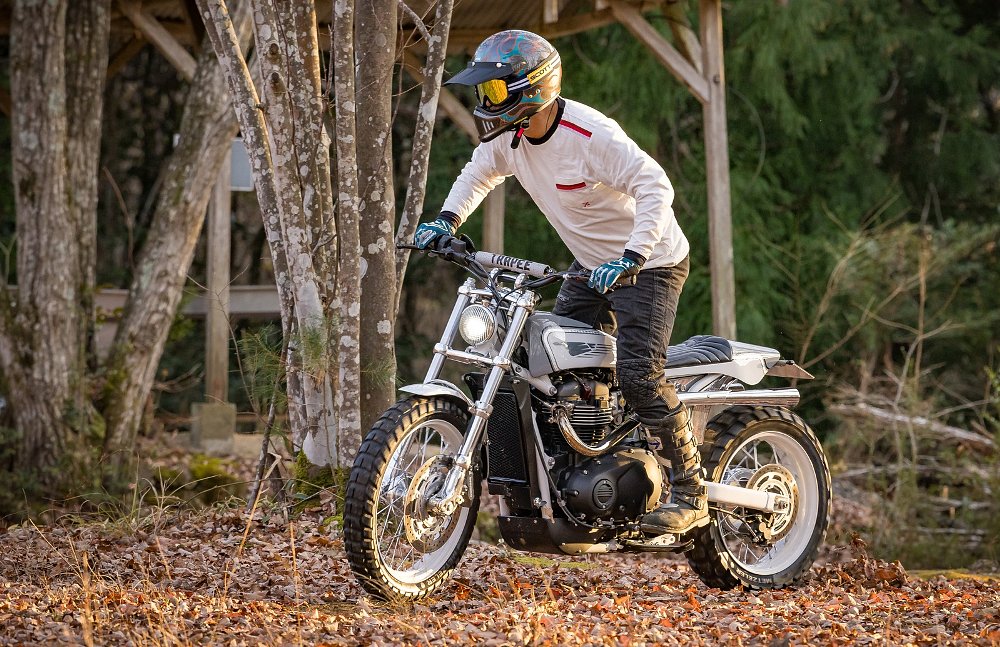
After a complete teardown, Kimura-san kicked things off with a redesign of the bike's frame. After removing the rear half, he added fixing points and fabricated a sleek, visually refined removable subframe. With the redesign of the subframe he also revised the rear suspension setup. Rather than the factory twin-shock arrangement, this bike now uses a single Öhlins shock. The shock affixes to a mount in the center of the subframe and to the swingarm, which has been lengthened by 50 mm (two inches) to increase the Scrambler's footprint. The front end has also been overhauled with the fitment of an Italian Forcelle fork sitting in a one-off triple tree that Kimura-san fabricated himself.
Kimura-san opted to not add side covers to the Scrambler during the rebuild. This added plenty of challenges in terms of keeping unsightly wiring and components out of view, but the biggest obstacle came from the fuel delivery system.
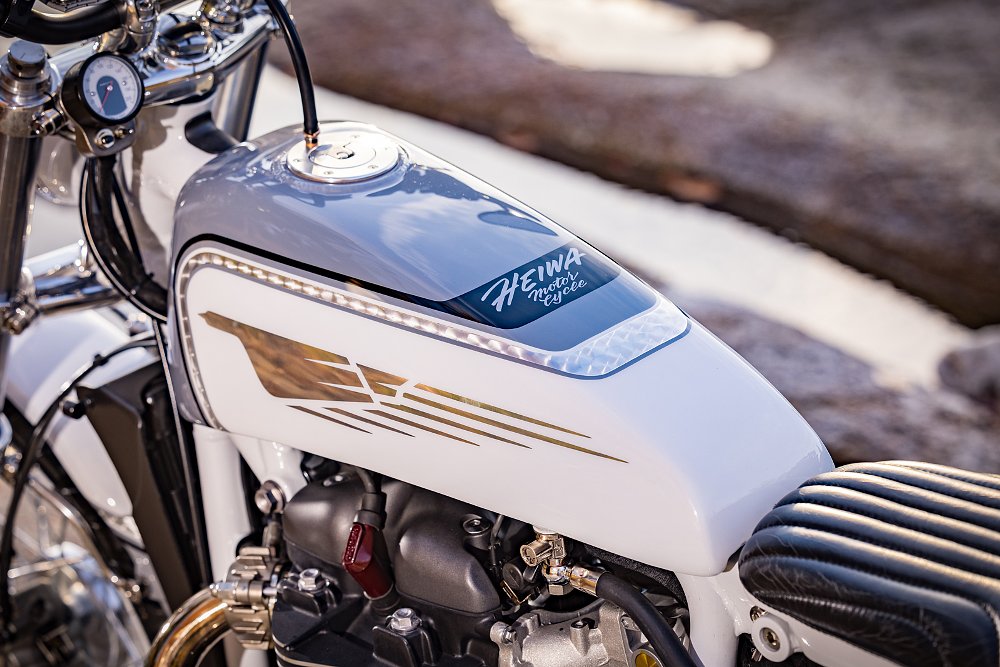
"We fabricated an aluminum fuel tank solely for holding fuel, while a separate tank containing the fuel pump is mounted under the seat," Kimura-san explains.
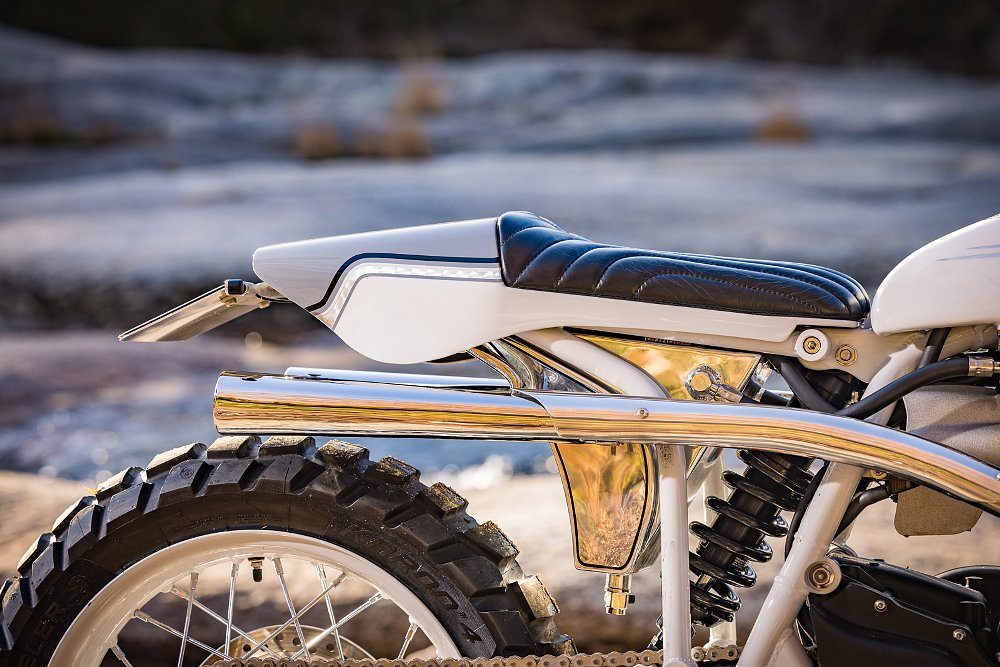
The rest of the bodywork is, of course, bespoke, too. The low-profile tail unit, front fender and headlight were all handmade from aluminum to complement the bike's desert sled styling while keeping weight to a bare minimum.
While Kimura-san built an impressive number of parts on Trapee, the bike still has its fair share of aftermarket add-ons. Sitting atop the Forcelle fork is a Renthal handlebar wearing Pro Taper grips. A tiny Motogadget Motoscope speedometer sits neatly to the left of the top yoke and the lighting has all been converted to LED units. To finish off the seat, Kimura-san tasked local upholsterer Ya Sest Custom with wrapping it in leather. And finally, Shaking Speed Graphics laid the grey and white paintwork, complete with hot rod-esque silver leaf and black pinstriping.
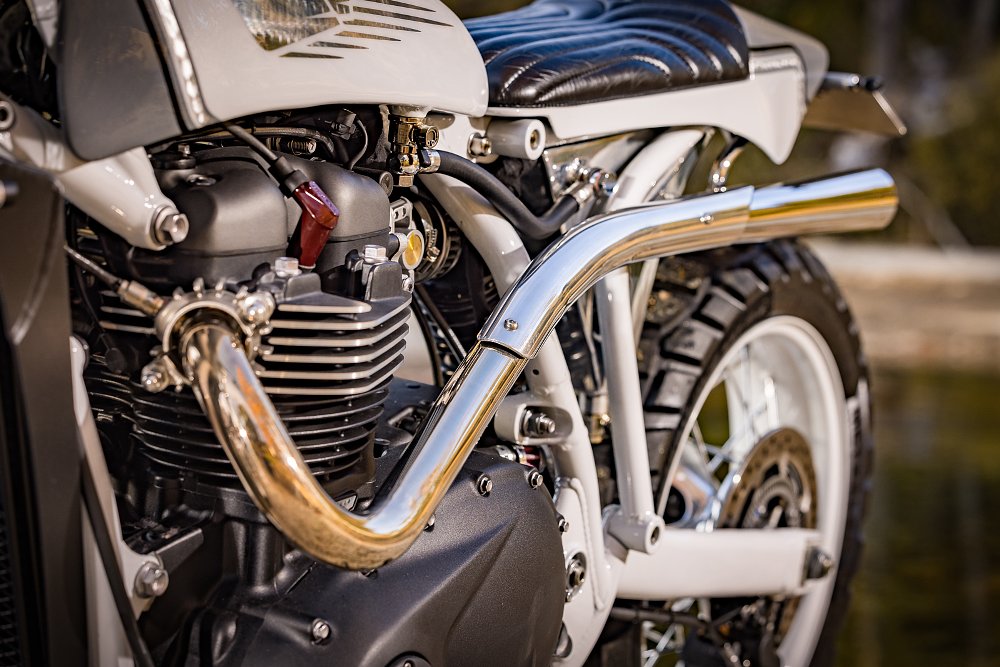
As for engine performance, a set of custom pipes and high-flow filter unlock a bit of extra oomph, but most of the improvement comes from the dramatic reduction in weight.
Trapee is the perfect example of what makes a Heiwa build so special. Kimura-san has transformed the modern Triumph into a motorcycle that looks vintage, rides modern, and is entirely unique.