

 Membership
 Riders Preferred Membership
 Shop by Vehicle
 Track Order
 Contact Us
Once a self-sufficient motorcyclist has built out a proper tool kit to handle basic maintenance and repair tasks, they may turn their attention toward equipment that will make regular operations easier. That’s where a set of motorcycle stands comes in.
Motorcycle stands support your motorcycle in an upright position with one or both wheels off the ground. This makes things like oil changes, chain lubing, and tire replacement significantly easier and quicker. For the DIY rider, stands can be a game changer.
However, like selecting a new chain and sprockets or choosing the right helmet, there’s some key info you should know before making a purchase or levering your beloved bike off the ground for the first time.
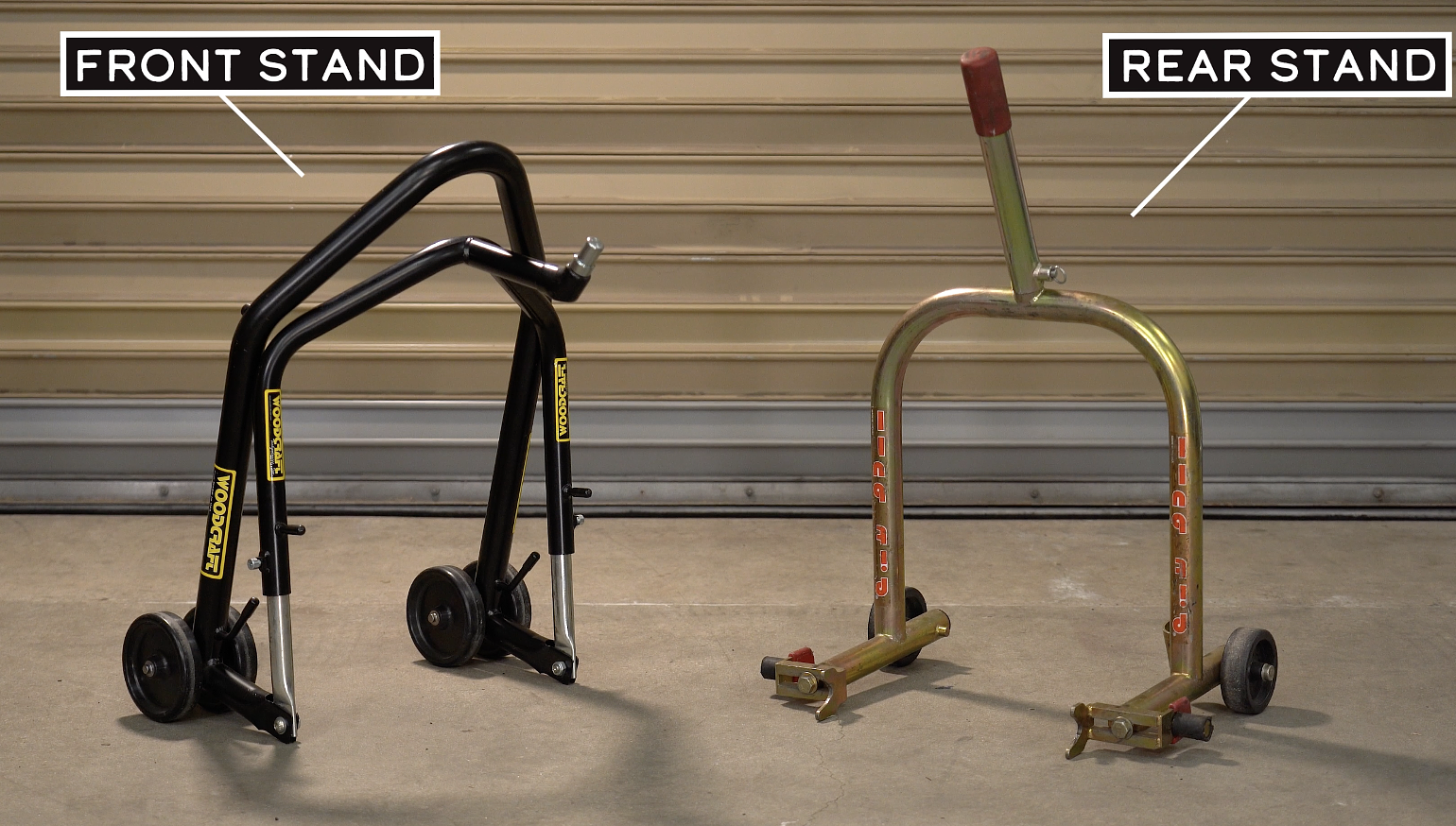
For starters, stands come in both front and rear configurations. Rear stands are designed to lift the back tire off the ground and support the bike all on their own. Front stands, however, are only meant to be used in conjunction with a rear setup. So if you’re aiming to get the front wheel off the ground, you’ll need two stands.
For regular maintenance and storage purposes, a rear stand is a slam dunk, and for the most part they’re universal and adjust to fit different width swingarms.
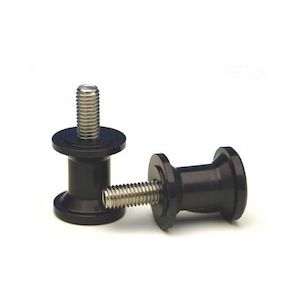
Still, you’ll want to consider your bike’s lift points: Are there swingarm spools in place, or threaded bungs so you can add spools? If so, a stand with hooks is the way to go. No option for spools? A stand with platforms or pegs is what you need. Better yet, get one that’s got reversible mounts, so you’re ready to lift any bike that rolls into your garage. Well, unless it’s a bike with a single-sided swingarm, but there are stands for those, too.
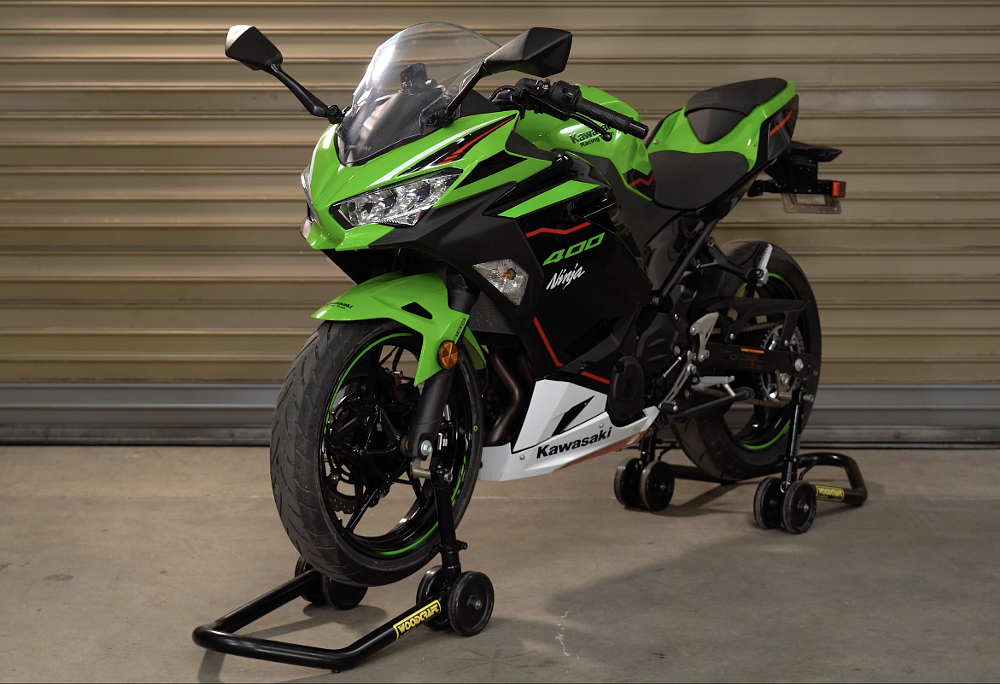
If you’re after a front stand as well, know that they come in two flavors: fork stands and frame stands. The fork stand is the most common and supports the bike using cups, pins, or platforms under the bottom of the fork legs. A frame stand lifts the bike using a pin that slips into the opening in the bottom of the triple clamp, so you can not only remove the front wheel but the fork, too. The pins come in different diameters, so measure your headstock opening before ordering.
When it comes to buying stands, as with most things, you get what you pay for. There are cheap, $80 options out there, but they may flex and wobble, which isn’t what I want with my bike. Brands like Woodcraft and PitBull are more expensive, but they’re built to last and have features and adjustments that you’re not going to find on cheaper options. As the saying goes, buy once, cry once.
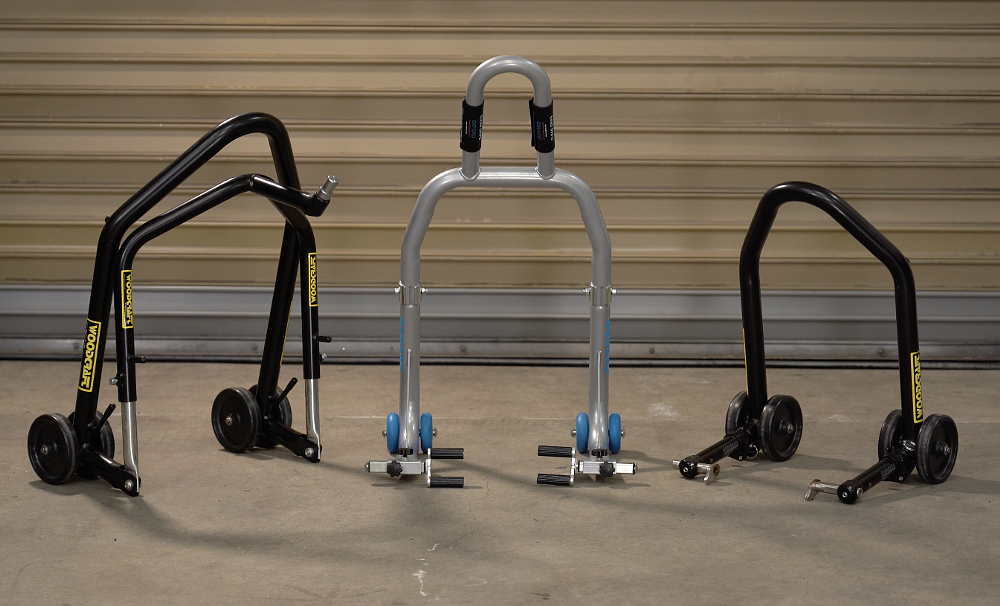
If you’re hesitant to drop $400 on a set of stands, consider this: Most shops charge half as much to change tires if you bring them just the wheels, and they can usually get them knocked out while you wait. So by having your own stands you can get a discount on tire changes, which is going to help offset and eventually pay for the cost of the stands.
OK, now that you have a rear stand, it’s time to use it. Start by facing the rear of the bike with the rear stand in your dominant hand. Grasp the passenger seat or subframe and brace the bike against your hip to hold it upright, then move the stand into position. Once the stand is in contact with the swingarm and you’ve applied some pressure to the handle, the stand will be supporting the bike, and as you push the handle down the stand will pivot under the bike and lift it up. It can be a little nerve wracking at first, but you’ll get the hang of it.
As far as the front stand is concerned, since the bike is already on a rear stand and stable, there’s no balancing required. You just need to position it under the fork bottoms and then press the handle down. For frame stands, you insert the pin in the bottom of the triple clamp, which may mean maneuvering around a brake line or removing a weather plug.
Once you’ve completed whatever work it is you’re doing to your bike and it’s time to take it off of the stands, the front is pretty straightforward. It’s the reverse of putting it up on the stand. When it comes to the rear stand, make sure the side stand is deployed and tilt the bike to the left as you lever it down onto the ground.
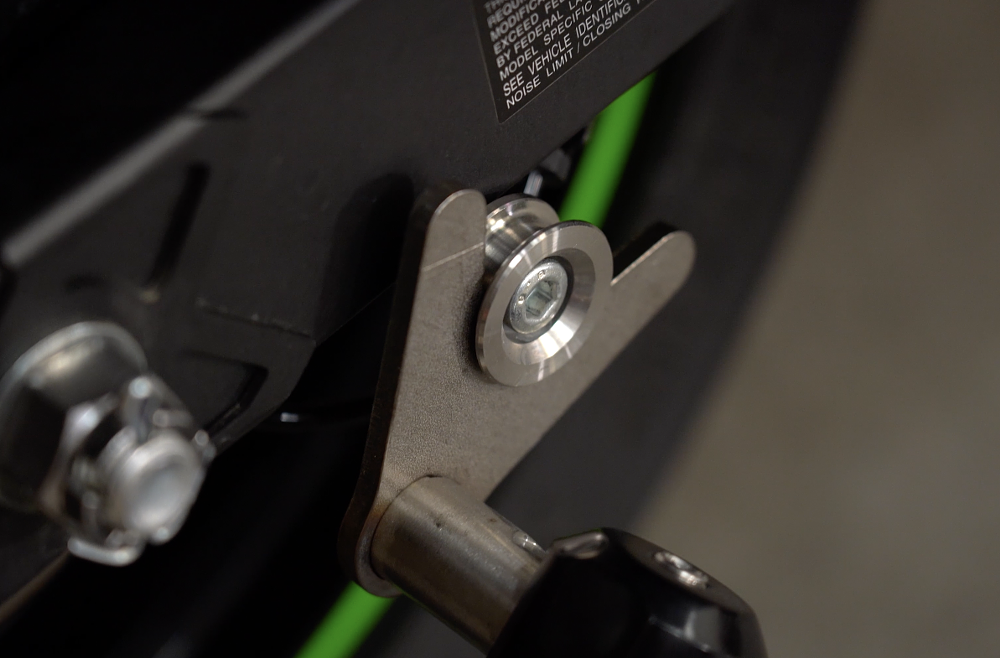
A few tips. If your bike will take spools, install them. Using a fork-type stand is preferable since spools positively locate the stand on the swingarm, which makes the stand easier to use and quite a bit more stable. I also like to adjust the width as wide as it can go while keeping the hooks in the trough of the spools. More clearance between the hooks and the swingarm means you’re less likely to scratch your paint.
For platform, pin, or cradle rear stands, aim to position the supports just ahead of the axle, or wherever the swingarm is flattest.
Whatever style of stand you choose, and whether you just get a rear stand or a front and rear combo, they're sure to make working on your bike a lot easier.
Image Gallery
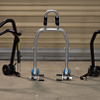
Image Gallery