
 Riders Preferred Membership
 Log In
 Shop by Vehicle
 Track Order
 Contact Us
Motorcycle design has become stale. Stalled. The Superbike horsepower races are over or boring, the branches on the ADV tree are sagging with plump and overripe machines, and the small-bike craze has leveled into normalcy. Wings? Yawn. Huge TFT screens? Meh. Radar systems? In this economy? And no, dammit, I don’t want another round headlight; what is this, 2014?
There’s arguably only one place in motorcycling where a wildfire of R&D activity has broken out, and that is automatics. Transmissions, clutches, or a combination of the two. Y’see, most motorbikes follow a set of agreed-upon (or mandated) rules for how they work — clutch lever and shifter on the left, five or six gears to select, neutral between first and second, done deal.
The world of automatics is anything but that. Sometimes neutral is all the way at the bottom. Sometimes there’s a parking gear at the bottom, and sometimes there’s a seventh gear at the top. Sometimes you use your fingers to shift and sometimes you use your foot — sometimes it’s neither, sometimes it’s both. Centrifugal clutches, electronic clutches, electronic shifters but also regular ones. It’s the Wild West, and we here at Common Tread found ourselves curious how they all compare.
A brief history of shiftlessness
Automatic shifting isn’t a new idea in the world of motorcycling. The notion of a continuously variable transmission, or CVT, dates back to before WWI. Honda spent plenty of time and money in the 1950s and ‘60s developing the Badalini concept, and then eventually dabbled with automotive-style, torque-converter automatics, as did Suzuki and Moto Guzzi.
Husqvarna employed a centrifugal clutch and a set of rudimentary sequential clutches to make automatic off-road and enduro machines in the 1970s — Honda had automatic motocrossers, too, in the early ‘90s. A dozen or so years after that, in the mid-2000s Yamaha sold an automatic version of its FJR1300 sport-tourer and Aprilia offered the CVT-equipped Mana.
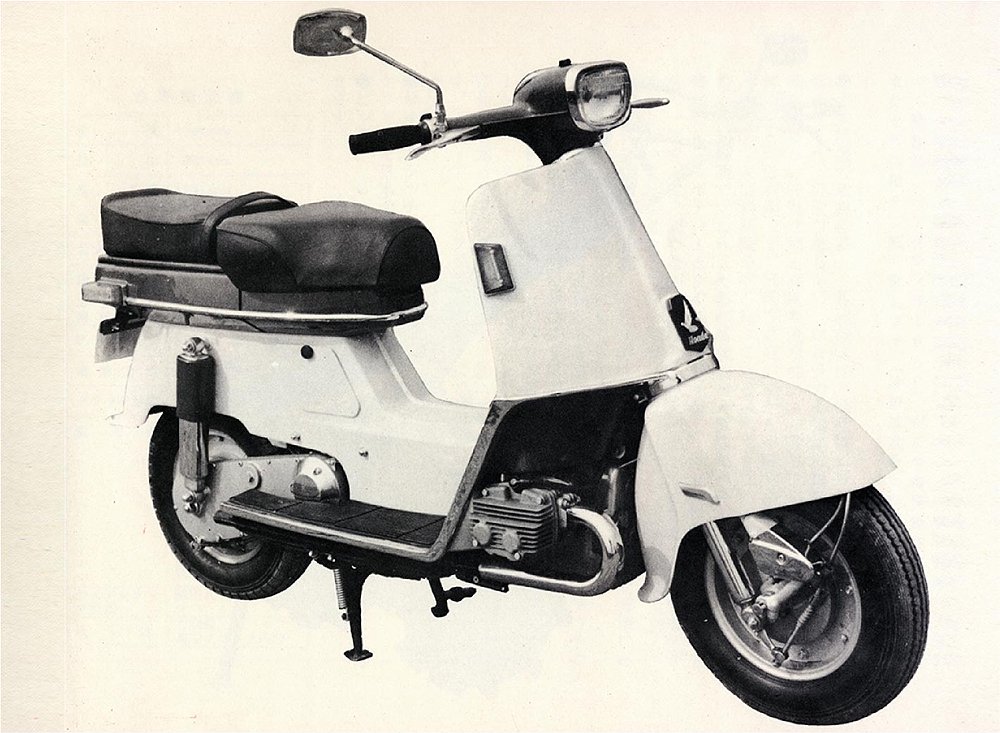
Around that time Honda had parlayed an ATV transmission into road-going automatics for street use, for example the DN-01. Honda was already at work adapting yet another automotive transmission technology, though, which debuted on the FourTrax ATV but soon made its way to motorcycles — the dual-clutch transmission, or DCT.
It’s been 16 years since the debut of motorcycle DCT in the VFR1200F and, to hear Honda tell it, the system has been a success. Over the past decade especially, Honda’s DCT systems have been adapted to multiple engine platforms and styles of machine. The development and distribution of DCT has been impressive, but the reason it matters in the context of this test is the sales numbers.
Around 70% of Honda Gold Wing and Rebel 1100 buyers opt for the DCT over the standard manual gearbox, and about half of NC700/NC750 models roll off the showroom floor with no clutch lever. Other brands seem to be taking notice. Over the past couple of years, BMW, KTM, and Yamaha (not yet available in the U.S.) have built and begun selling their own versions of automatic gearboxes. Even Kawasaki has one, as an incidental slice of technology on a hybrid motorcycle.
Which brings us back to this lawless society of current automatic transmissions, where up is down but sometimes up is up. Where finding neutral is easier to do, as well as harder to explain, than ever. Where conventions are being ignored and rules are being rewritten. Our goal was to test all of the systems back to back on a multi-day ride and break down how the technologies differ in theory, and in practice.
The automatic state of the art
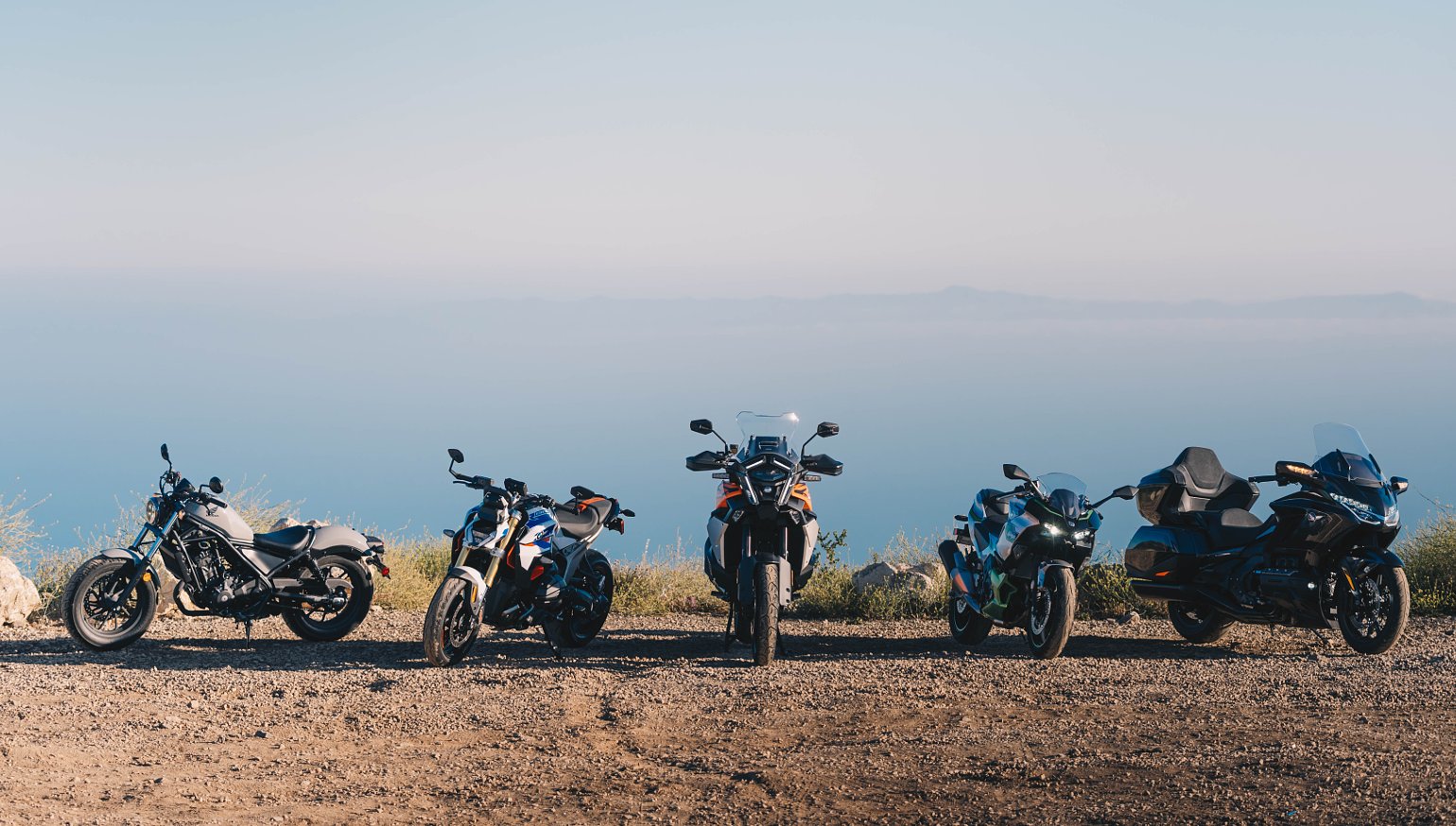
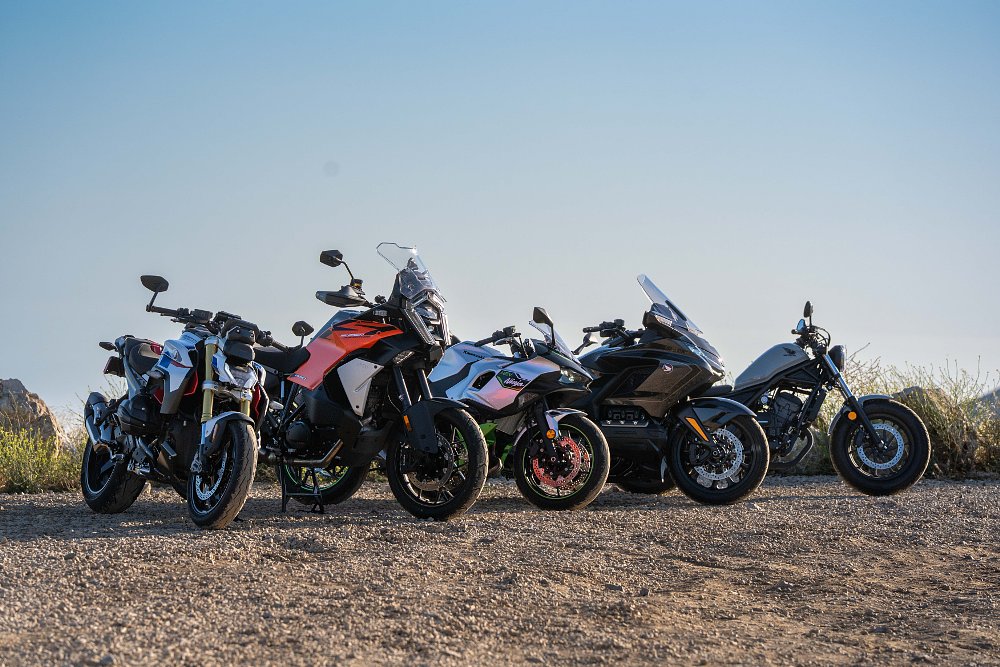
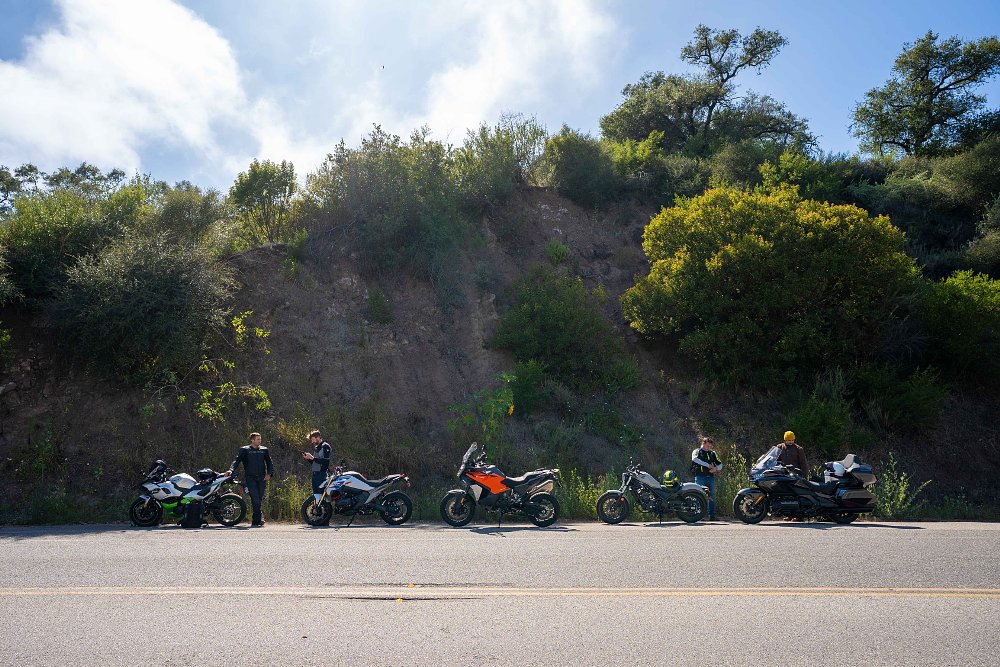
In order to understand all of the options we have available, the Common Tread team collected as many current automatic options as possible. Our motley group of machines ended up including BMW’s R 1300 R with ASA, Kawasaki’s Ninja 7 Hybrid, KTM’s 1390 Super Adventure S EVO with AMT, and Honda’s Gold Wing Tour with DCT. Then we added Big Red’s Rebel 300 E-Clutch — not technically an automatic transmission but still quite relevant.
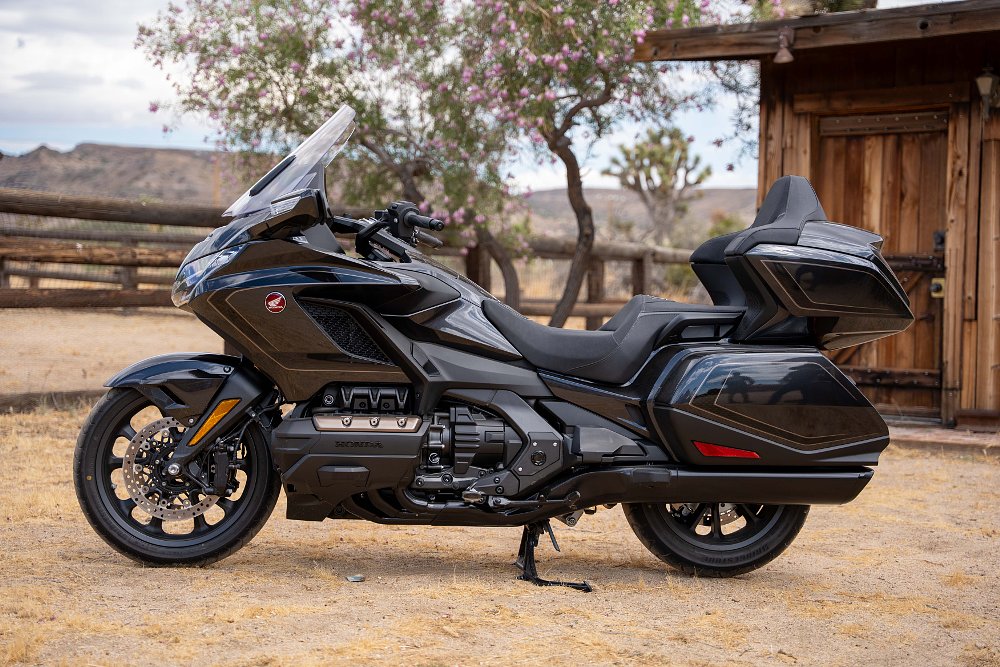
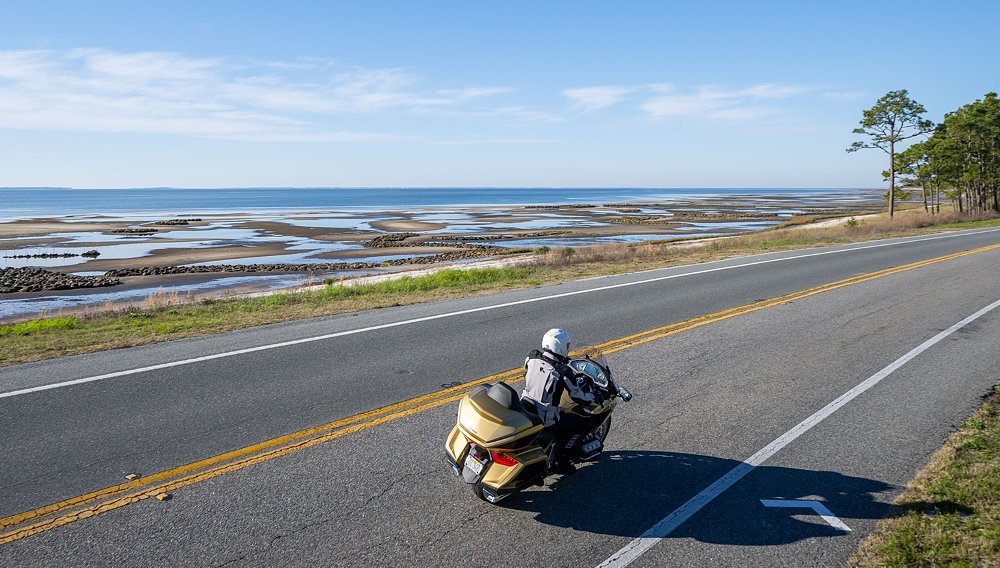
The Gold Wing with DCT is probably the best understood of the bunch. Honda’s dual-clutch system has been around longer than any of the others and it most accurately mimics the automatic-transmission experience we are used to in a car. That is: Select “D,” then hit the gas and go (indeed, some cars use similar technology to switch power between clutches to expedite shifting). Changes between the seven forward gears aren’t literally seamless but by all accounts it is as close as any standard-transmission’d motorcycle has ever come. It’s the result of decades spent trying to perfect automated gear changes, not to mention an engine and powertrain cut from whole cloth to include the system.
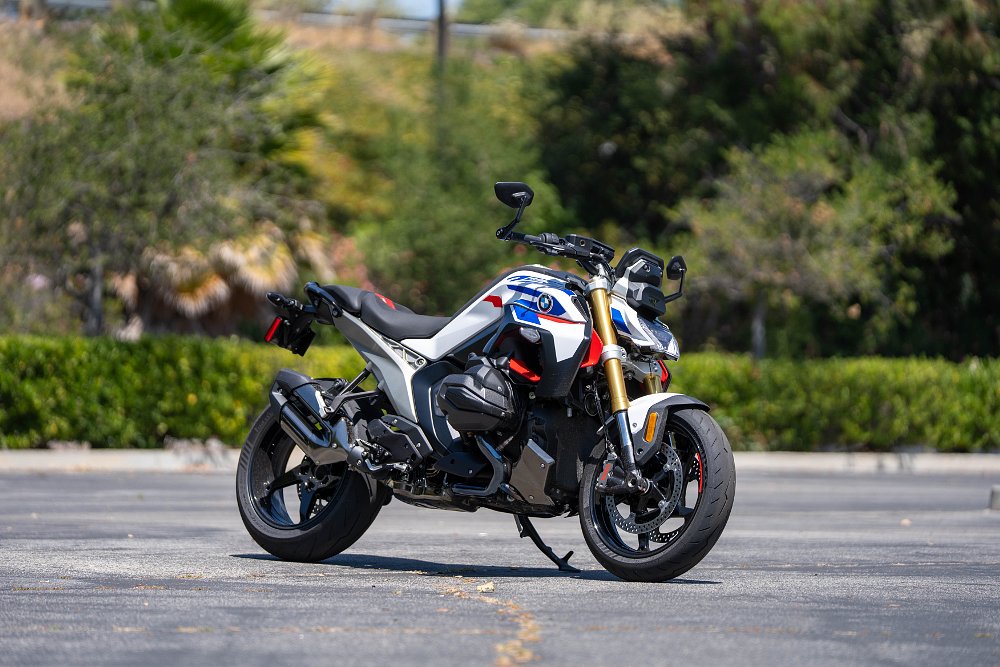
BMW’s Automated Shift Assist and KTM’s Automated Manual Transmission take a different tack. Tried-and-true flagship powerplants — BMW’s 1,300 cc boxer and KTM’s 1,357 cc V-twin — with a couple of new tricks built in to automate a standard transmission. Kawasaki took an even stranger road to an automated transmission, which was to take on the task of delivering the world’s first true hybrid motorcycle and along the way introduced an automated version of a standard gearbox with hydraulically actuated clutch plates. Similar to Honda’s DCT, there’s no shift pedal at the rider’s left foot, only little paddles for the rider’s left thumb and index finger.
And then there’s Honda’s E-Clutch, which amounts to a bolt-on system that automates clutch engagement upstream of the plates. That means there’s still a clutch lever to use if the rider wants to override the system, and also a typical foot shifter that must be used to change gears. Very much an automatic clutch, in other words, but not an automatic transmission. (For a deeper dive into how each machine's system works, the linked articles above on the individual bikes will help fill in the gaps in this comparison.)
Old cogs, new tricks
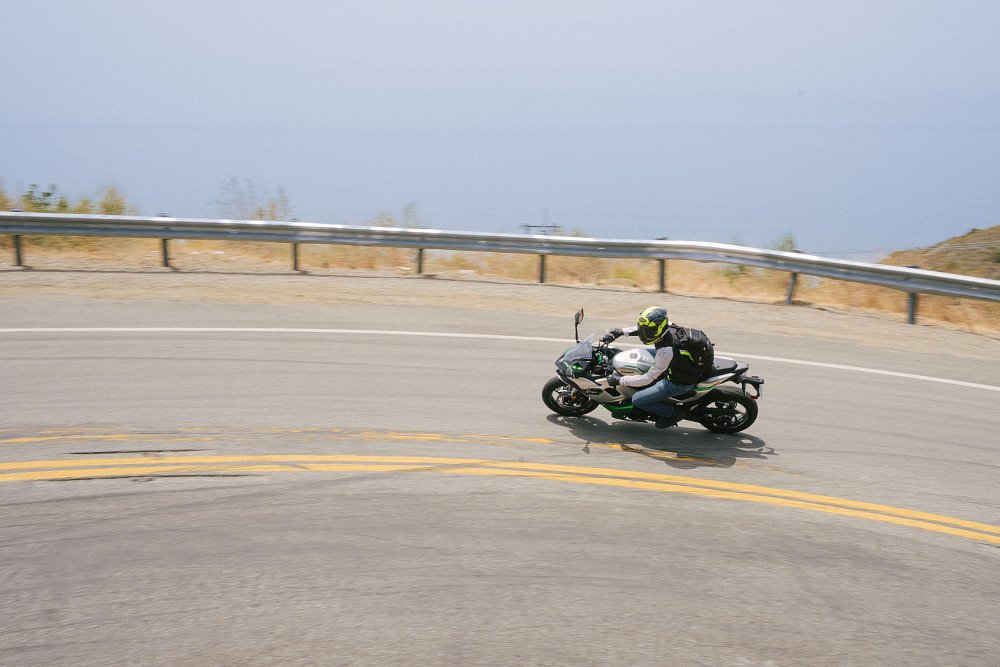
As the five of us hit the road, some things became clear very quickly, and foremost was that Kawasaki’s Ninja 7 Hybrid has a few problems. The team’s feelings were largely an echo of what I wrote in my ‘round-town review of the Ninja 7, except that when I rode the bike by itself I was at least charmed by the idea of the hybrid drive. Next to these other bikes, everything from side-to-side handling to the dash and button layout seemed woefully underbaked.
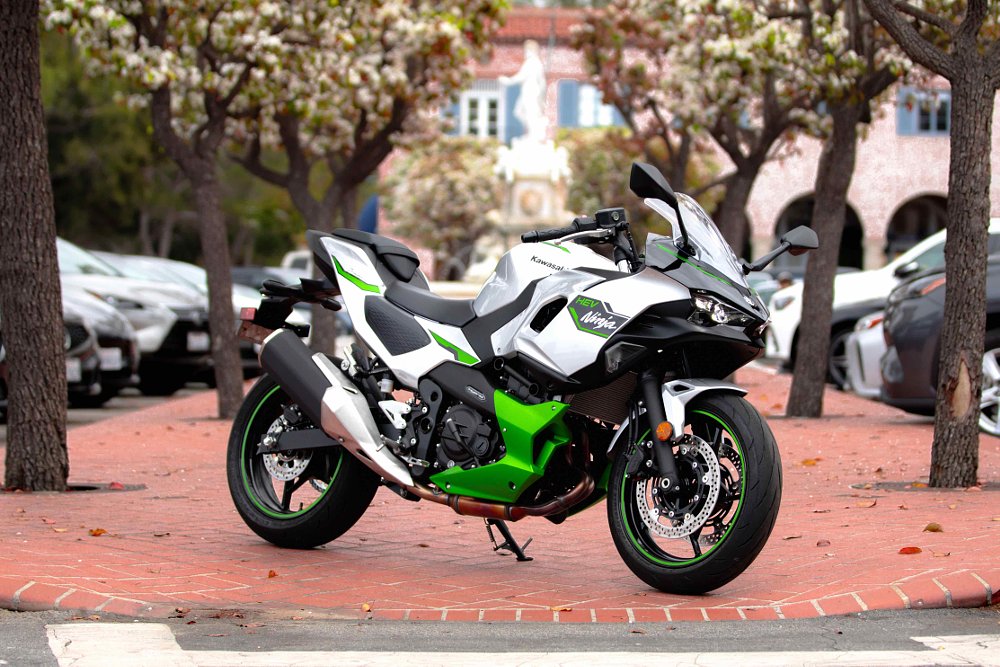
The hybrid powertrain does create some problems, most notably weight and wheelbase, which makes for slow handling, but the automated shifting is the biggest miss. Scanning the team’s test notes I found multiple uses of the word “abrupt,” as well as a sprinkling of “baffling,” “clumsy,” and one line that simply read, “bad, bad, bad.” To be fair, the automatic clutch engagement when leaving a stop is mostly tolerable — sluggish when you try to accelerate quickly, but it is largely predictable.
The core of the problem seems to be how the shifts take place, which is a full actuation of the clutch, as though a lever was being pulled, for each upshift and downshift. It feels excruciatingly slow compared to a basic quickshifter and, because shifting is automated (triggered by the rider or the system), it is inherently out of sync with the rider’s brain. The full clutch actuation for every shift, combined with programming that refuses to let the engine rev properly, even in Sport mode, makes the whole experience amazingly awkward.
On the other end of the spectrum was Honda’s Gold Wing, where testers used the words “intelligent,” “brilliant,” and “incredibly smooth” to describe using the G-Wing’s DCT. Everyone fell in love with the Gold Wing as a machine, but more importantly than the luxury and unbelievably adept handling, the transmission quietly shines. It melts into the riding experience like soft butter onto hot toast, simultaneously disappearing and yet making everything better.
Every motorcyclist worries that losing control over clutch engagement and shifting will tarnish or detract from the ride, but to quote one rider who had never ridden a Gold Wing DCT before this test: “I truly don't think you’ll miss not having a clutch.” As a cherry on top, everyone seemed to like the finger paddles used to manually trigger DCT gear changes, as well as the system’s reaction to suggested gear changes in auto mode. Five stars, full marks, would recommend if you have the means, et cetera.
Another way to frame Honda’s DCT as it compares to Kawasaki’s Ninja 7 transmission is that you get what you give. While nobody should ever doubt Kawasaki Heavy Industries’ knack for engineering, it doesn’t seem likely that Team Green was working on the Ninja 7’s gearbox 20 years ago. Honda, however, was doing just that — an engineer named Dai Arai started working on how its DCT system should shift on a motorcycle in 2007, before there was any precedent for predictive shifting or data-informed gearbox automation.
DCT has already come a long way, in other words, and it shows. Most of these other systems have only just landed in the world of two wheels, and while Kawasaki may have bitten off a little more than it could chew this time, BMW and KTM have come to market with pretty polished options.
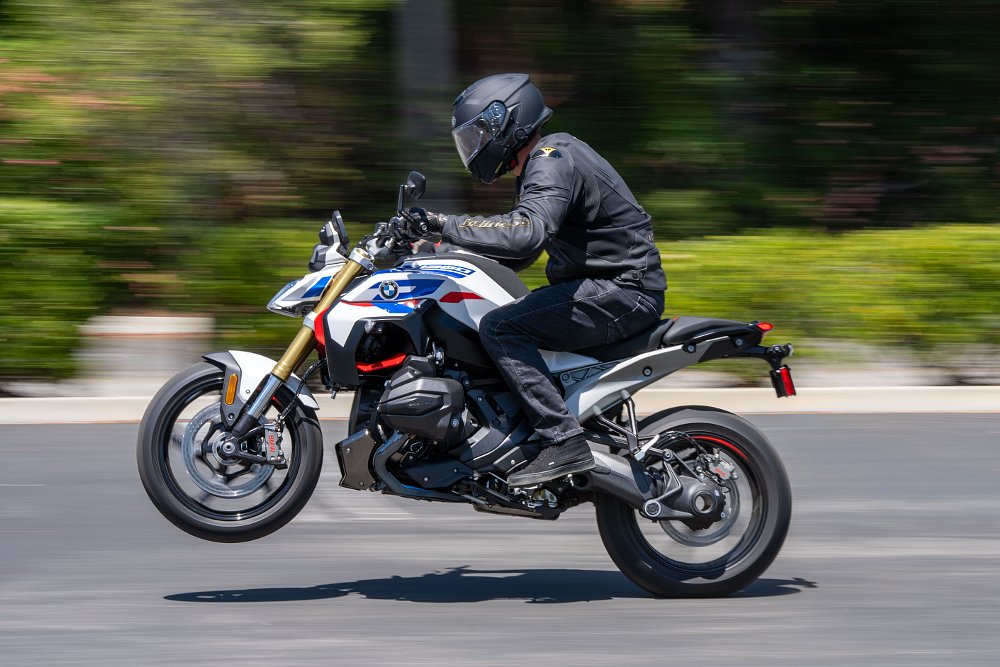
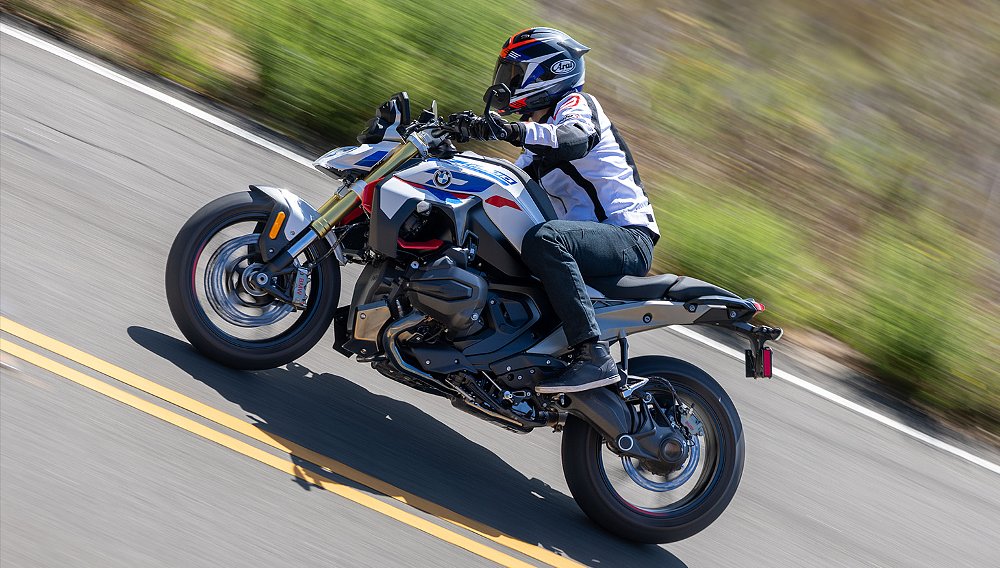
BMW’s ASA uses an internal servo that operates the clutch pack instead of the rider’s left hand, and another little motor to spin the shift drum inside the engine, instead of the rider’s left foot. Mostly, it works well. As the rider eases the throttle open and engine RPMs rise, the clutch plates gently engage to push the bike forward. Much like you or I would do with a clutch lever.
Once the bike is moving, and in M mode, the foot shifter works like a quickshifter would on any other equipped machine. Up for up, down for down. If you’re not in the mood to shift, select D mode and the bike does the shifting for you, based on the ride mode, the perceived aggression of the ride, and probably your astrological sign if you’ve entered that in the menu.
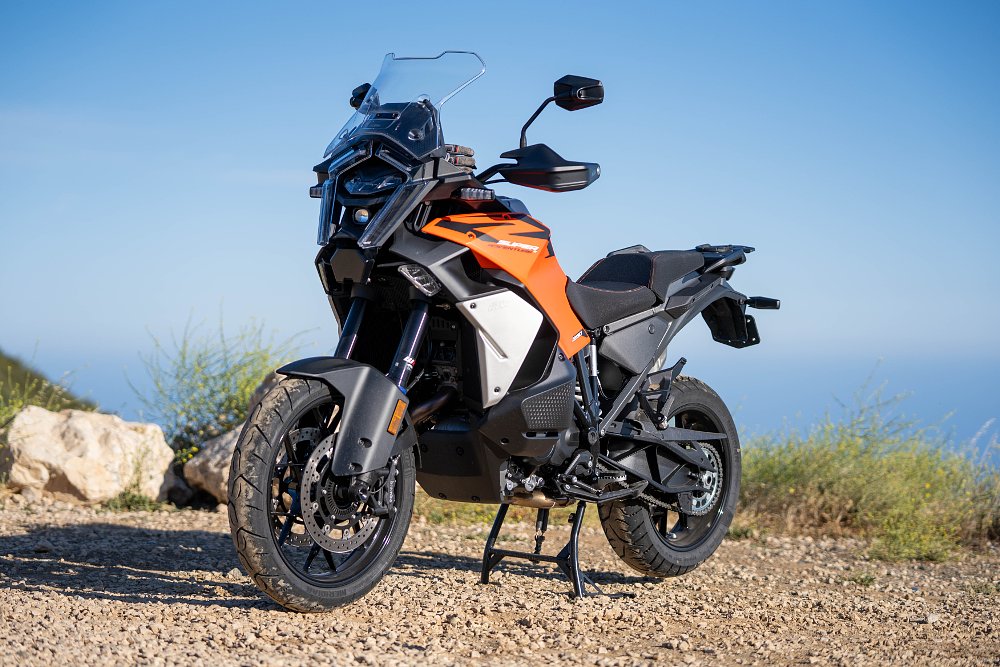
If you were to jump over to KTM’s 1390 Super Adventure S EVO mid ride, as we did, it would be easy to assume the systems are identical. Twist ‘n go from a stop and click through the gears with your left foot in Manual mode, or swap to Automatic and let the bike decide. There are some key differences, though.
Foundationally, the KTM system is different mostly because it uses a mechanical, centrifugal clutch instead of algorithms and electricity to control the clutch plates (off-road riders, think Rekluse). Practically, while the rider can use their foot to shift, there are also finger triggers inboard of the left grip, similar to the Gold Wing DCT and Ninja 7. The 1390’s expansive dash options also allow the rider to turn on a function where the bike will downshift if the rider rolls the throttle forward past closed, in either AT or MT modes. Lots of ways to shift, to suit your style or mood.
The BMW and KTM share the unfortunate sensation of ghost shifting, meaning that when you lift or press on the shifter there is no tactile feedback from the transmission. Because moving the shift pedal results in the same action as pressing a trigger (if there is one) or the motorcycle’s brain deciding to shift — the servo connected to the shift drum kicks the bike to the next gear. No feel, and no collateral emotions, either.
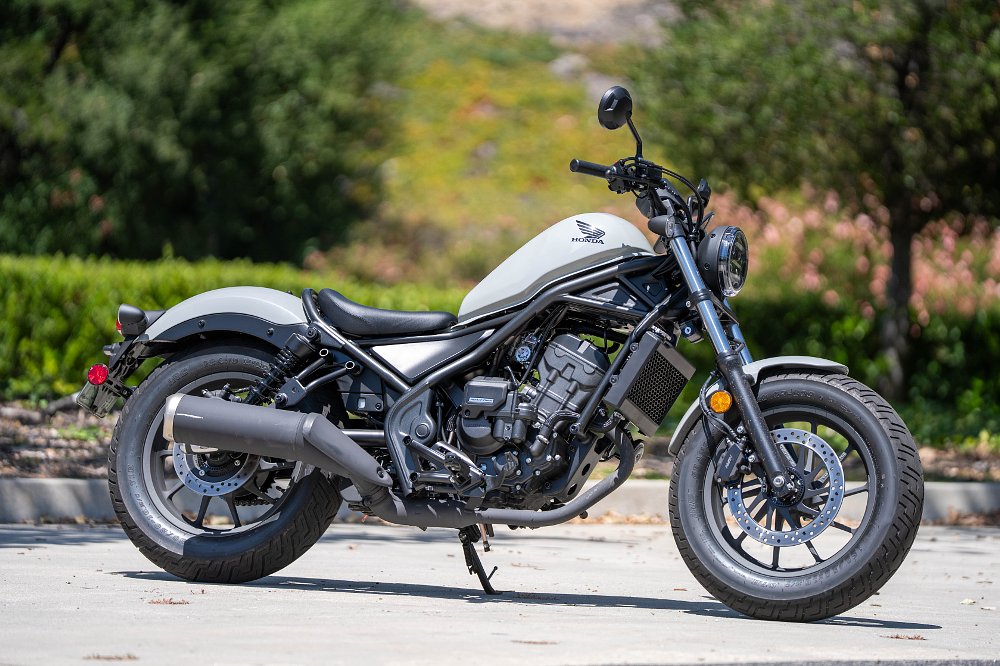
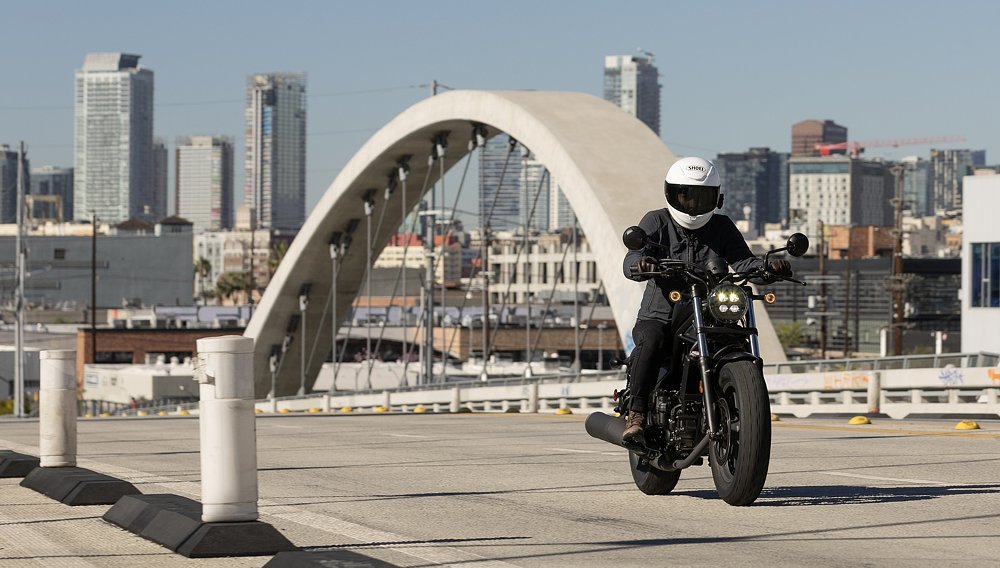
That’s where Honda’s E-Clutch has all of these other systems beat. Ostensibly, it is the least sophisticated system, simply (easy for me to say) automating clutch action and combining it with a conventional quickshifter, and in some ways it’s the most satisfying to use. Use the clutch lever when you come to a stop, or don’t, then click through the gears as the baby Jebus intended.
Nits and nuances
Having the E-Clutch on hand for this test was useful for context, both to illustrate the things that the full automatics deliver and where they leave a rider wanting. However, in a showdown of automatic transmissions, the Honda E-Clutch is disqualified because it simply isn’t a true automatic. And we are self-aware enough around here to realize that the reason we like it so much is that we, as test riders, already know how to use a clutch and we have fully operational left hands and feet. Whether it’s preference or necessity, let’s not lose sight of how these auto-trans machines can help people enjoy motorcycling.
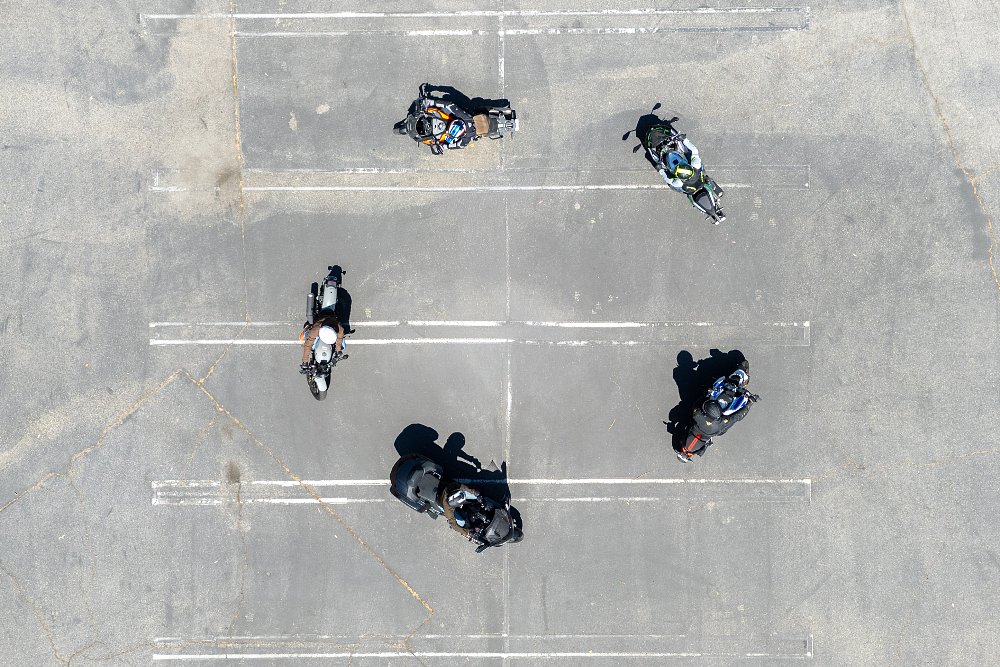
We took turns on all of the bikes in a parking lot, doing U-turns and riding slowly, and they all proved easy enough to adapt to at low speed. Both of Honda’s systems were especially good. KTM’s centrifugal clutch unit is designed to engage at about 1,900 rpm, which means the engine spins up a little more than any of the other machines before the plates engage. That’s not necessarily a bad thing, though we did wonder why, considering the 1390’s massive torque figures and ridiculous tractability.
At the end of the ride, we all felt the battle of automatics was won and lost in little moments and details. Tiny little decisions made by a system in automatic mode that seemed odd, or unnatural. Or, in the case of the Gold Wing, the fact that most of us admitted to completely forgetting about the transmission at one point or another. One tester asked: “Ultimately, I think that's the goal of any automatic system?”
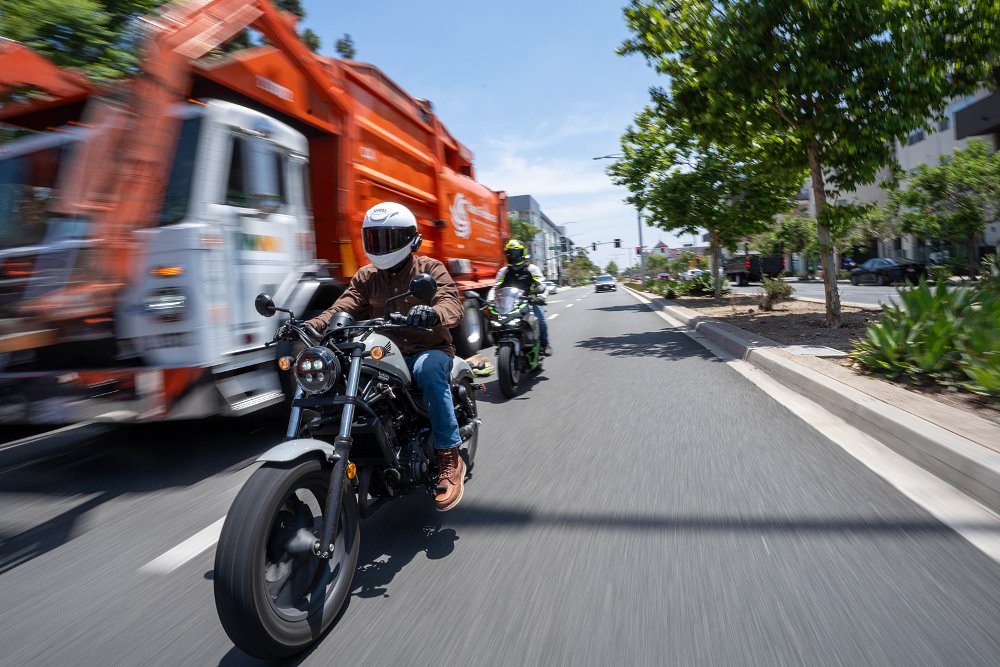
Both BMW’s ASA and KTM’s AMT occasionally flirted with perfection, in the way the automatic systems chose to shift gears and in the satisfaction they delivered in manual mode. Every now and then, though, the R 1300 R would grab a downshift after tipping into a corner, just before the rider cracked the throttle open — never dangerous, but certainly jarring. The 1390 Super Adventure S sometimes did something similar.
A few of the oddities we found weren’t even related to the actual function of the system. Honda, Kawasaki, and KTM call automatic mode “A” or “AT.” Makes sense. BMW calls it “D” mode, which is a little confusing because BMW also loves to use the word “dynamic” to describe throttle maps or ride modes. Not a huge deal, I suppose, if you owned the bike you’d learn where to look for the appropriate “D” and know what it means.
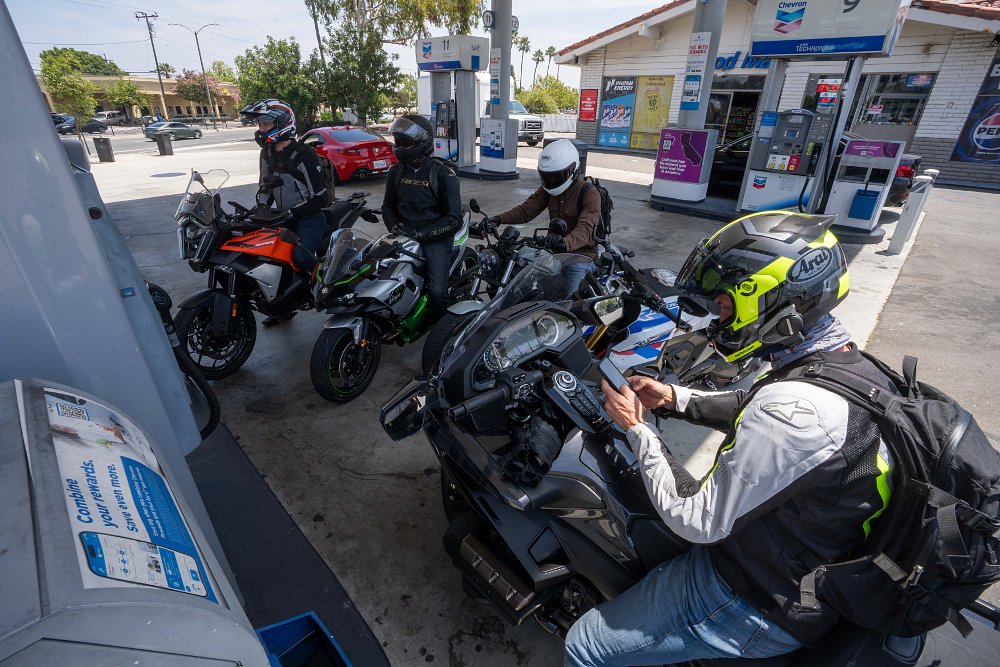
How about this one: The KTM’s gearbox is arranged as P-N-1-2-3-4-5-6, so all of the gears are “above” neutral and park is “below.” Those words get quotes because you can’t actually select N or P with the foot shifter. Press down with your foot all day, you’ll only ever get to first gear — if you want N or P you have to use the downshift trigger for your left index finger. Then, if you’re in neutral, and you lift up with the foot shifter the bike will shift into first gear. But, get this, if you press down it will also shift into first gear. Spooky.
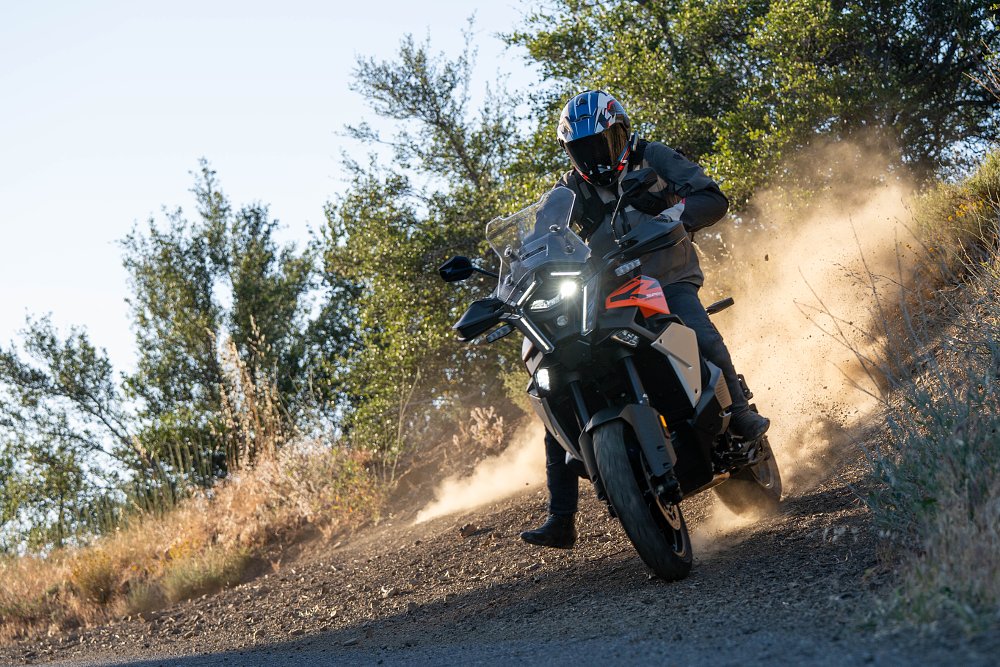
Incidentally, that index-finger trigger that shifts down on the 1390 Super Adventure S is opposite the Gold Wing and Ninja 7, where the rider’s thumb shifts down and the index-finger paddle shifts up. Again, if you own a bike then you’ll learn which way does what, but one tester asked a great question: Why not have an option in the dash to swap it to the rider’s preference?
Forests and trees, transmissions and gears
We motorcyclists are creatures of habit, and when a bike has an option we haven’t encountered it confuses us. Pushing down or pulling up on the shift pedal to get to the same gear isn’t a problem theoretically, just like calling it “drive” or “auto” or “AT” doesn’t really matter. It’s mostly weird because we’re not used to it. Menus, options, and terminology on dashes will likely stabilize over time, but the riding experience faces a similar problem.
Anytime a bike does something unexpected while we are moving it takes us, as riders, out of it. “It” being that special state of mind while piloting a motorcycle, some combination of meditation, focus, and awareness. In this test, Honda’s Gold Wing DCT offered the least distracting experience of the machines we gathered. If you pay attention you’ll notice engine revs rising and falling, but if you don’t you’ll just ride along on a frothy, 100-foot-pound wave of torque and bask in the raspy, flat-six soundtrack.
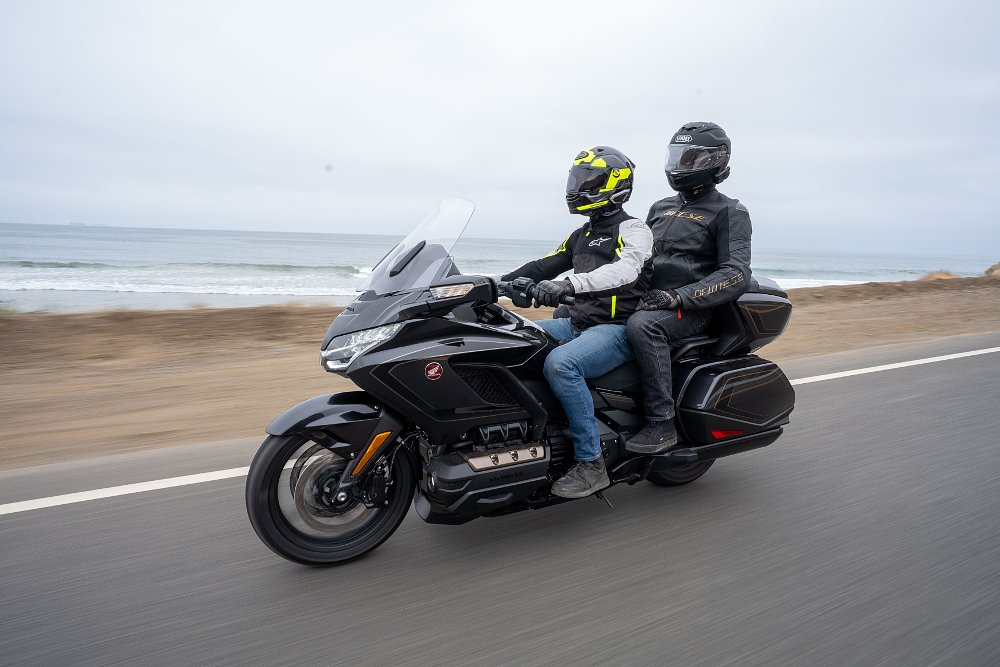
Now, here is where the questions get really sticky. Is the Gold Wing the best because the DCT is so good, or because the bike is so good? Honda Africa Twin DCT models are great, too, but in my experience (and ours as a group of riders) it doesn’t blend quite as brilliantly into the riding pleasure. The calculus for what system makes the most sense is impossible to solve. There are simply too many variables. The type of bike makes a difference, as does the personality of the rider and the nature of the journey.
We found ourselves going around in circles (figuratively, this time), wondering if the Honda DCT were applied to [insert motorcycle] would it still feel as satisfying as a Gold Wing. Anyone can speculate, but none of us can know, and the same goes for the systems developed by the other bikes in the test. Would the AMT that we used on KTM’s 1390 Adventure S EVO work well on a 390 Duke? Would it dethrone Honda’s E-Clutch as the thing that makes the most sense for a clutch-anxious rider to start their journey?
While we’re at it, is automatic shifting on high-end models exactly what motorcycling needs? Is it a luxury feature? A lot of DCT-equipped Gold Wings have been sold, sure, but maybe that’s a Gold Wing thing? Honda building up from the bottom of its lineup with its E-Clutch is a good idea, in order to invite clutch-anxious newbies to the fold, but is the clutch lever truly what’s keeping people away from motorcycles? And if it is, maybe seeing those luxury machines with automatic shifting will convince new riders that it’s OK to have that on their bike? Or maybe it’s the other way around, expert riders will only accept it if it seems like technology that can trickle down, and oh-no-I’ve-gone-cross-eyed.
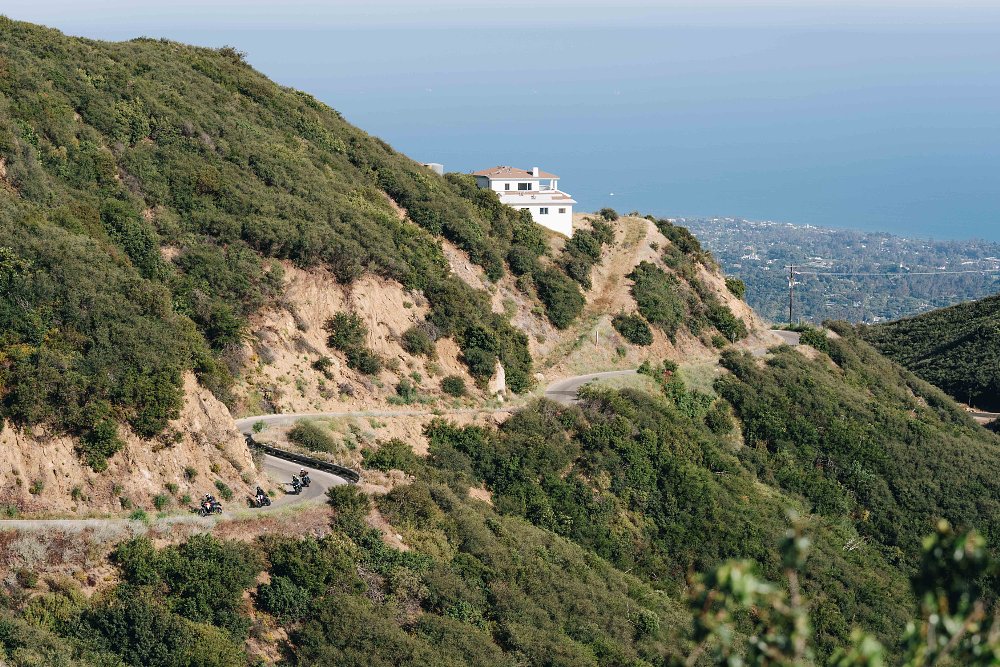
Remember, too, that this whole discussion so far has ignored electric motorcycles and scooters, where riders’ left feet and hands have been dormant practically forever. Someone would be fair to point out that KTM’s 1390 Super Adventure S EVO costs the same as a Zero DSR/X. The Zero is actually a little more expensive and will lose in nearly every performance-based comparison to the KTM, but by gosh it will literally never kick down a gear right when you least expect it.
Maybe this is why the rise of development of automated gearshifting, and the interest shown by motorcycle manufacturers, is so intriguing. It’s outside the bounds of what most experienced riders want in their garage, and yet it is definitely motorcycling — not the electrics we already understand, not the scooters we love to dismiss, and not like other machines that have come before. It is the motorcycle companies we all know, unbridled by tradition and in search of a new two-wheeled experience. This is the Wild West.
Image Gallery





Image Gallery


Shop the gear
 Shoei GT-Air 3 Helmet$779.99
 Alpinestars S-R7 Helmet$679.95
 Arai Contour-X Face Helmet$999.95
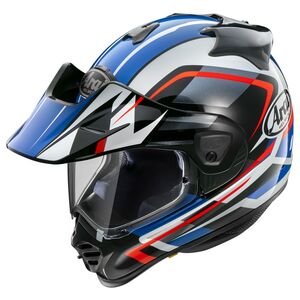 Arai XD-5 Discovery Helmet$1,039.95
 Dainese Racing 5 Perforated Leather Jacket$649.00
 Alpinestars AST V3 Air Jacket$249.95
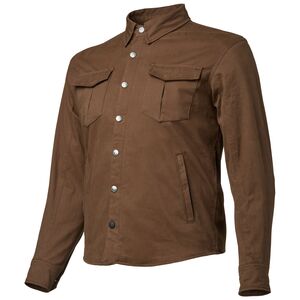 REAX Bridger 2 CE Riding Shirt$199.99
 REV'IT! Stratum GTX Jacket$1,549.99
 REAX Castor 2 Perforated Gloves$99.99
 Alpinestars SP-5 Gloves$124.95
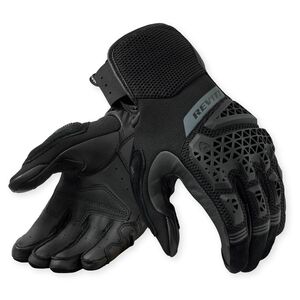 REV'IT! Sand 5 Gloves$129.99
 REV'IT! Detroit 3 Jeans$259.99
 Klim K Forty 2 Jeans$279.99
 Klim K Forty 3 Jeans$279.99
 TCX Street 3 Air Shoes$189.00
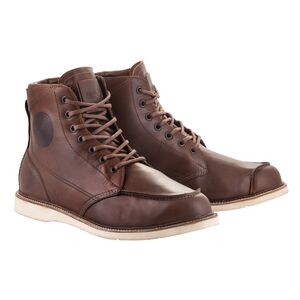 Alpinestars Oscar Monty V2 Boots$319.95
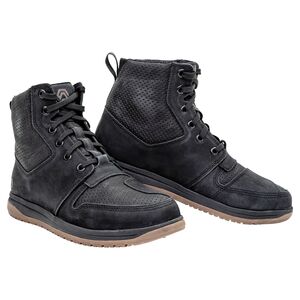 REAX Fulton Air CE Riding Shoes$159.99
 SIDI Performer Gore-Tex Boots$299.99
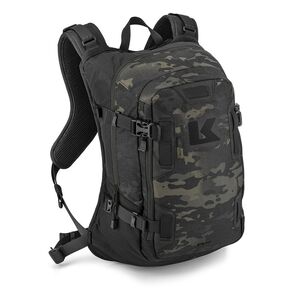 Kriega R20 BackpackFROM $179.99