

 Membership
 Riders Preferred Membership
 Shop by Vehicle
 Track Order
 Contact Us

Secrets are fun.
This occurs to me mid-flight, halfway between Los Angeles and Munich. Maybe it's because I'm secretly watching the movie on my seatmate's screen. Or maybe it's just that KTM planted the idea. I'm running on four hours of broken sleep, I'm eating food fit for prison mess halls, I'm traveling 6,000 miles, and I still don't know what bike I'm testing because KTM apparently thinks it's fun to keep it a secret.
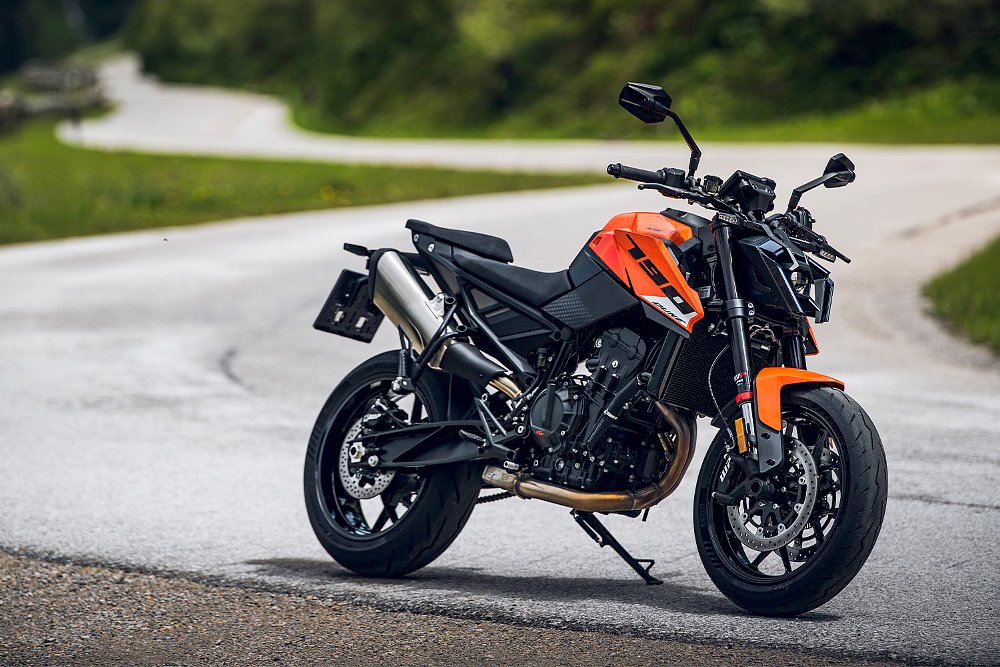
It’s these surreptitious measures that draw me to speculation. Is it a limited-edition model? Is it an R variant? Is it a new bike altogether? Acts of secrecy usually hint at the secret’s significance, after all. So you can only imagine my reaction when KTM personnel peeled back the cover to reveal a 790 Duke.
Secret sauce
Calling the 2027 790 Duke the worst-kept secret in the motorcycling world wouldn’t be accurate. It wouldn’t be totally inaccurate, either. The Austrian firm revamped its Super Duke platform in 2024 and introduced the 990 Duke in 2025. Even the 390 Duke received some T.L.C. in recent years. The 790 was simply next in line. Its update was long overdue, too.
KTM reps trumpeted the 2027 model as the “most comprehensive evolution in the history of this model,” but that’s because it’s the only evolution in the history of this model. Sure, Euro 5 emissions standards and reciprocal tariffs caused two lapses in the model’s timeline, but the U.S.-spec middleweight has remained virtually unchanged since its 2018 debut.
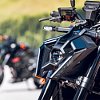
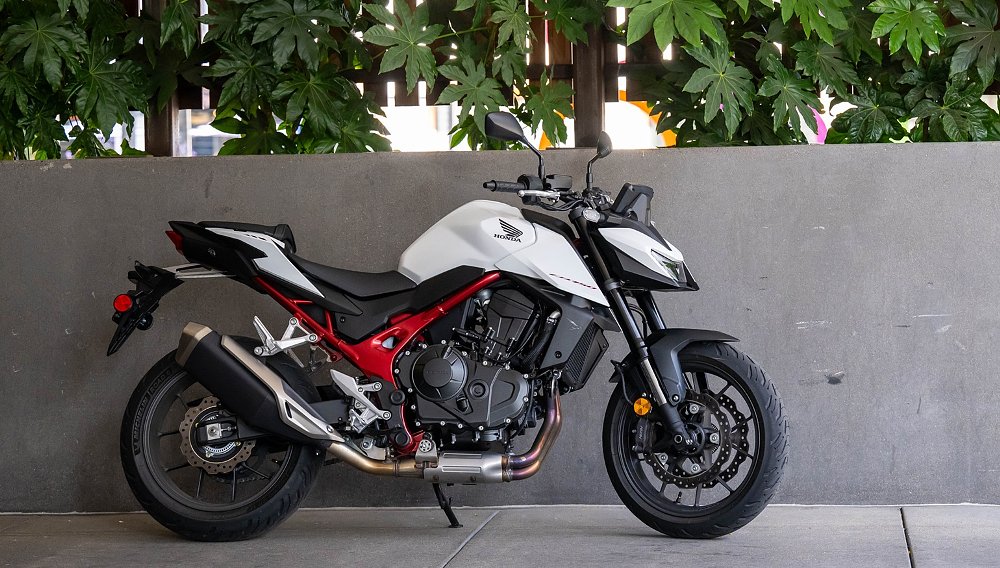
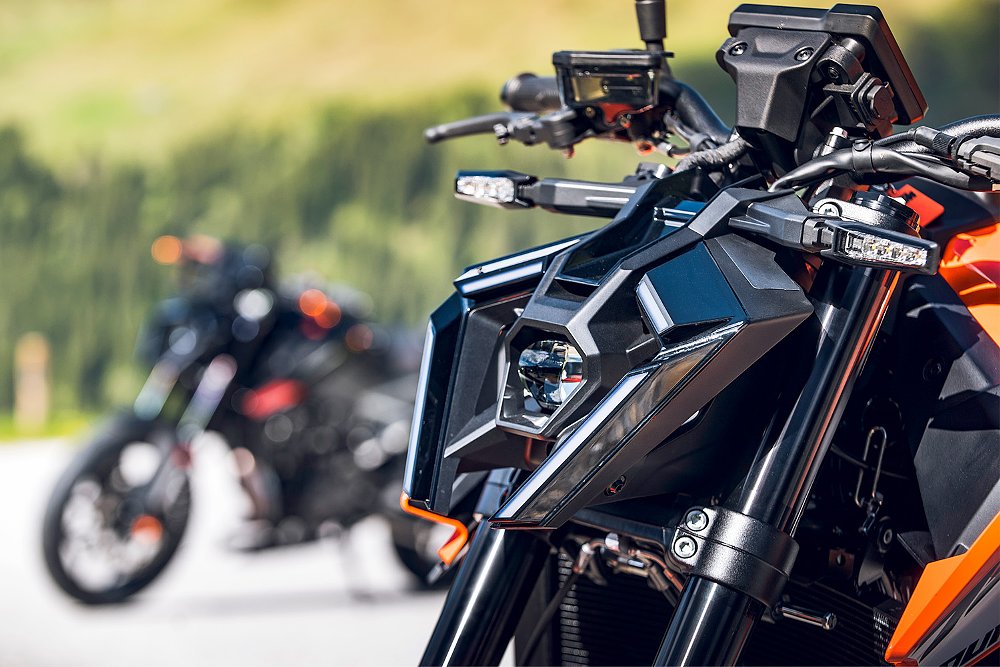
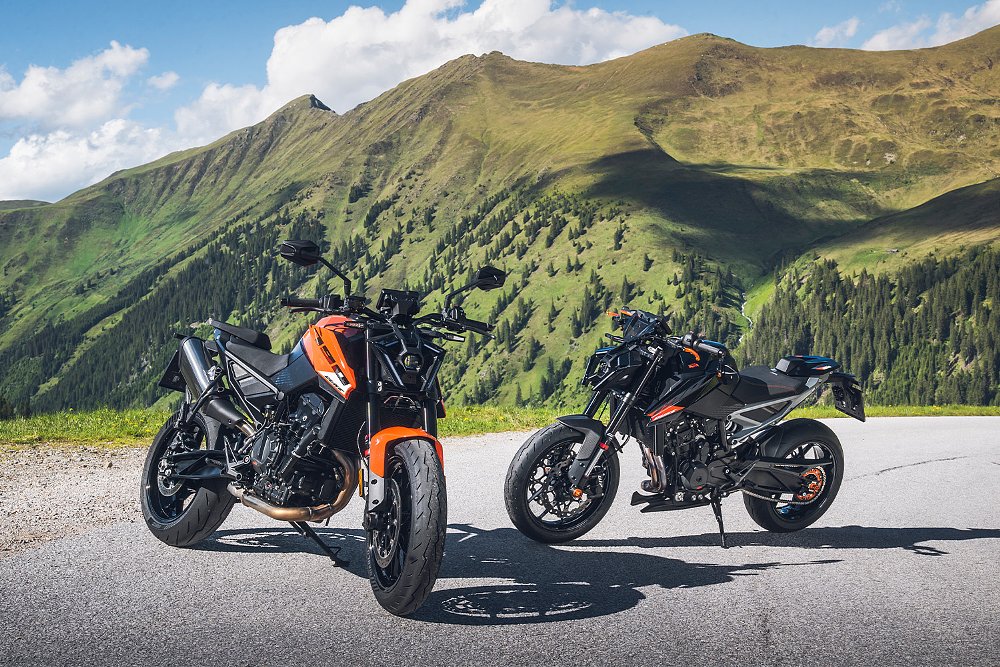
Now properly in its second generation, the 790 returns with a raft of revisions. Most visible among them is a redesigned headlight. Similar to its bigger Duke siblings, the new headlamp array features four LEDs flanking a dual-function projector bulb. It’s not the only stylistic flourish. The tank fairings are sharper. The fuel cell under those body panels is reshaped, too, with flatter sides for improved knee contact, whether the rider is hanging off or sitting center-saddle.
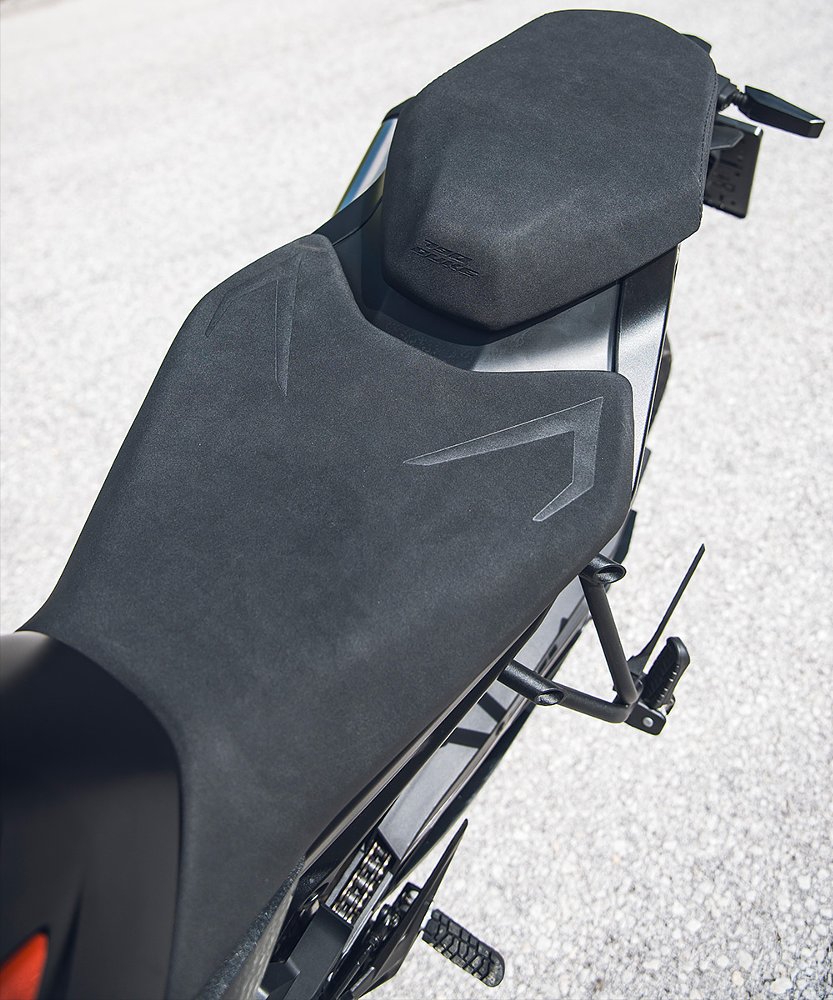
Speaking of the seat, it’s not only flatter, which promotes a more neutral riding position, but also it narrows toward the tank, easing the rider’s reach to the ground. KTM even lined the seat pan with additional padding, all in an attempt to enhance cockpit comfort.
The foot pegs are shifted two millimeters aft and seven millimeters upward. Slightly revised, too, is the handlebar shape. That’s all to say that the rider triangle is modified, but only slightly so. Similar, but different. That’s the theme here. Not just with the ergonomics, but with the chassis, too.
The 790 Duke always sported WP suspension. A non-adjustable WP 43 mm fork and a preload-adjustable WP monoshock, that is. The former now benefits from compression and rebound damping clickers. The latter, preload and rebound. The rear also gains 20 mm of additional wheel travel.
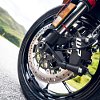
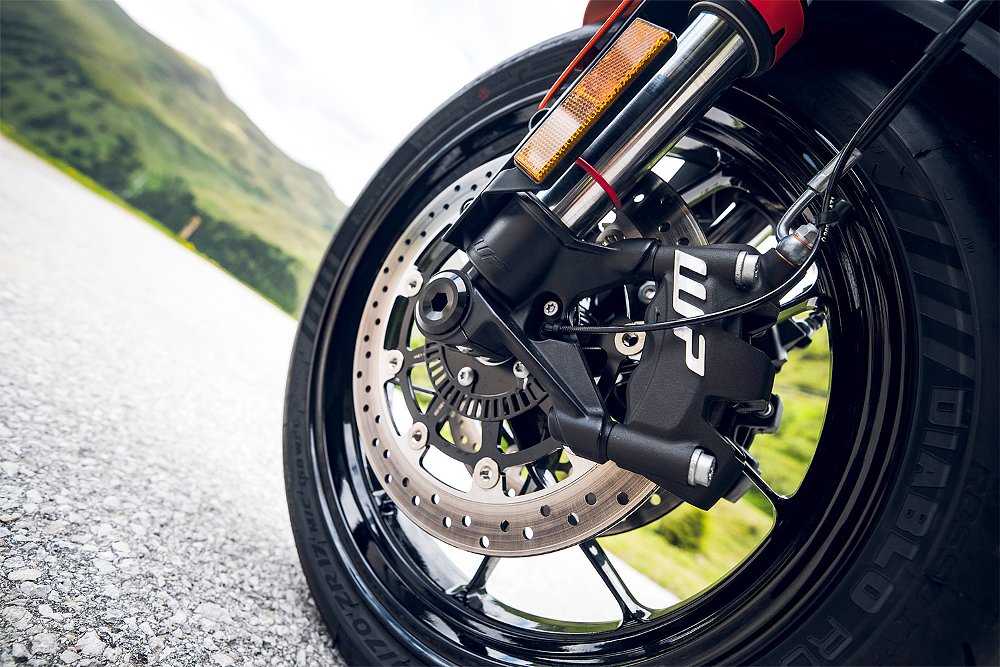
The suspenders aren’t the only components sporting WP branding these days. KTM brought the braking system in-house, too, with WP calipers, discs, master cylinders, and rubber brake hoses supplying the stopping force. Whereas vertical integration prompted that switch, customer feedback prompted the move away from Maxxis tires. KTM now shod the Duke’s 17-inch wheels in Pirelli Diablo Rosso IVs, a category mainstay.
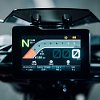
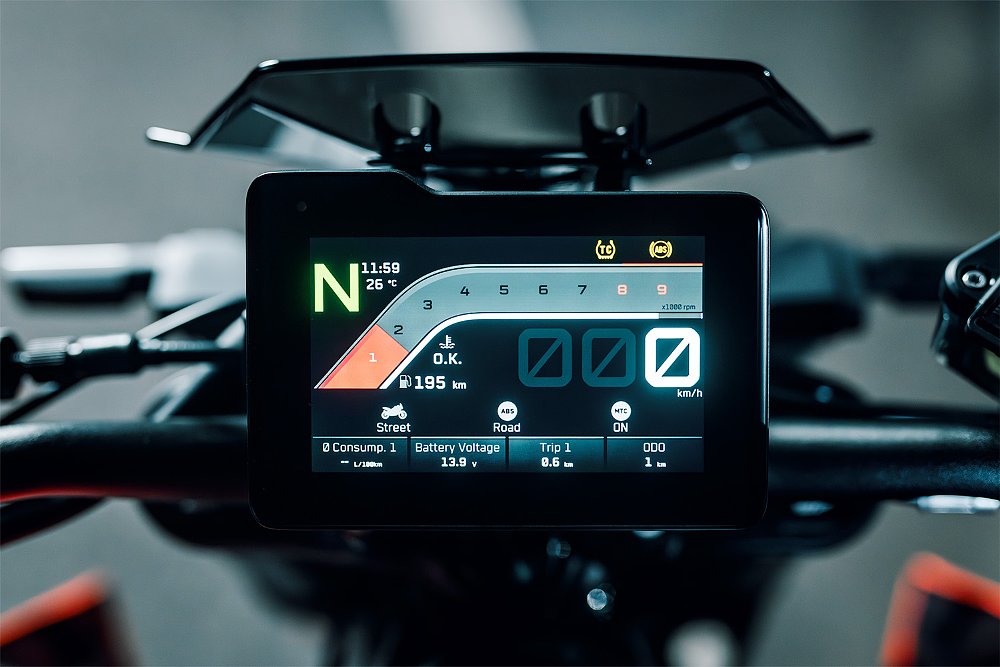
The tech suite couldn’t escape the Mattighofen marque’s renewal efforts, either. The model’s five-inch TFT unit is new. The housing it lives in is new. The anti-glare coating it wears is also (you guessed it) new. That display is now controlled through the same interface found on most current-gen Dukes. Supermoto ABS is standard, but so are the IMU-enabled cornering ABS and cornering traction control.
What the 790 does away with is KTM’s Demo Mode, which previously loaded each model with its full electronics suite, only for the OEM to lock the add-on tech packs behind a paywall once the odometer reached 1,500 kilometers (932 miles). To be clear, KTM doesn't give buyers those add-ons for free now. They simply don't tease them with a taste test any more. All of the electronic aids remain available any time after the purchase of the motorcycle. To activate them, customers will need to take the 790 to their local KTM dealership.
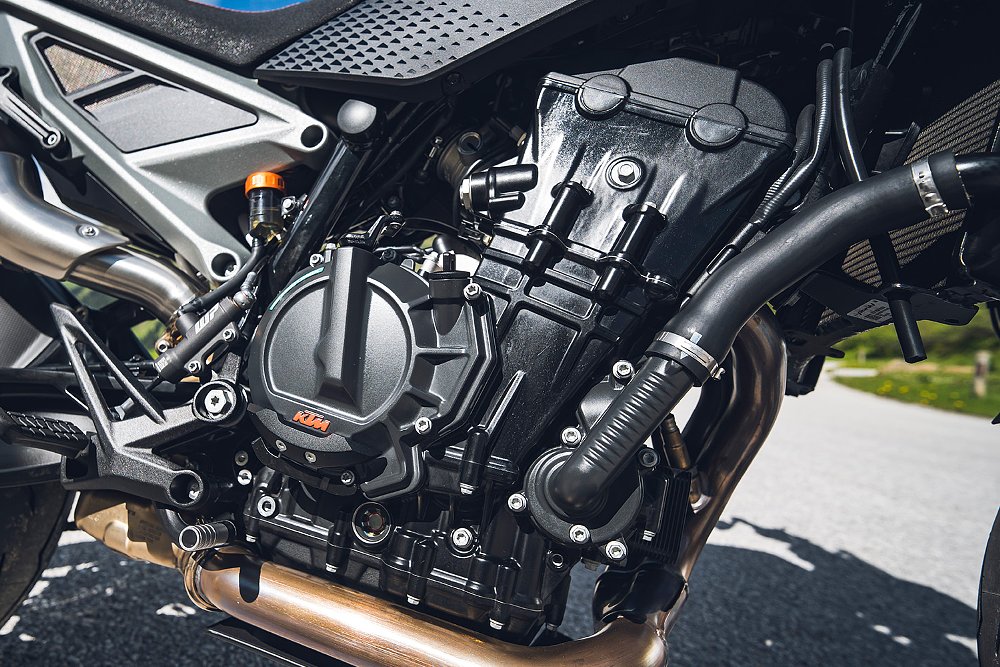
Change alone doesn’t define the 790 Duke, however. What the model retains is equally, if not more, important. That’s because the 799 cc parallel twin, steel tubular frame, and die-cast aluminum swingarm return untouched. By carrying over that core package, the 790 maintains its strengths, all while improving upon its weaknesses. At least that was my assumption. Riding the bike painted a slightly different picture.
In on the secret
Misty morning clouds hang over the spruce-lined mountainside. Masses of metamorphic rock shoot past the timberline, redrawing the horizon in sharp, angular lines. Tyrolean chalets overlook meadows of emerald-green wild grass — meadows dotted with dandelions, daisies, and cowslips. A single marmot scurries to the shaded cover of a tree stump. This is my view from the 790 Duke’s cockpit.
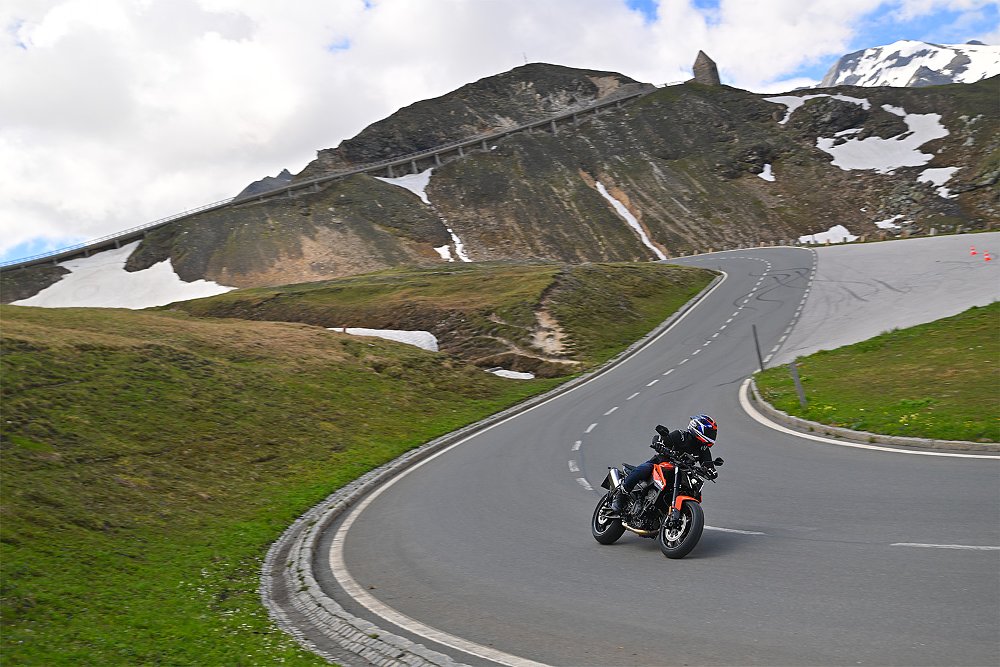
To my media-molded mind, the Austrian Alps look like “The Sound of Music,” a Ricola commercial, and the Matterhorn ride at Disneyland all rolled into one. The shuttle between Munich Airport and the resort town of Saalfelden provided a sneak peek of Austria’s countryside, but we’re in fairytale territory now. I half expect a dragon to fly overhead. The only problem is that I’m currently navigating one of the twistiest roads I’ve ever ridden: The Grossglockner High Alpine Road.
Maybe I should stare less and steer more. Less marveling, more maneuvering. The 790 was bred for roads like this. Its 105-horsepower p-twin is neither underpowered nor overpowered. Its steering is neither twitchy nor heavy. The WP braking system is a welcome addition, too, yielding a strong initial bite, accurate modulation, and excellent adjustability. I’m eager to press the 790’s limits that much further, if only I didn’t find the scenery so captivating.
But periodically enjoying the view leaves room for assessing the bike’s other attributes. The ergonomics are chief among them. My hands, positioned around chest height, hardly stretch to the wide and low bars. My knees bend at a 90-degree angle, with the balls of my toes planted on the narrow pegs. My tuchus rests not on the saddle’s widest section, but on its slimmest, producing a nearly upright upper half.
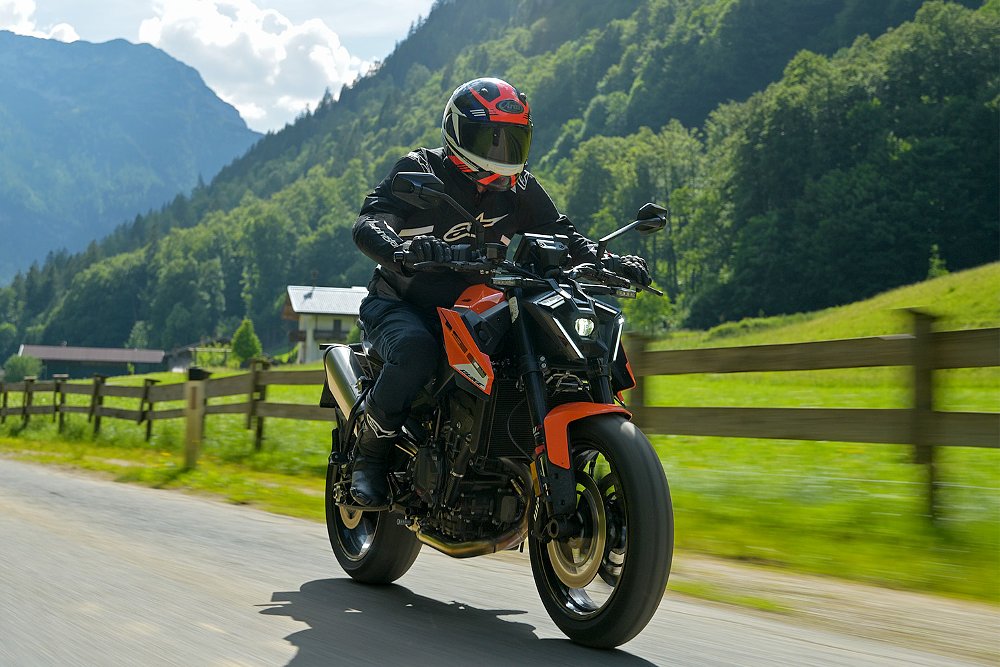
In a word, the riding position feels natural. Comfortable? Sure. For about 90 minutes, at least. But “natural” is the word that comes to mind first. The only flies in the ointment, the only grounds in the coffee, if you will, are the shifter peg and rear brake pedal. Both are tucked too close to the Duke’s body. I regularly missed shifts as a result and stopped using the rear brake altogether. You shouldn’t have a problem if you’re naturally pigeon-toed. Otherwise, aftermarket replacements might be a worthy investment.
There are even fewer nits to pick with the Duke’s electronics. The new five-inch TFT isn’t just easy to read; it's easy to navigate, with intuitive controls and submenus. Riders can customize everything from the throttle response to the display mode, and that goes for each ride mode. Yes, there are options galore, but that abundance of choice never became overwhelming.
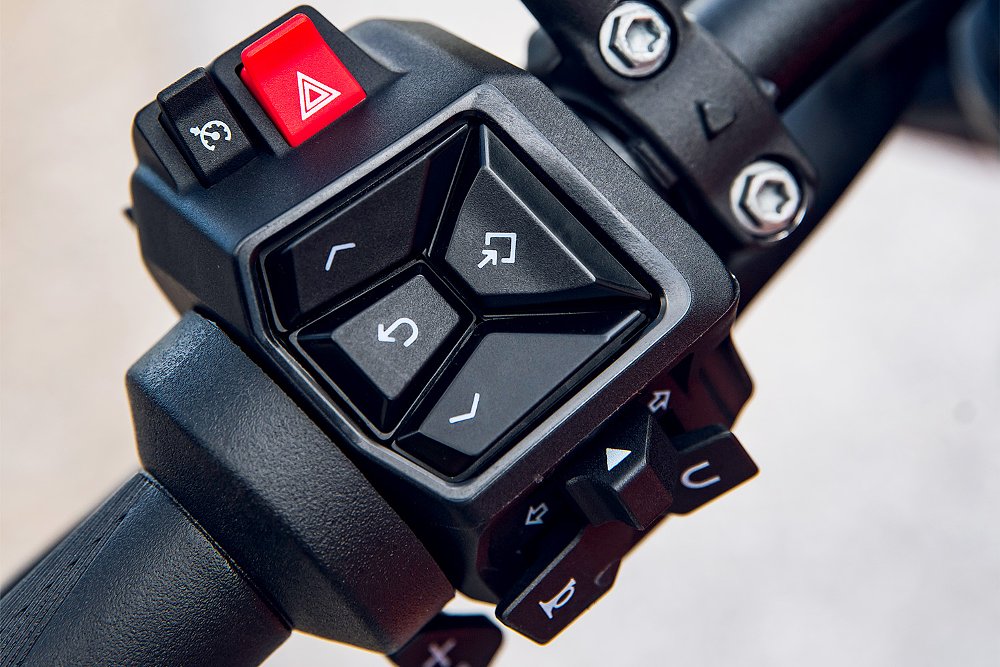
User interface aside, the true strengths of the 790’s tech package lie in the features that work in the background. The lean-dependent traction control comes to mind first. That’s because a spirited pace, slick pavement, and an eager throttle hand triggered TC several times. In some instances, with crash-saving efficacy.
Secret weapon
When I wasn’t actively awestruck by Austria’s Alpine beauty, I was chucking the 790 into a second-gear hairpin, rocking it through an S-curve, or powering it through a fast kink. The Duke handled it all with aplomb. But the mighty middleweight wasn’t immune to everything that Grossglockner threw its way.
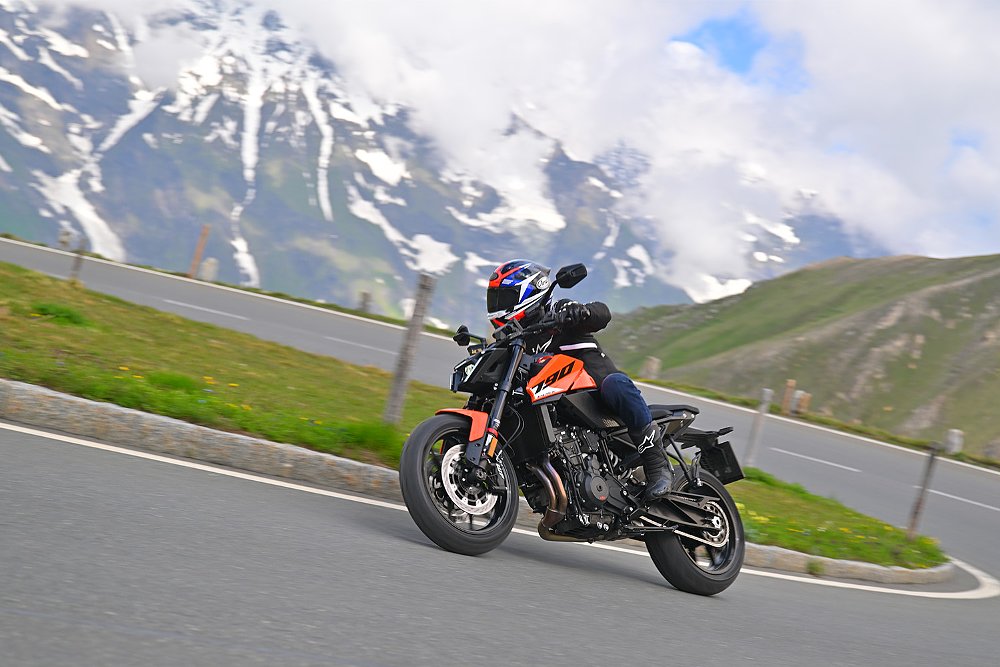
I say that because the 790’s rear wheel stepped out no less than four times while it was under my charge. Three instances were slight slips that required no TC assistance. The other occasion was a butt-out-of-the-seat, heart-in-the-throat moment. All four occurred while negotiating the tight-radius, low-gear switchbacks that weave up the alpine pass. My edge grip woes weren’t limited to the mountainside, either. The results were consistent when I got the Duke on the racetrack later that day.
As the name suggests, the ÖAMTC Driving Technique and Experience Center caters to four-wheeled vehicles. That might explain why the facility’s pavement offered less than ideal grip for two-wheeled vehicles. One corner, in particular, was downright dicey. Surprise, surprise, it was a tight-radius, low-gear hairpin.
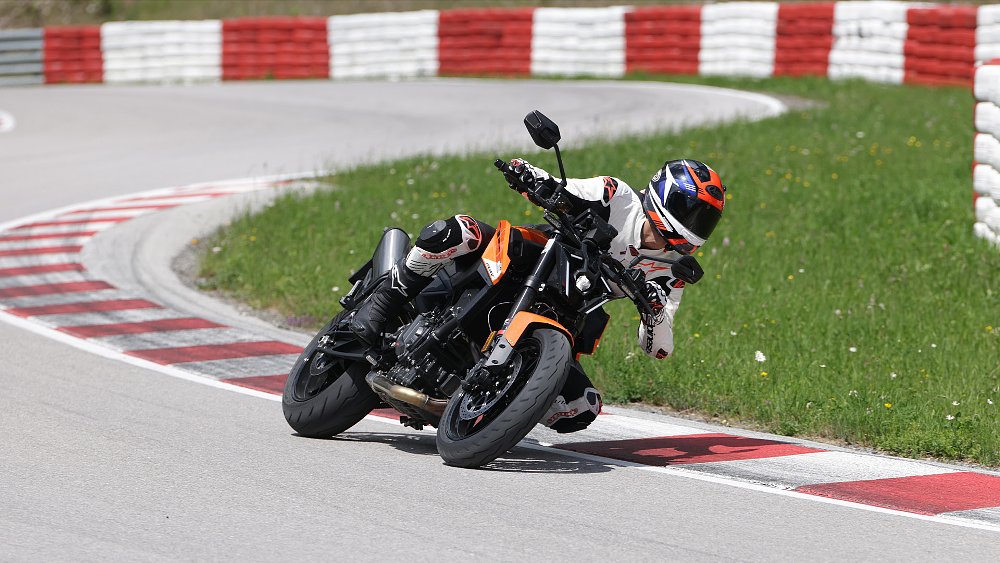
Even after heeding the warnings imparted by KTM staff, even after waiting to get on the gas, I lit up the rear at the corner exit, contorting the Duke into shapes that bikes shouldn’t make. That’s when TC engaged, the tire found purchase, and my backside went airborne yet again. I didn’t go down, but my confidence sure did. That’s why I tiptoed my way through that turn for the remainder of the session.
Much of the 790’s core components return in 2027. The ones that don’t receive an upgrade instead. Pirelli now supplies the rubber. The fork earns adjustability. The shock gains additional stroke. So why didn’t the Duke feel as sure-footed as its predecessor? Could the Austrian asphalt be to blame? I’m left with more questions than answers, but one thing is for sure: KTM sure has its hopes pinned on the middleweight naked bike’s success.
Top secret
KTM went to great lengths to keep the 2027 790 Duke under wraps. N.D.A.s, embargoes, you name it. It’s clear that Team Orange wanted to make a splash with the second-gen “Scalpel.” I’m just unsure if the changes made were worth all the secrecy along the way. That’s the thing about secrets, though, sometimes they’re more important to the secret keeper than anyone else. That might be the case with the 790 Duke.
This model was in development during the darkest days in KTM’s history. From the time the Austrian OEM filed for self-administration to the day Bajaj became the majority stakeholder, the 790’s second coming remained in the balance. Its arrival in 2027 isn’t just proof that Bajaj remains invested in the brand; it’s proof that KTM is still pressing forward. That it’s still willing to take risks. That KTM is still KTMing. The 790 Duke is a secret no more, but it’s still fun, nonetheless.
| 2027 KTM 790 Duke | |
|---|---|
| Price (MSRP) | $9,799 (MSRP); $10,699 (as tested) |
| Engine | 799 cc, liquid-cooled, eight-valve parallel twin |
|
Transmission, final drive |
Six-speed, chain |
| Claimed horsepower | 105 @ 9,000 rpm |
| Claimed Torque | 63.4 foot-pounds @ 8,000 rpm |
| Frame | Steel tubular |
| Front suspension | WP APEX 43 mm fork, adjustable for compression and rebound damping; 5.9 inches of travel |
| Rear suspension | WP APEX shock, adjustable for spring preload and rebound damping; 6.7 inches of travel |
| Front brake | Dual WP four-piston calipers, 300 mm discs with ABS |
| Rear brake | WP two-piston caliper, 240 mm disc with ABS |
| Rake, trail | 24 degrees, TBA |
| Wheelbase | 58.1 inches |
| Seat height | 32.4 inches |
| Fuel capacity | 3.5 gallons |
| Tires | Pirelli Diablo Rosso IV; 120/70ZR17 front, 180/55ZR17 rear |
| Claimed weight | 408 pounds |
| Available | September 2026 |
| Warranty | 48 months |
| More info | ktm.com |