 Riders Preferred Membership
 Log In
 Shop by Vehicle
 Track Order
 Contact Us
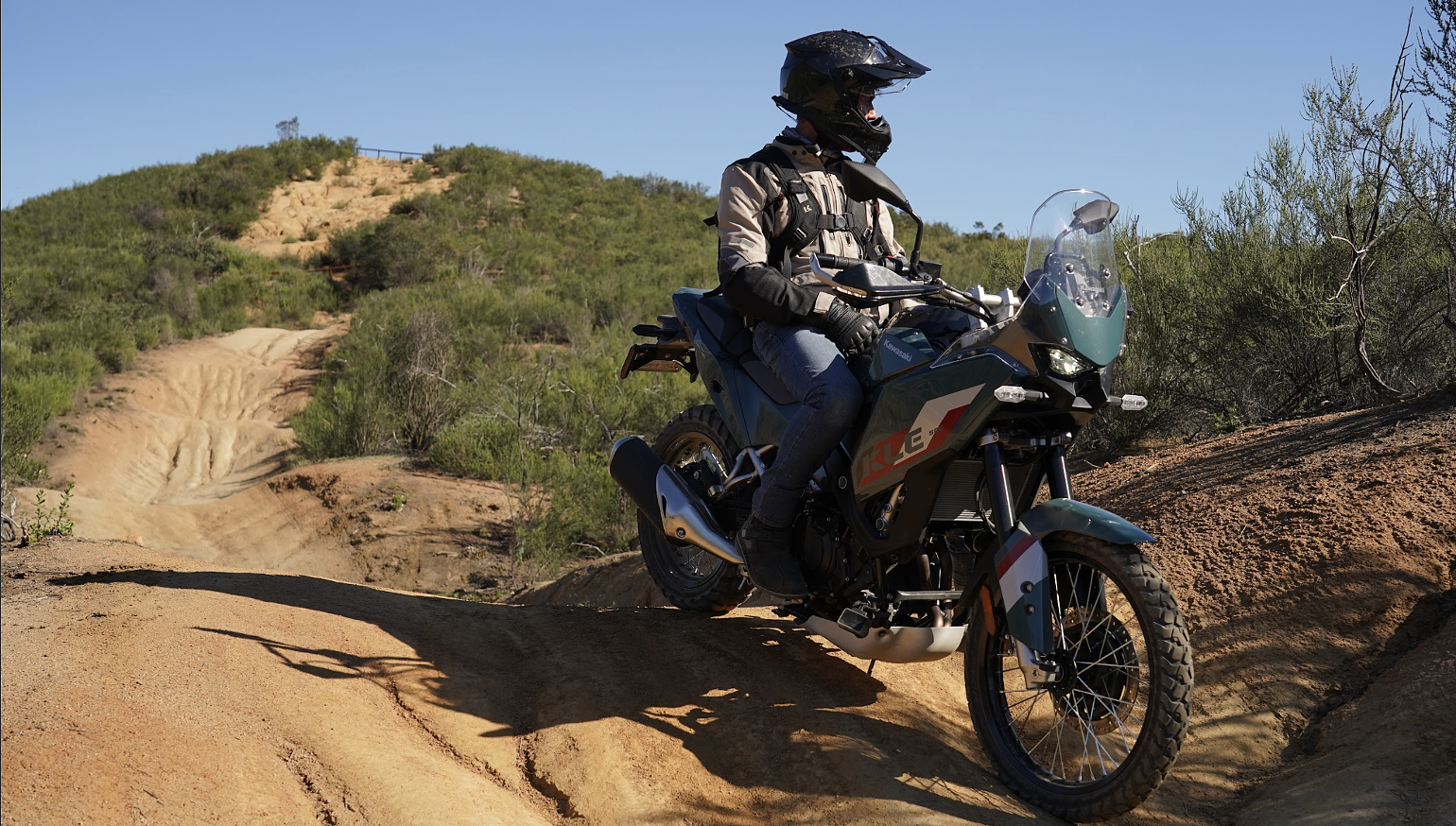
In evolution, smaller, more adaptable creatures tend to surpass larger animals, and that’s evidenced in ADVs, too. In the last decade we’ve seen downsized, simpler bikes (re-)emerge, and their lighter weight, lower prices, and go-anywhere capability have helped make them hugely popular. Kawasaki’s new KLE500 and KLE500 SE are the latest machines to join a thriving lightweight-adventure variant.
Ancestral DNA
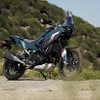
This isn’t the first time Kawasaki made a KLE500. The original debuted in 1991 at the dawn of the ADV era, but wasn’t sold in the United States. Like the original, this modern KLE500 utilizes an existing engine, in this case Kawasaki’s 51-horsepower 451 cc parallel twin. The same motor powers the Eliminator cruiser, Ninja 500 sport bike, and Z500 naked. It appears unchanged here, hung in a new steel-trellis frame that’s sprouted longer legs and spoked wheels to better handle rougher terrain.
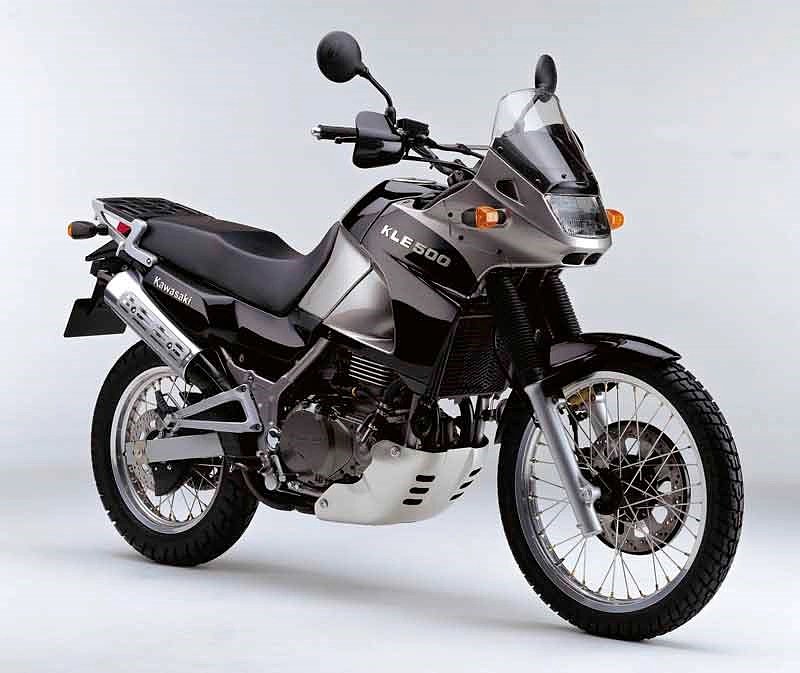
A non-adjustable inverted cartridge fork lets the 21-inch front wheel travel through 8.3 inches of stroke, while a preload-adjustable shock gives the 17-inch rear wheel 7.7 inches of movement. That’s 75% more travel up front and 50% more in the rear compared to the ground-hugging Ninja, but the KLE’s engine sits low in its frame and the exhaust routes under the engine, as in its kin, so ground clearance is limited to 7.3 inches, just 25% (1.6 inches) more than the sport bike.
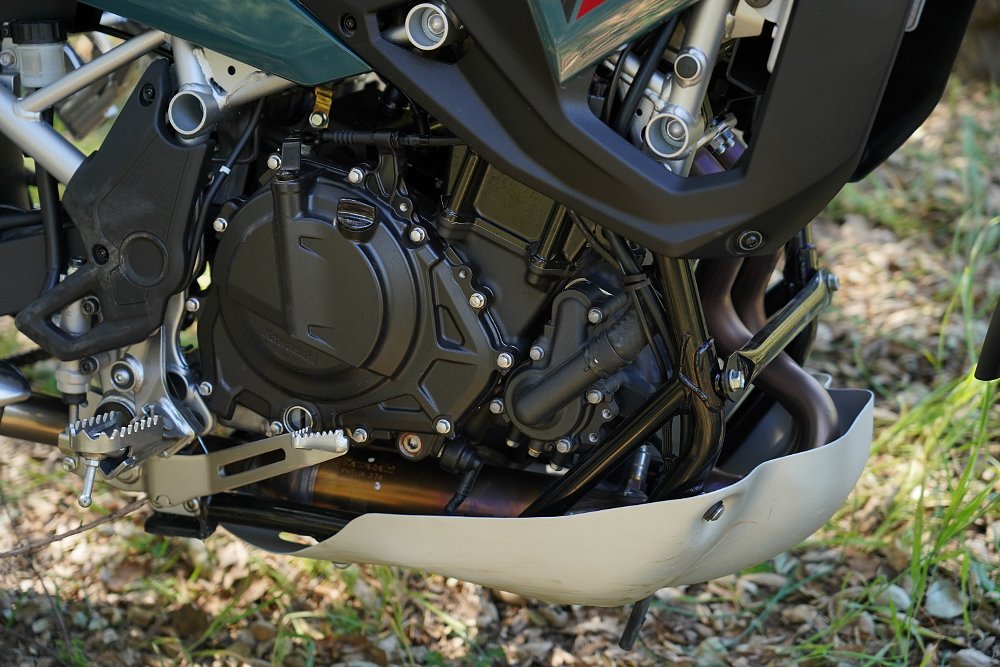
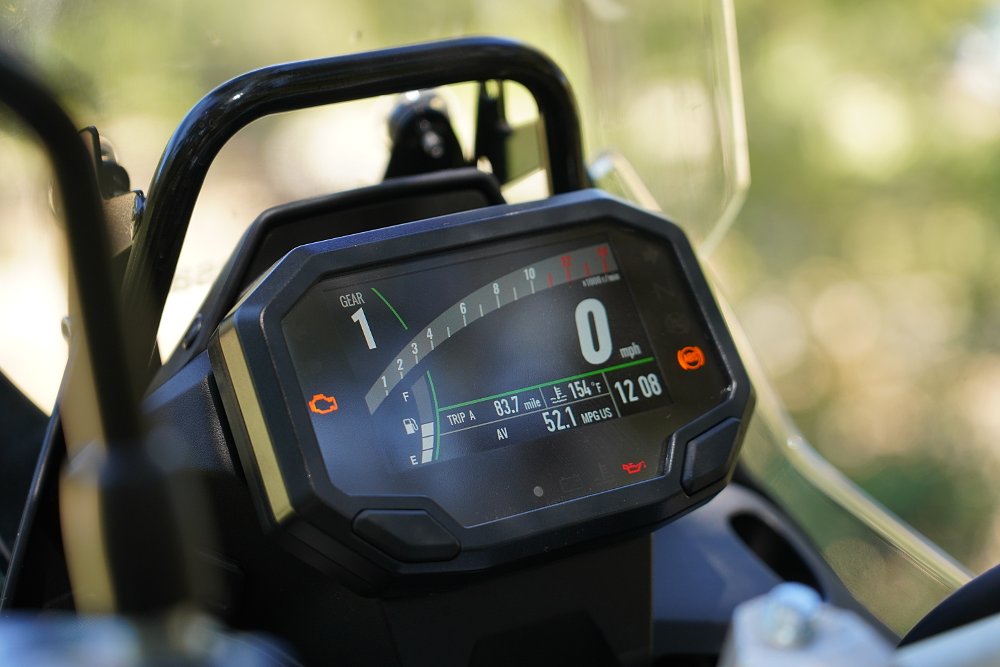
Tubed, block-tread IRC Trail Winner tires hint at the KLE’s mandate for all-road performance, while a 4.2-gallon tank equates to around 200 miles of range, depending on where in the engine’s expansive rev range you spend your time. I averaged 54 mpg over 350 miles and two fillups. A rally-inspired fairing and adjustable windscreen aim to offer weather protection over the long haul, and the curved saddle gives you some fore/aft seating options.
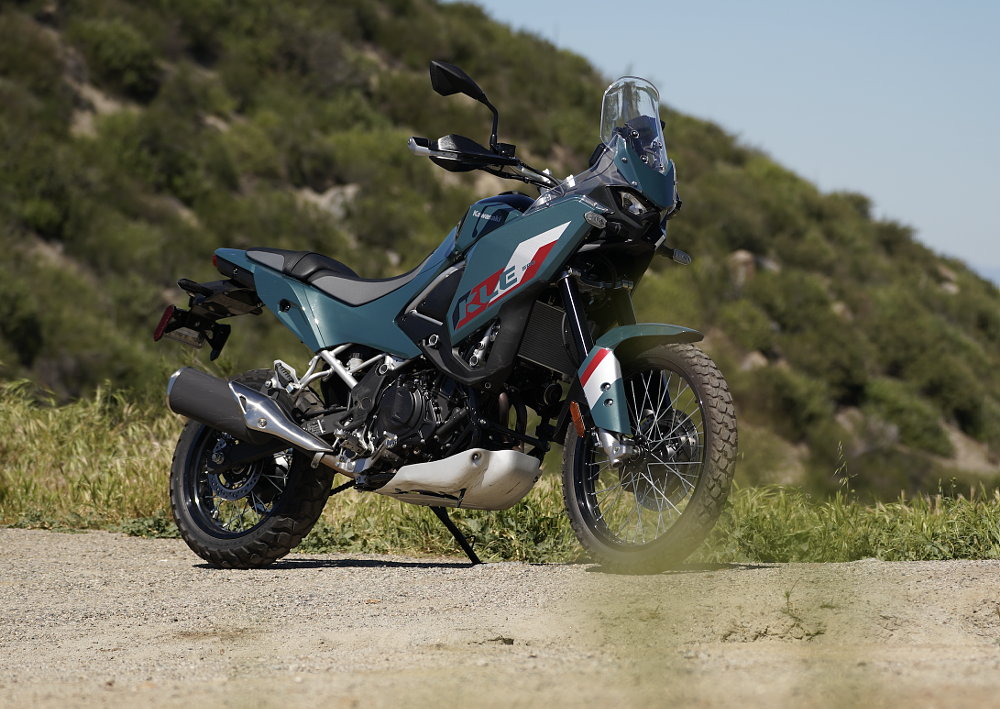
The KLE’s ground clearance may be at the lower end for its cohort, but the height of that seat is at the high end: 34.3 inches. And because the suspension is sprung (and damped) on the firm side, you don’t get the seat-lowering sag you might experience on a tall bike like the CRF300L Rally. I’m five-foot, eleven inches tall and didn’t have any trouble on flat ground, but once I took the KLE off-road I encountered a few instances where I was nervously balancing on my tippy toes.
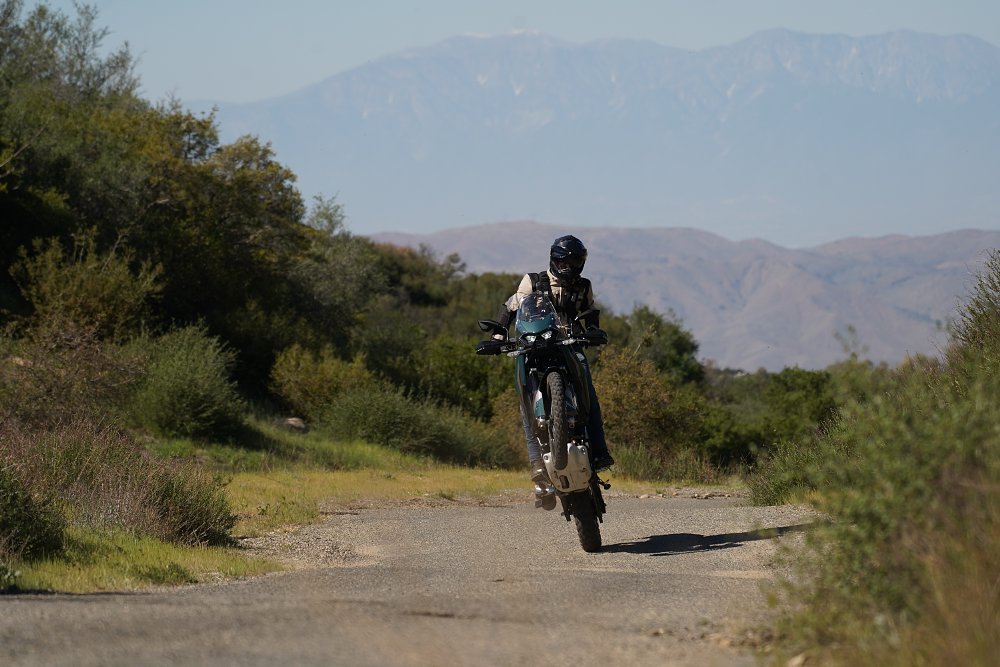
All told, the KLE is a 428-pound (wet, measured) package that rings in at $6,599 in base trim, or $7,499 with the SE package, which is what I tested. The SE has a TFT dash, taller windscreen, larger skid plate, handguards, and LED turn signals.
In standard form or upgraded, the KLE500 is supposed to do it all, so I took leave of the office to find out what benefits this particular bike’s adaptations offer to riders.
Made to migrate
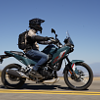
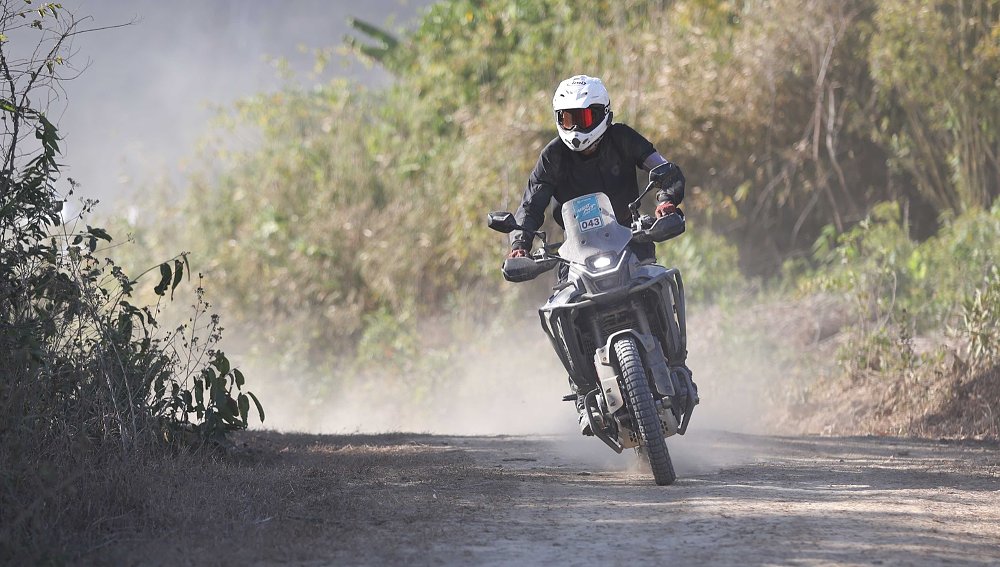
An area where many small-displacement ADVs struggle is on the interstate. Not so with the KLE; this thing should make a great long-distance travel steed. Shortly after climbing aboard the Kawi and noting how you sit down in the bike with that wide, tall bar ahead of you, I merged into, and then proceeded to pass, fast-moving interstate traffic.
Horsepower equals miles per hour, and the KLE’s claimed 51 ponies at 10,000 rpm help it trot along at a brisk pace. The engine’s performance is a bit muted due to the KLE’s weight, so acceleration is modest in the lower revs, but power picks up above 7,000 rpm and roll-on performance is impressive once the motor is spinning. Sixth gear at 70 mph puts the engine at 6,100 rpm, but the high-revving twin can easily cruise at 80 or above. In fact, the higher you rev the motor, the smoother it spins.
Because the KLE’s engine is a 180-degree parallel twin, you’ll experience some degree of buzziness throughout the usable rev range, more so here than in other models with this motor. The vibes first appear in the handgrips at about 4,500 rpm before visiting the tank sides and footpegs. The engine is counterbalanced and Kawasaki put dampers on the handlebar risers and footpeg brackets, but the rocking couple remains. It’s not uncomfortable, just annoying, and certainly something to consider since it’s the engine’s dominant characteristic. Second is the nasally howl from the airbox. Combined, they make the engine seem a little exasperated.
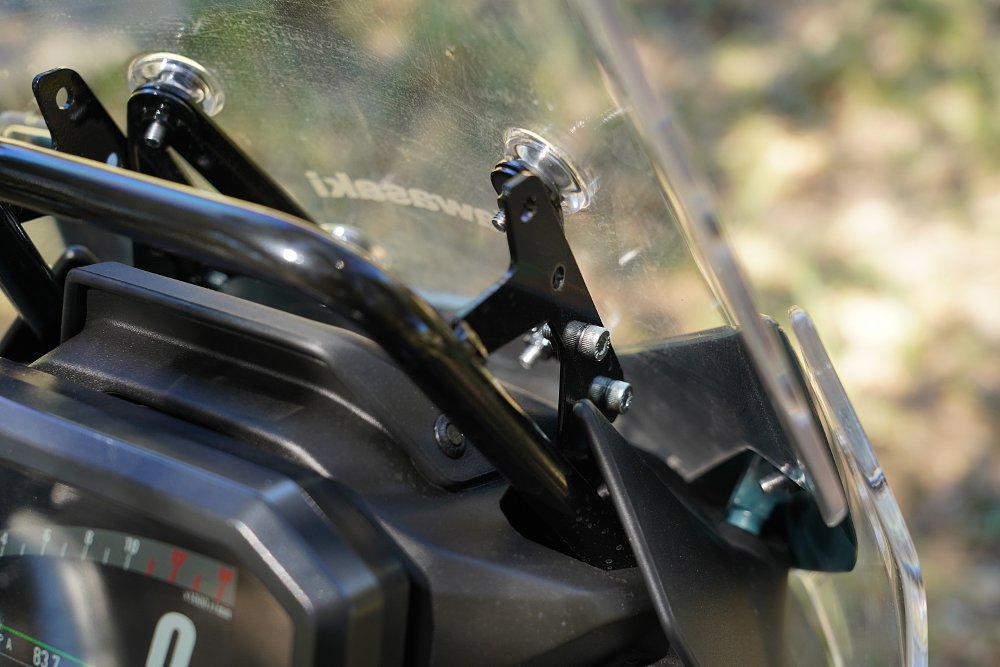
At speed, the windscreen and tall, tapered fairing do a great job ushering air around the rider’s torso and shoulders. Even in a billed dual-sport helmet, there was no buffeting or turbulence, though the pressure coming off the top of the screen increased noise in my Sedici Duale, as well as an Alpinestars S-R7 I rode in.
A surprising characteristic of the KLE is its suspension calibration. It’s quite firm, and it seems to transmit as much as it absorbs. That’s not ideal for comfort, especially on potholed city streets or bumpy back roads, but it is good for handling since the fork doesn’t dive while braking and the chassis remains planted and stable while changing direction and fully leaned over. If you like a firmer ride, or perhaps weigh more than 210 pounds geared up as I do, it may suit you. If not, your only available adjustment is rear spring preload.
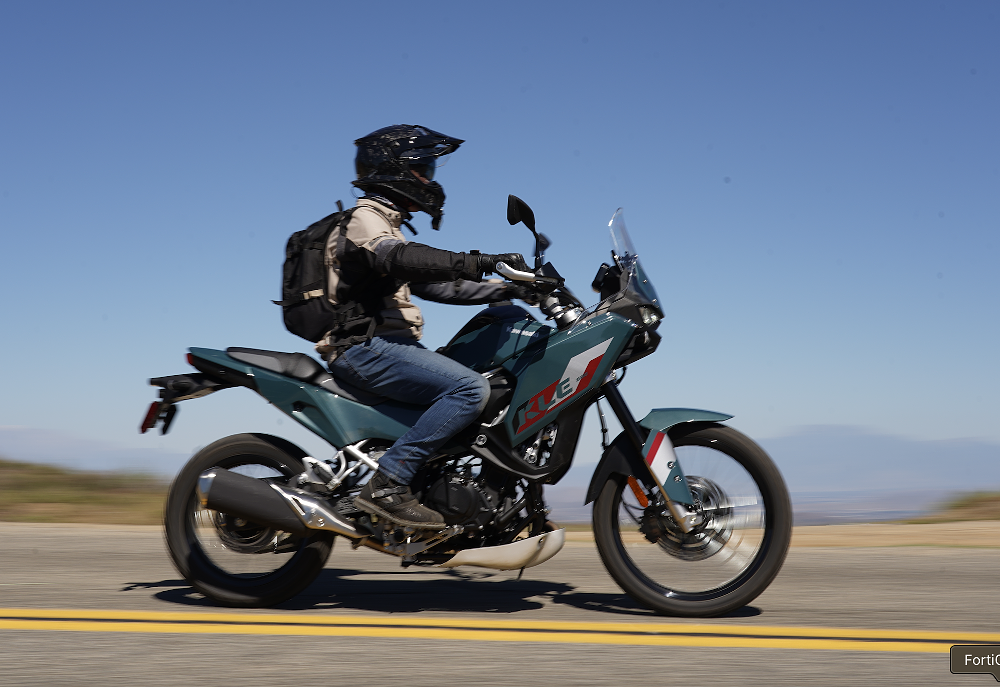
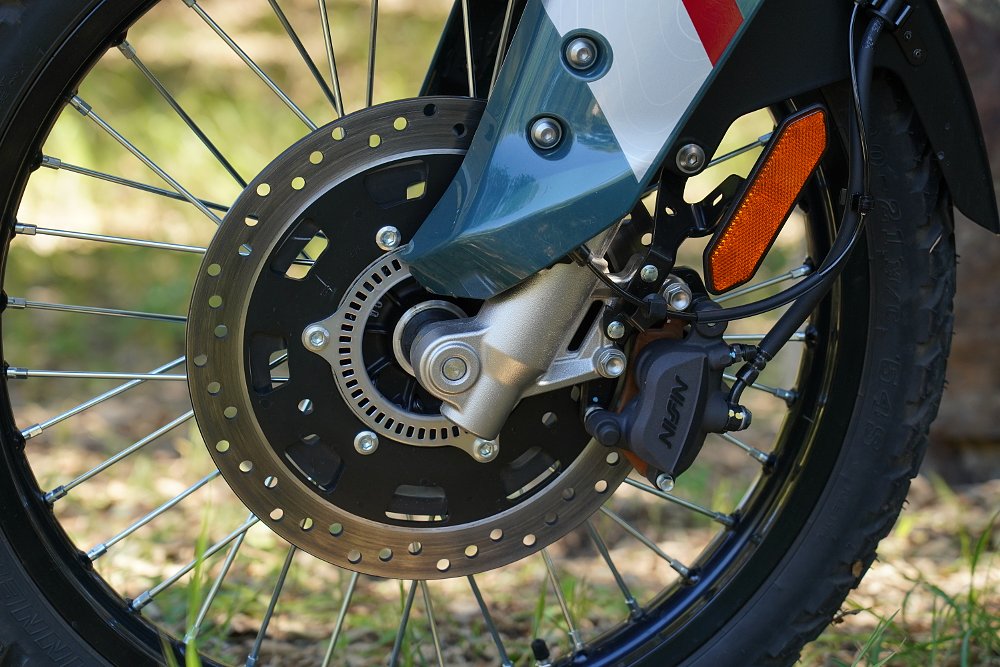
As a backroad explorer, the KLE is every bit as fun as a Ninja 500. It benefits from the quick direction changes and eagerness to lean that we’ve come to expect and enjoy from tall, skinny-tired ADVs, aided of course by that wide handlebar. The engine feels responsive and strong when it’s turning toward the right side of the bar-graph tachometer and the smooth-shifting gearbox helps you keep the revs up. There’s only one 300mm disc to slow you down, but it gets the job done and is backed up by ABS. If you prefer a firm (or adjustable) brake lever, the KLE’s somewhat squishy setup may disappoint you. The good news is that all that travel equates to loads of feedback.
As a long-haul highway machine the KLE500 is better than everything except maybe Honda’s NX500 (more on that later), and as a twisty back road or secondary highway explorer, it is excellent. That leaves one last type of terrain on the ADV checklist.
Leaving tracks
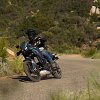
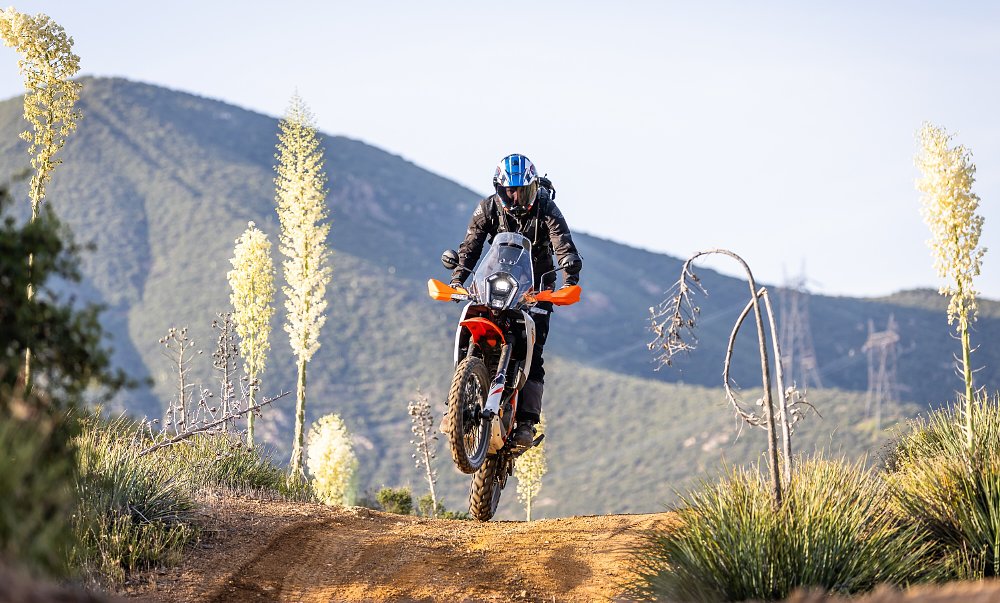
If it’s not explicit, it’s certainly implicit: Any ADV worth its engine oil needs to be able to go off the beaten path. How far afield, and with what confidence, is what I wanted to know, so I disabled the KLE’s ABS and rolled into an OHV park.
It only took a couple of deep ruts and rain bars to confirm what I’d already assumed — even with that taut suspension the bottom comes easily with 428 pounds behind it, and the belly pan makes a sickening thud when it kisses the earth. OK, dialing things back.
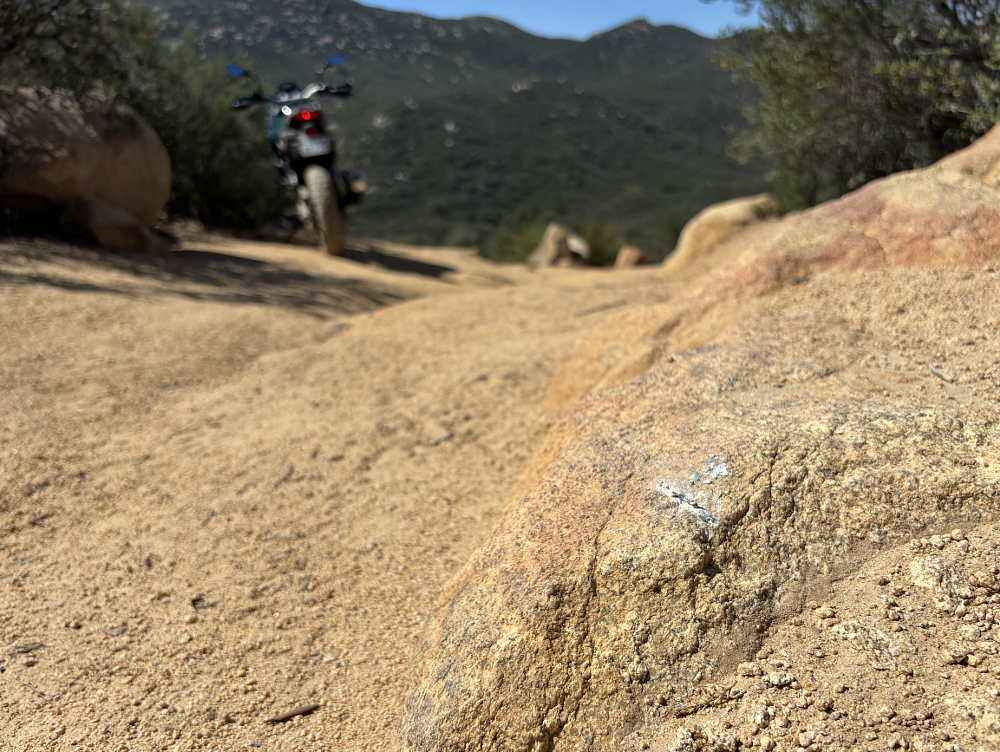
Considering how happy the engine is at 8,000 rpm, it’s fairly tractable at 4,000 rpm, though this twin lacks the grunt needed to easily lift the front tire or quickly set the rear tire spinning. I was mostly traveling at 10 to 20 mph, and at those speeds first gear felt too low and second gear felt too high. I opted for second, which meant slipping the clutch a bit. Covering the clutch is a good idea anyway, because the grabby rear brake makes it easy to stall the engine.
On many bikes, the handlebar feels too low once you stand on the pegs, but it’s perfectly positioned (for my height) on the KLE, and the bike has impeccable balance and generous steering sweep. That makes picking your way along a rocky or washed-out road fairly easy. I also appreciate the clear fairing panels that help you keep tabs on the terrain.
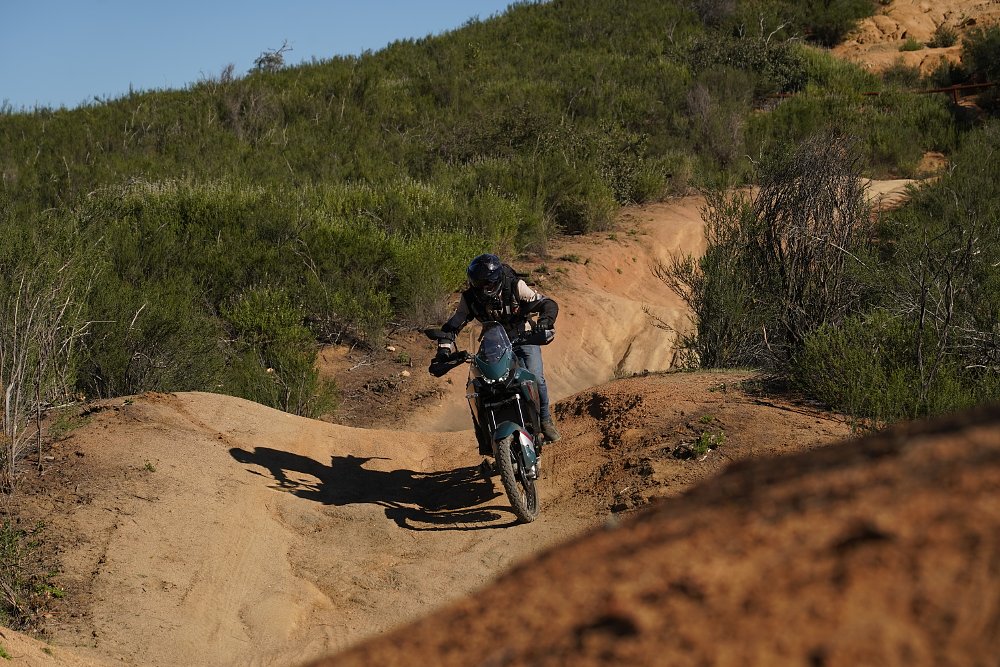
I wasn’t tempted to tackle any bonus-point obstacles on the KLE, but it was enjoyable enough to ride that I kept exploring well after I’d learned what I needed to know, which certainly says something. Despite struggling in the ways I expected, the KLE500 is a lot of fun, and more capable than I expected.
Survival of the fittest
It’s the year 2026, and the lightweight adventure bike fauna is prolific. So where does the KLE500 fit in?
In terms of off-road capability, the KLE is most obviously outperformed by the CFMOTO Ibex 450, which is cheaper than the base KLE and better equipped than the KLE SE, with fully adjustable suspension, tubeless spoke wheels, a much gruntier engine, and more. That bike struggles on the freeway, though, due to both transmission and final-drive gearing.
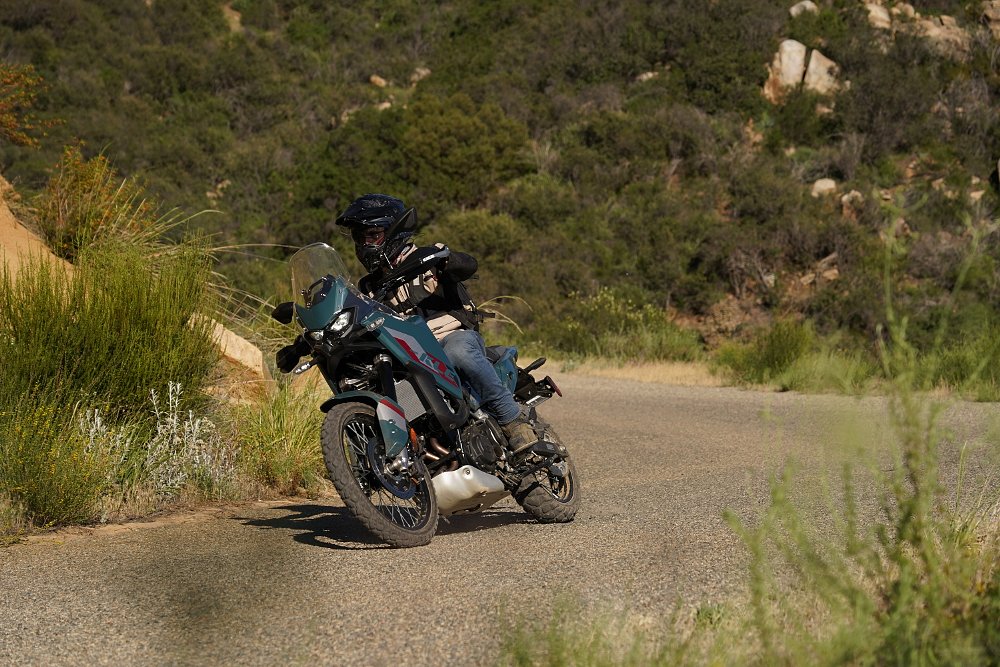
As mentioned earlier, the KLE excels at high-speed travel, and has great ergonomics and wind protection. In fact, I’d argue this might be the best small adventure-touring bike on the market — if you’ll actually be mixing some dirt or gravel into your outings. However, if you truly prefer pavement and the extent of your loose-terrain aspirations is the dirt driveway on the way to lunch at your aunt's house, then you should consider Honda’s NX500.
That bike is $600 less than the KLE500 SE, has a lower seat height, larger tank, and much smoother-running engine. True, the Honda weighs a bit more and has even less ground clearance and cast wheels, but if you’re already leaning toward a paved way of living then those are benefits, not a disadvantage.
As it stands, the KLE500 represents the latest evolution of the species, toward a more broadband set of traits that equip it for survival in a variety of environments. And with any luck, it’ll continue to adapt and improve.
| 2026 Kawasaki KLE500 ABS | |
|---|---|
| Price (MSRP) | $6,599 base; $7,499 SE |
| Engine | 451 cc, liquid-cooled, eight-valve, parallel twin |
|
Transmission, final drive |
Six-speed, chain |
| Claimed horsepower | 51.0 @ 10,000 rpm |
| Claimed torque | 31.7 foot-pounds @ 7,500 rpm |
| Frame | Steel trellis |
| Front suspension | KYB 43mm fork; 8.2 inches of travel |
| Rear suspension | KYB shock, adjustable for preload; 7.2 inches of travel |
| Front brake | Nissin two-piston caliper, 300 mm disc with ABS |
| Rear brake | Nissin one-piston caliper, 230 mm disc with ABS |
| Rake, trail | 28.0 degrees, 4.1 inches |
| Wheelbase | 61.2 inches |
| Seat height | 34.3 inches |
| Fuel capacity | 4.2 gallons |
| Tires | IRC Trail Winner, 90/90-21 front, 140/70-17 rear |
| Measured weight | 428 pounds |
| Available | Now |
| Warranty | 12 months |
| More info | Kawasaki.com |