

 Membership
 Riders Preferred Membership
 Shop by Vehicle
 Track Order
 Contact Us
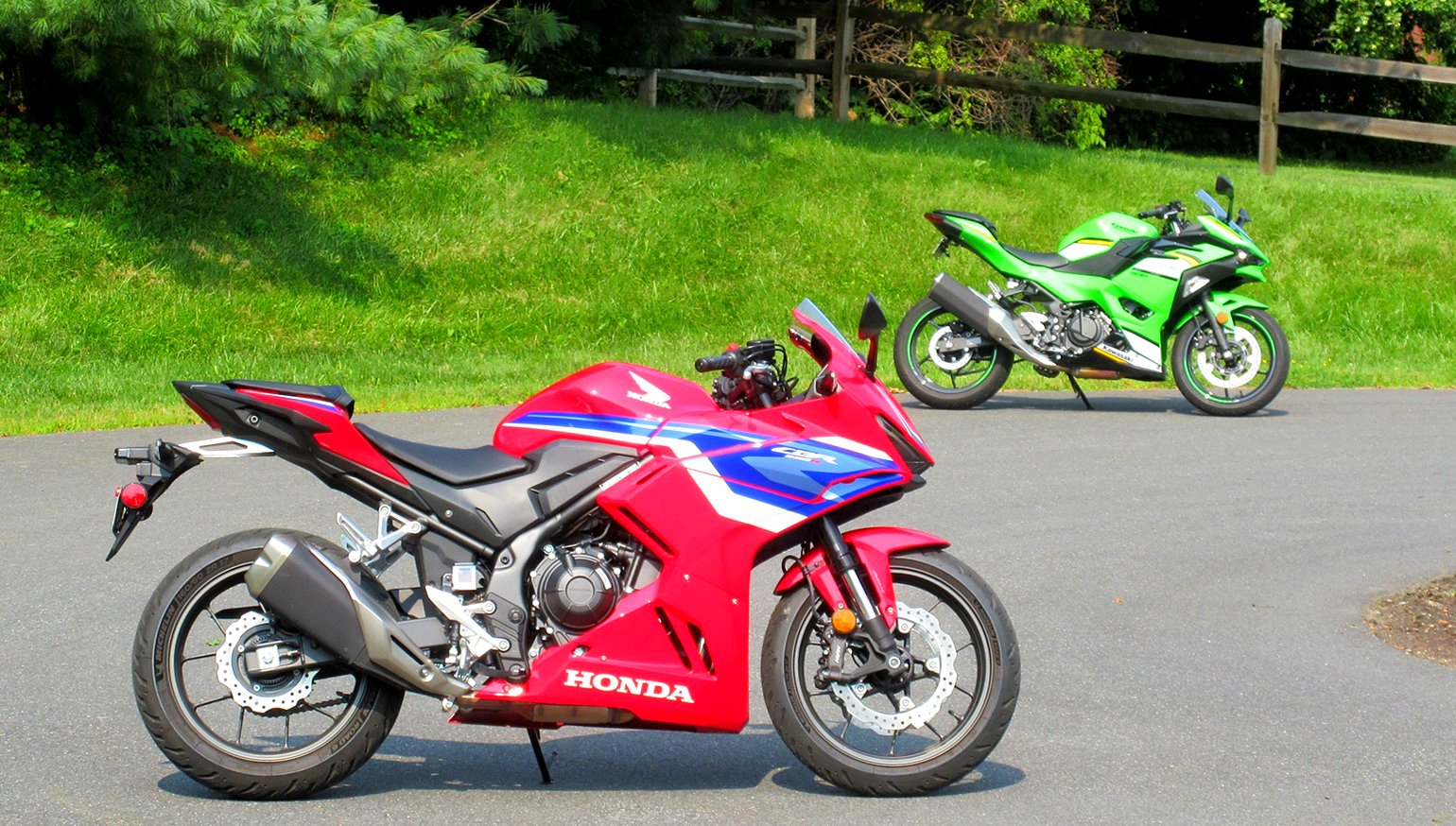
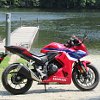
There's only one thing that's new for 2026 on the Honda CBR500R that really matters. It's not the engine, suspension, or brakes, and has nothing to do with styling, which are all the same as last year. It's the price. Honda has slashed the MSRP on the CBR500R by a cool $1,000 and it's not hard to see why.
Now listing at $6,399, the Honda is priced $100 less than the Kawasaki Ninja 500 SE ABS, the highest of the three Ninja 500 trim levels and the one that comes closest to being comparably equipped to the Honda. That matters because the Ninja 500 has ruled the sub-500 cc sport-bike class in recent years and it appears Honda has grown tired of watching customers walk past its model in the showroom to pick up a green alternative.
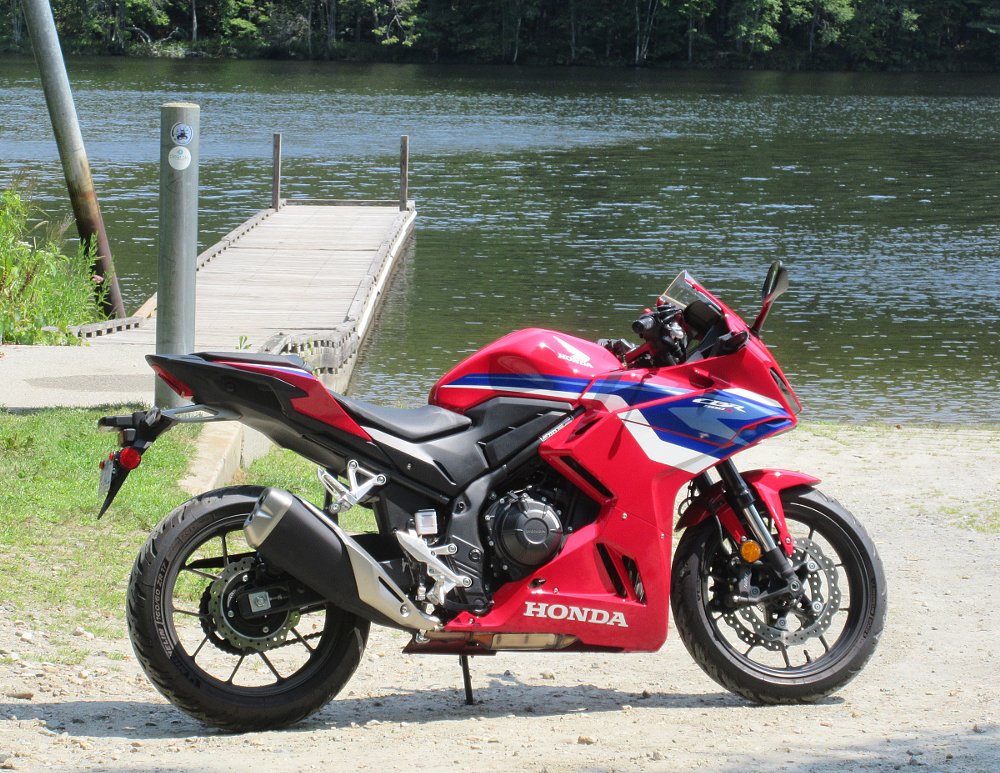
The Ninja 500's dominance can be seen in a few different ways, most importantly in how it far outsells its competitors. Dating back to the model's origin as the Ninja 250, then through its development as a 300, 400, and now 500, it has frequently been the company's best-selling model in the U.S. market and that continues with the 500, according to Kawasaki. The Ninja 500's appeal spreads beyond beginning riders or those stepping up to their second bike and includes experienced riders who want something light and nimble when they don't feel like taking their big adventure or touring bike out for a short errand or those looking for a less expensive track-day bike that pushes them to work on skills to improve their lap times, not rely on horsepower. And, at the same time, the smallest Ninjas made a mark on domestic professional racing. In 2018, the first year MotoAmerica introduced the Liqui-Moly Junior Cup for young, rising racers, replacing the spec-bike KTM RC 390 Cup, the field was a mix of Yamaha YZF-R3s, KTM RC 390s, and Kawasaki Ninja 400s. By 2024, the last year before Junior Cup was replaced by the spec-bike Talent Cup formula, at most races every single rider in the field was on a Ninja 400. The popularity among track-day riders and racers also contributed to the development of a large aftermarket for the model.
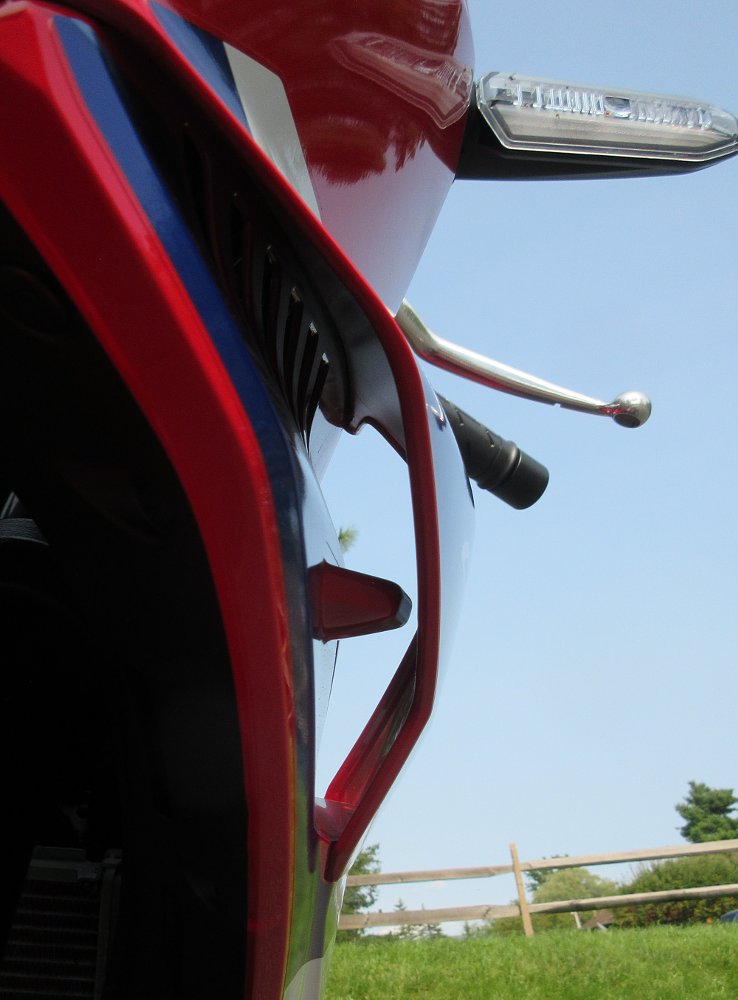
All that made it hard for consumers to justify paying an extra $1,000 or more Honda's CBR500R, despite the fact that the Honda comes with some features the Kawasaki lacks. But with the price cut, the half-liter sport bike from Honda is now back in the conversation.
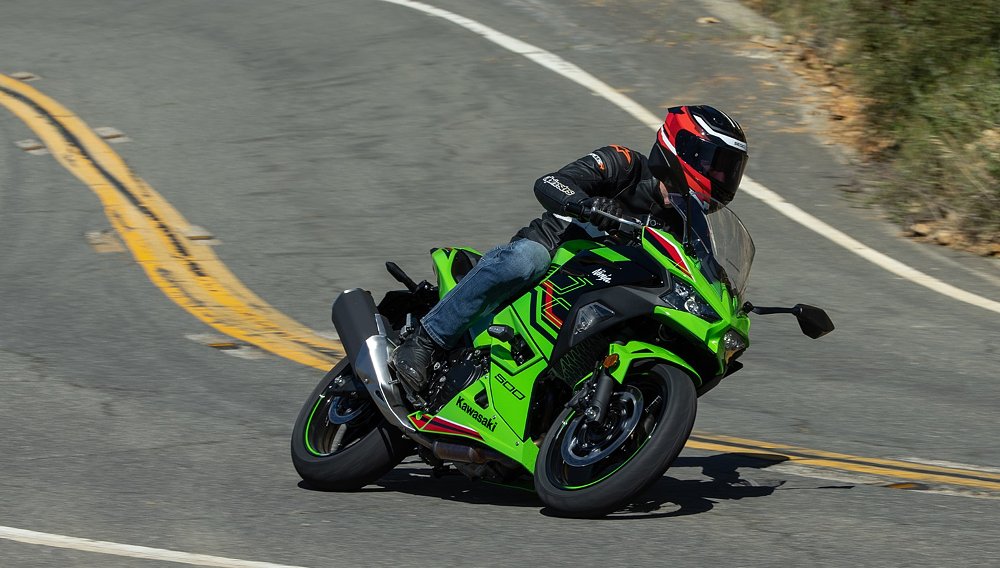
Can the CBR500R topple the ruling Ninja? It just so happens that we have a 2025 Ninja 500 with the KRT paint treatment in the company fleet that we use for display purposes, photo shoots, and test-fitting accessories. So with that as a basis for comparison, I borrowed a CBR500R from Honda to try to answer the question.
The 2026 Honda CBR500R: The basics
Like the Ninja 500 (at 451 cc), the CBR500R is only a 500 if you round up. It's powered by the same 471 cc, liquid-cooled, eight-valve, parallel-twin engine found in the Rebel 500 cruiser, NX500 adventure(ish) bike, CB500 Hornet naked bike, and SCL500 scrambler-styled standard. The twin is a user-friendly, versatile engine. The redline is only around 8,500 on the tachometer. The fairing shape and Grand Prix Red paint scheme may bring to mind Honda's CBR1000RR-R Fireblade SP Superbike platform, but the half-liter parallel-twin engine is not the high-strung powerplant providing a rush of acceleration at five-digit rpm that may come to mind when you think "sport bike." Not by a long shot.
Despite the twin's docile nature, in 2024 Honda updated the CBR500R with Honda Selectable Torque Control, which is a basic traction control system based on front and rear wheel speed sensors. There's no adjustment but it can be switched off. Every time the key is turned on, the system returns to the default setting of on.
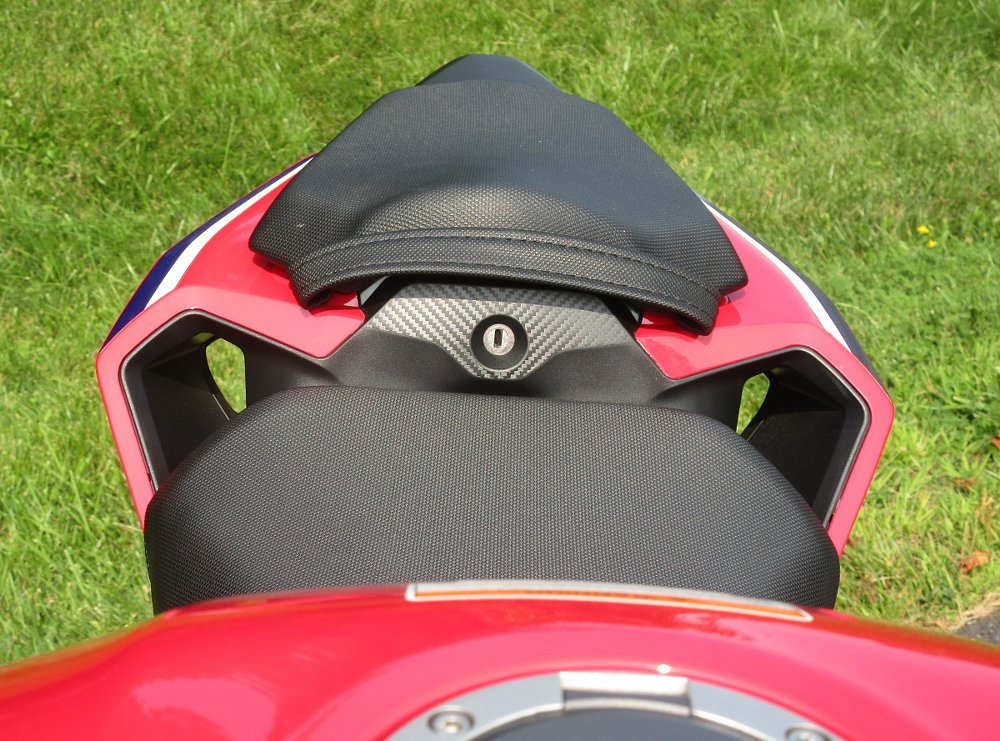
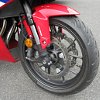
Unlike its obvious competitors, the Ninja 500 and the Aprilia RS 457, the CBR500R has dual front disc brakes. Nissin four-piston calipers squeeze 296 mm discs and ABS is standard. The front fork is a 41 mm Showa Separate Function Fork-Big Piston (SFF-BP) inverted unit that, while non-adjustable, also represents a step up from the front suspension on the Ninja models but lacks the adjustable preload on the RS 457's fork.
Also unlike its competitors, the Honda has a 4.5-gallon tank that carries about a gallon more fuel than the others and that accounts for at least part of the Honda's extra weight over the Kawasaki and Aprilia. But with a claimed wet weight of 421 pounds and a seat height just over 31 inches, it's still a user-friendly package for newer or smaller riders.
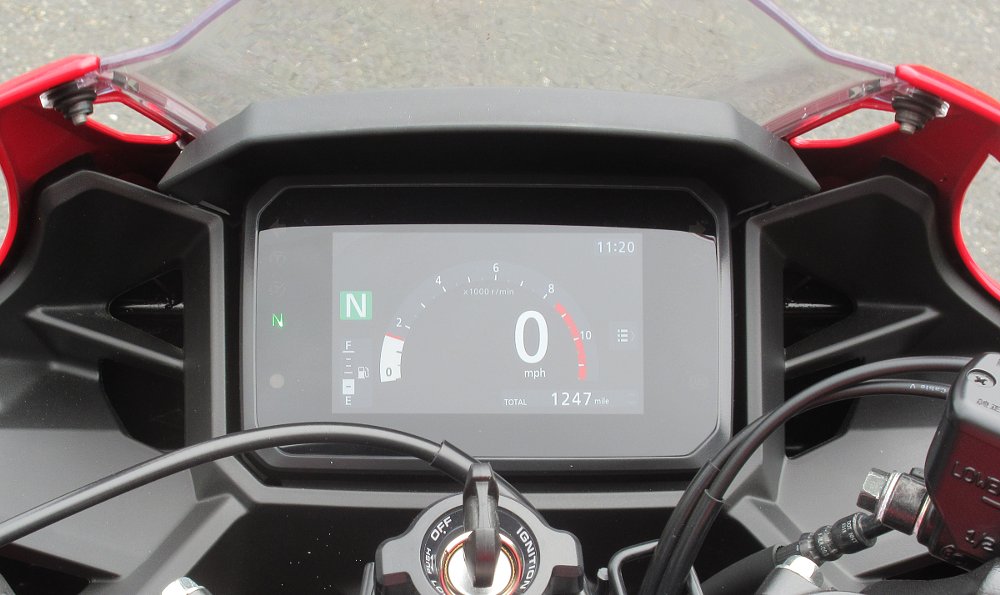
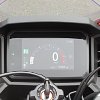
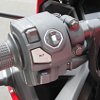
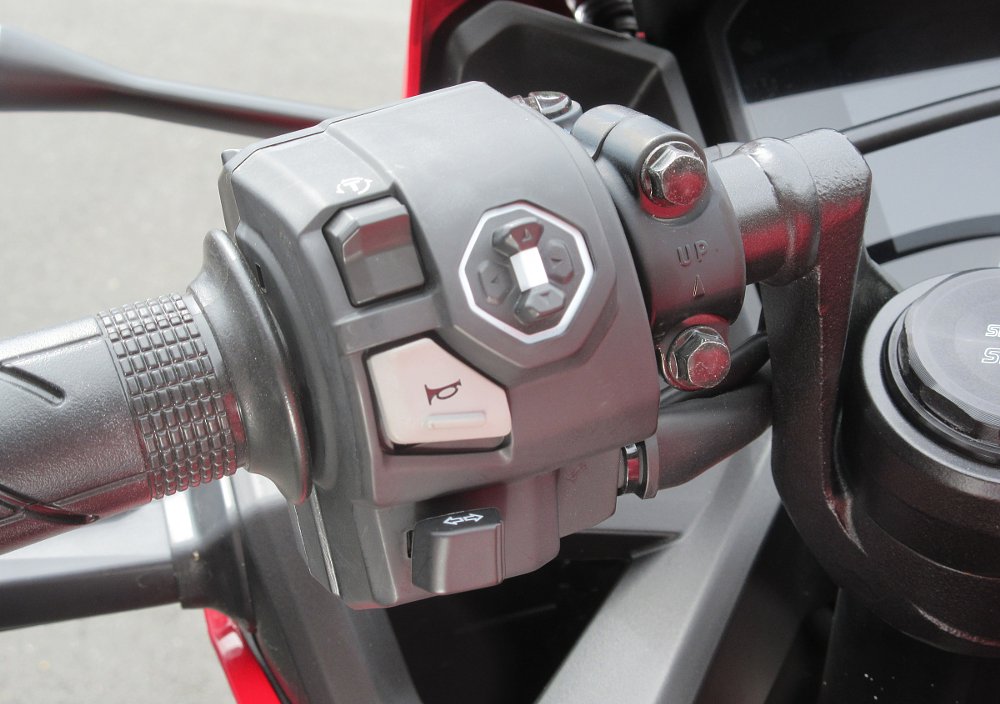
In the cockpit, the CBR500R features a five-inch TFT display very similar to what Honda uses on other models such as the CB750 Hornet and NX500 I tested last year. The display is navigated by the same joystick-type switchgear on the lefthand pod, as well. Once you get the hang of diving into the menus, it's pretty easy to use, and it's simpler on the CBR500R than on more upspec models like the CB750 Hornet just because there are fewer settings to change: no quickshifter, no ride modes, no adjustments to traction control or ABS.
We last tested the CBR500R in 2023, when our video guru Spenser Robert did a thorough evaluation and put a thousand miles on a test unit on both the street and track. But that was before the 2024 update and this year's price drop, so it was time for a fresh look.
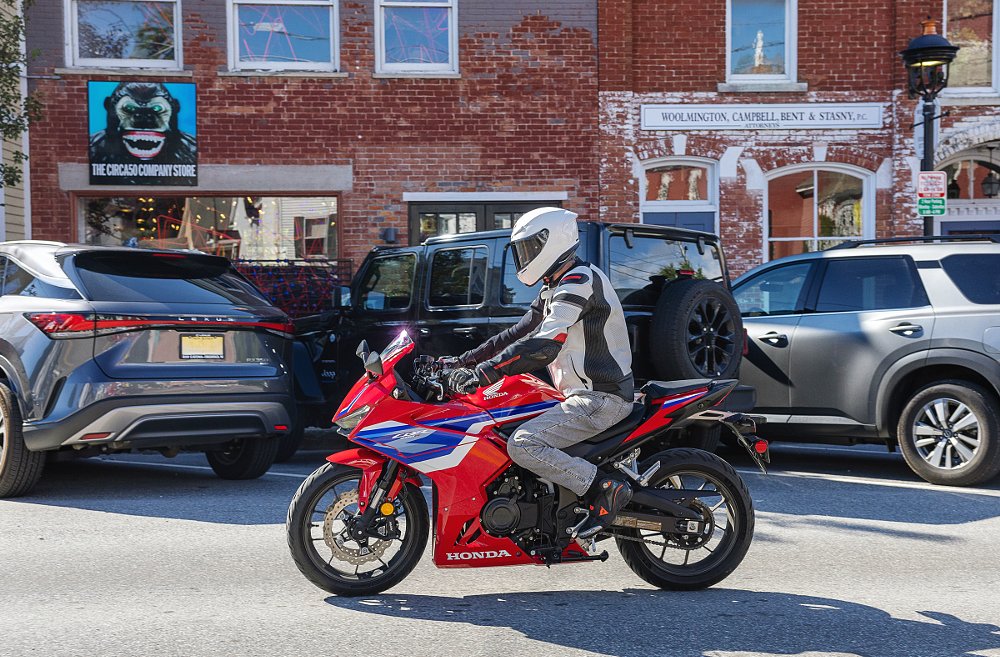
Riding the Honda CBR500R
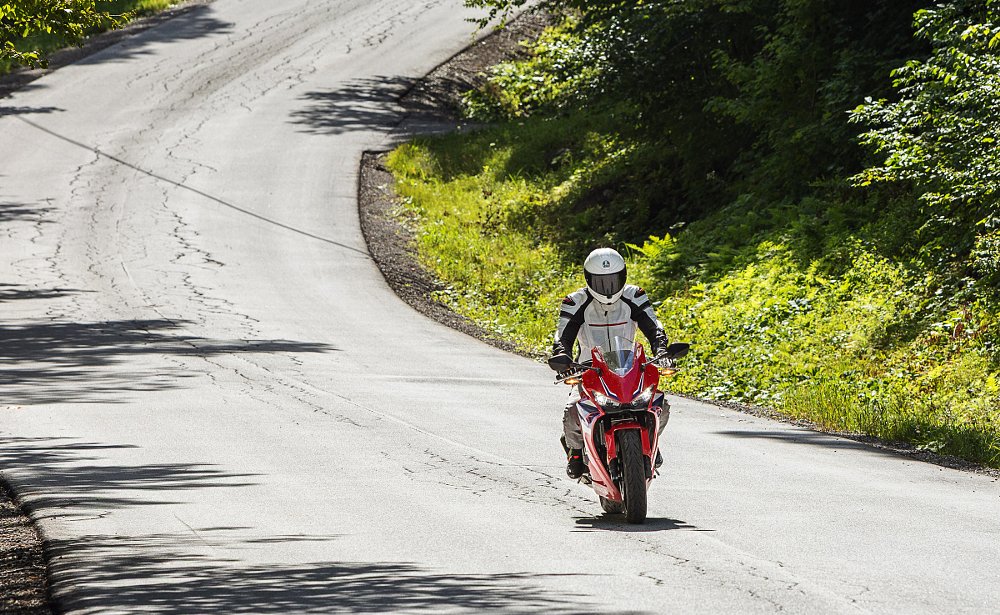
The 500-class sport bikes are popular with young riders and I suspect for most of them this will be a one-and-only motorcycle, used for a little of everything. So I tried to test it like that, riding some of my favorite local test routes, naturally (see the map below), but also using it around town and on the highway.
The fact that the 500 cc twin is put to use in an array of models, from the Rebel cruiser to this sport bike, explains why it projects broad versatility rather than focused performance. The twin spins up to its relatively low redline with no hiccups or surprises or peaks and valleys in the power output. It's one of the smoother parallel twins I've ridden. There's not much reward for keeping the engine flirting with redline, but at the same time there's less of a penalty than you might expect if you're off by one gear.
I took the CBR500R to one of my local dirt roads and whacked the throttle, to see what the traction control would do. It let the rear tire slip just a bit, the tail wagged to let me know things were happening, and then everything got back in line, like it's supposed to. I think that safety net is a real selling point for a motorcycle in this category and I don't see any downside. An expert rider on the track could always switch it off, if desired.
The slipper and assist clutch requires light effort and shifting action is precise, giving the transmission a better overall feel than I might expect for the price point. The CBR500R comes with an adjustable brake lever and I liked the feel of the front brakes, though I was surprised that the dual-disc setup wasn't stronger. That may be something that could be fine-tuned by different brake pads when the time comes to replace the originals, but if I owned this bike I wouldn't worry about it until then. And, the lack of an abrupt bite — along with ABS — is probably a good thing for a motorcycle that will be bought by many new riders.
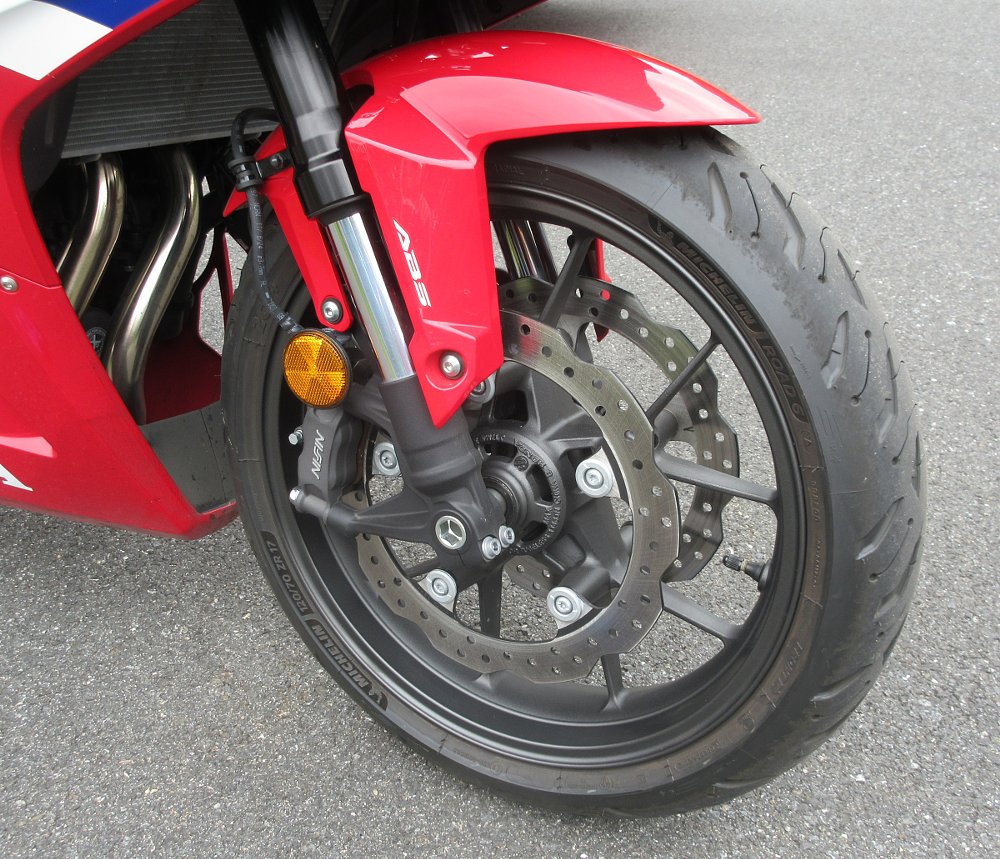
The Showa suspension also exceeded my expectations for the price point. On my favorite local sequence of sweepers over the mountain, the Showa SFF-BP fork felt reassuringly firm and planted but it was also able to soak up the sharp-edged bumps of the winter-ravaged pavement we have around town. Riding some sport bikes on anything other than track-smooth pavement can feel punishing after a while, but once again the CBR500R showed versatility over single-minded focus.
Some will look at the 421-pound wet weight and write off the CBR500R as too porky. And there's no denying it outweighs its competition. And yes, it weighs about the same as its much faster (and twice as expensive) CBR600RR sibling. In the broad view, however, it's still at the nimble end of the spectrum of full-size motorcycles and hustling it through some corners remains a low-effort undertaking. The payoff you get in exchange for the weight is a feeling of solidity. At no time did the CBR500R feel to me like a toy. Just a lighter, more compact motorcycle than what most of us are riding on the street now.
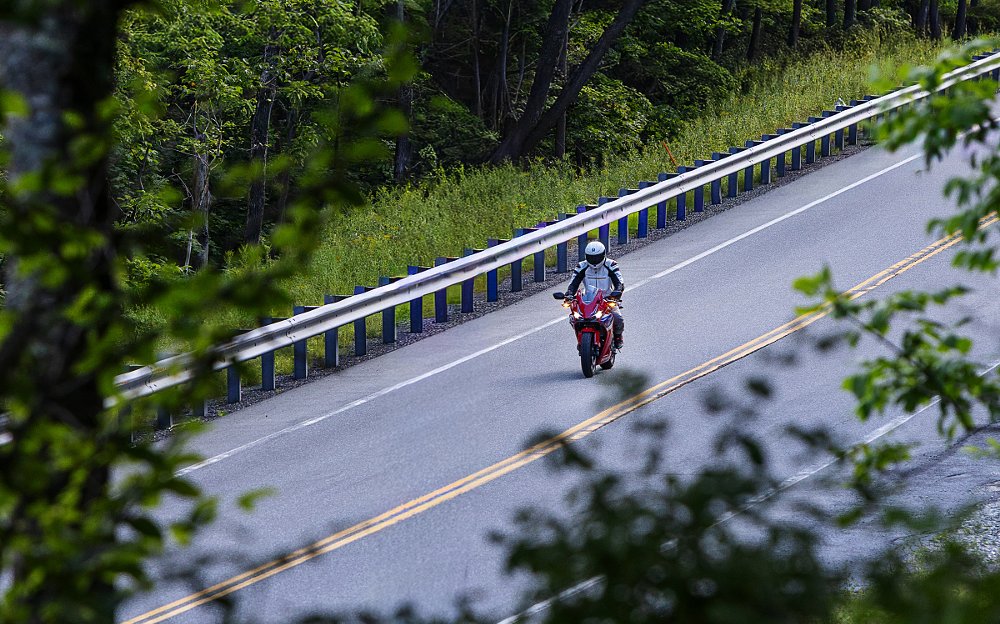
One surprise, for this class of motorcycle, was the fuel range. I averaged 64 miles per gallon for the mixed riding I did over a two-week period and with the CBR500R's 4.5-gallon tank and that meant it was easy to go 250 miles between fill-ups without pushing my luck (or pushing the bike to the next gas station). A 200-mile range seems to be the number many buyers of sport-touring motorcycles expect, and the CBR500R easily exceeds that, putting it more in the company of sport-tourers than sport bikes.
It wouldn't be the last time I'd have that thought.
Getting to ride a test bike for several days in my own territory allows for a more thoughtful evaluation than the one-day, regimented group ride that we typically get when a new model is introduced to the motorcycle media. But you know what's better yet? Getting to compare a motorcycle back to back with its competition. That's why I borrowed our 2025 Ninja 500 from the company fleet, rescuing it from its boring life of being used to test-fit accessory tail tidies or for test sitting by customers trying on gear in the showroom. Our Ninja is a non-ABS model with the KRT paint scheme (a graphics package not offered in 2026), while the trim that's more comparable to the CBR500R is the more expensive Ninja SE ABS, which is the only one with a TFT display. The SE also offers a few other features, including Kawasaki's KIPASS keyless ignition, a larger windscreen, frame sliders, a pillion seat cover, a USB-C outlet, and other bits. But apart from the lack of ABS, our base model is mechanically the same as the SE, so it was a fair test of the different personalities of these two half-liter sport bikes.
And it turned out to be revealing.
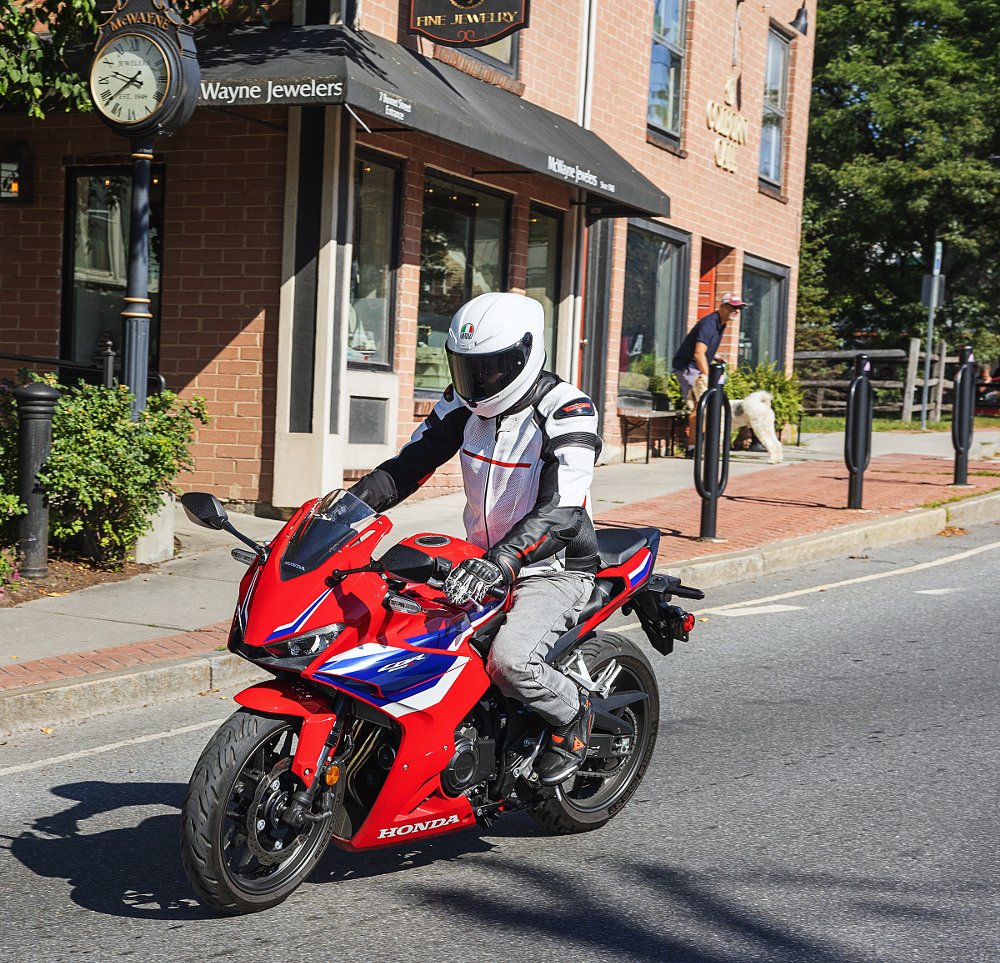
So is the CBR500R ready to dethrone the Ninja?
It's interesting how motorcycle companies have DNA that can be passed down for surprisingly long time periods. A few years ago, thanks to the generosity of my friend and motorcycle instructor Ken Condon, I had a chance to ride two of the hottest bikes from 1983 back to back, Ken's Honda CB1100F and Kawasaki KZ1000R, the Eddie Lawson replica. In describing how those two rode, Ken and I used words like smooth and powerful for the Honda and raucous and visceral for the Kawasaki.
The Honda and Kawasaki employees who designed those hot liter bikes of more than 40 years ago are a couple of generations removed from the ones who designed these 2026 half-liter sport bikes, but here we are in 2026 and I'm using similar terms to describe this Honda and Kawasaki. Somehow, the DNA has carried on over the years. When I read about these two motorcycles on paper, I expected them to be practically the same. In reality, they have different personalities.
Rolling the Honda out of the garage, it feels light enough. Until I also roll out the Kawasaki and notice how it feels lighter. According to company figures, the difference is more than 40 pounds. The difference is much less noticeable out on the road, and both require low effort to tip into a turn, but the Honda wants just that tiny bit more shove on the clip-on.
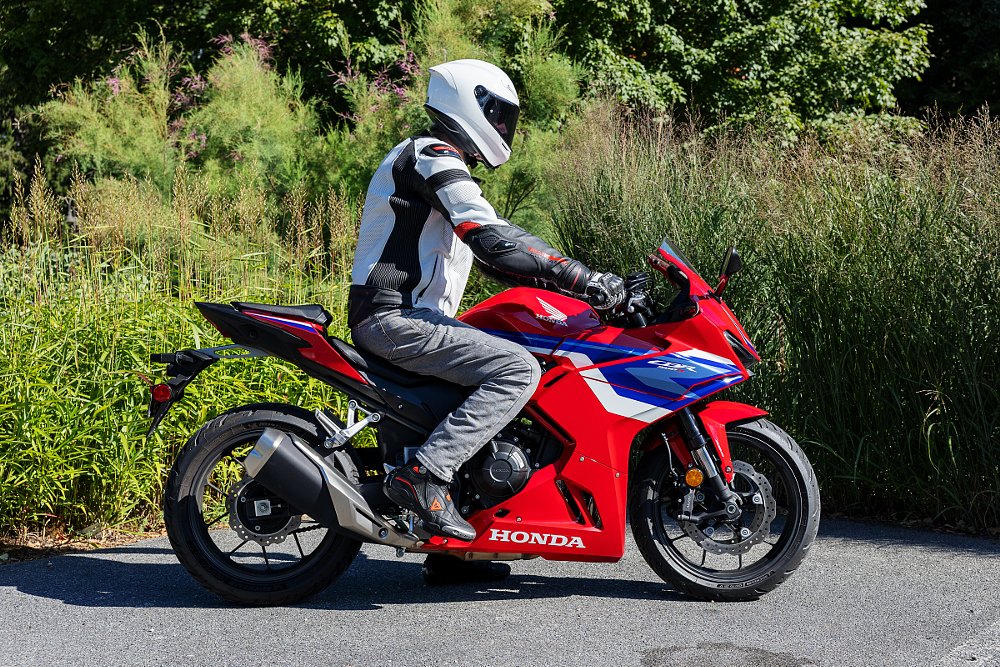
While the riding position on the two bikes feels virtually identical, everything else feels different, and that starts (as it always does) with the engine. Neither of these twins will give you the high-rpm rush of power that you get from their four-cylinder, 600-class siblings; you know, the feeling that if you hold on to the throttle just a second or two too long things could quickly get away from you. Instead, they provide a friendlier spread of power. But revving to the Ninja's 11,000 rpm redline is definitely a more sport-bike-like experience than revving to the CBR500R's 8,500 rpm redline, which doesn't reward you with much more acceleration than 6,000 rpm provides.
The suspension carries on the same pattern. The Ninja fork feels sport-bike-firm, which feels just right on smooth pavement (or on the track?) but can get a little tiring on bumpy streets. The CBR500R's Showa SFF-BP fork is noticeably more supple. Maybe if I spent time at track speeds I'd find a handling advantage to go with the Ninja's firmness, but in all the street riding I did, I never felt I was sacrificing any performance with the Honda in exchange for its more compliant and comfortable ride.
Surprisingly, the single front disc on the Kawasaki felt a little stronger than the Honda's dual discs, though I had a slight preference for the feel of the Honda's brakes. The Honda has an adjustable brake lever; the Kawasaki doesn't.
The Honda's clutch pull was light. The Kawasaki's clutch pull was exceptionally light. Shifts felt precise on the Honda, and just OK on the Kawasaki. Neutral was sometimes elusive on the green machine.
The Honda's seat is flat and firm. The Ninja's seat is smaller and even firmer. I remember Spurgeon telling tales from his days as a young man working at a motorcycle dealership in Nashville, Tennessee, and taking off for the northern Georgia mountains for a long weekend of a thousand miles of sport riding. If I were a young rider doing that today, I'd definitely rather be on the CBR500R than the Ninja.
On the highway, the Honda shows 5,700 rpm at an indicated 70 mph. The Kawasaki is spinning 6,500 rpm at an indicated 70 mph. I sometimes was cruising along on the Honda and looked down to realize I was still in fifth gear, because sound and vibes hadn't convinced me to upshift.
See the pattern? In the grand spectrum of motorcycling, the CBR500R and the Ninja 500 are two dots very close together. But they are not the same.
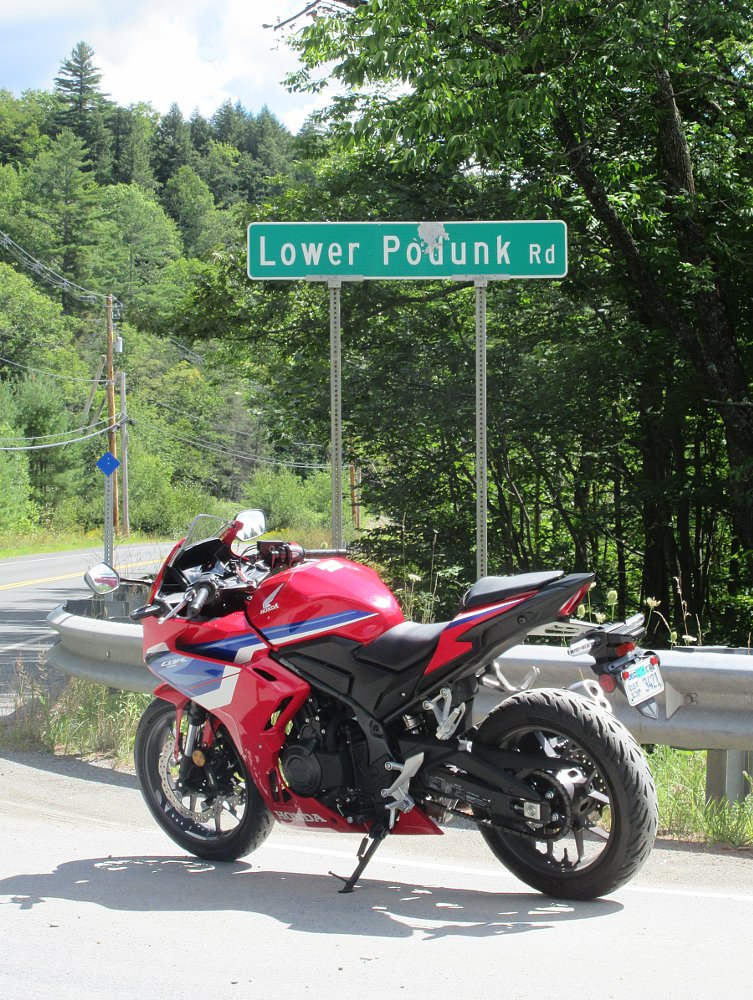
Because of its small size and relatively modest power, the Ninja 500 feels like it falls at the edge of the sport-bike category. With its greater weight, friendly power delivery, excellent fuel range, slightly better comfort and smoothness, and its overall feeling of solidity, the CBR500R almost feels like it falls at the edge of the sport-touring category.
That's another family resemblance that came to mind, in addition to the Honda and Kawasaki characteristics I mentioned above. I was struck by how the CBR500R felt like a scaled-down version of the 2014 Honda VFR800 Interceptor I used to have. And again, I'm back to the same thought: Is this a small sport bike or a small sport-tourer?
In the end, while I am sure that Honda's price cut will help CBR500R sales, I don't have any illusion that it will suddenly start outselling the Ninja 500.
For the experienced rider who's adding one of these bikes to the stable for track-day duty, the base Ninja without ABS makes sense. Spend the savings on track-day fees and tires. But that's a tiny slice of the sales of these models.
For young riders who are determined to buy new and are really stretching the budget, the lower price of the non-ABS Ninja could make the deal — though personally I think every rider on the street should have ABS as a safety net.
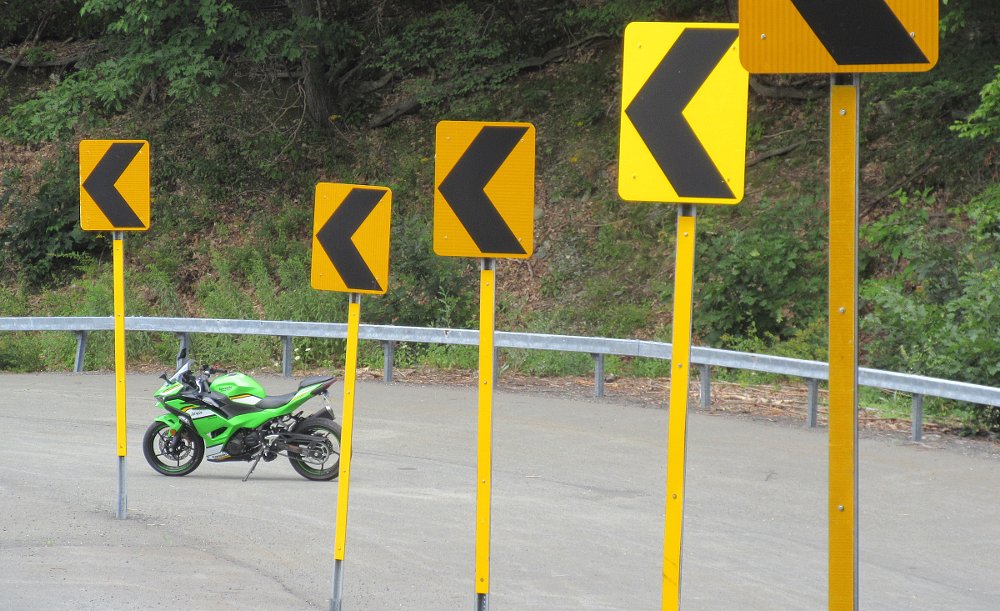
Looking at the vast majority of buyers, I suspect many will still convince themselves they "need" the slightly higher degree of sportiness the Ninja offers, even though the difference may be noticeable mostly at a track day and the reality is that few riders ever do a track day and most of us who do are only out there once or twice a year. On the street, maybe once while trying a passing maneuver on the Honda, I said to myself, "The Ninja would have done that better."
For many buyers, young riders who will make this their only motorcycle, the all-around competence of the CBR500R might well serve them better. If they can get past the Ninja 500's sporty allure and established reputation as the king the class. The Honda gives up half a step on the sportiest street rides, if you're really pushing as hard as is socially acceptable on public roads. But it will also be smoother and more comfortable on the commute to work or class and if you take a long weekend trip. It's really a question of your priorities.
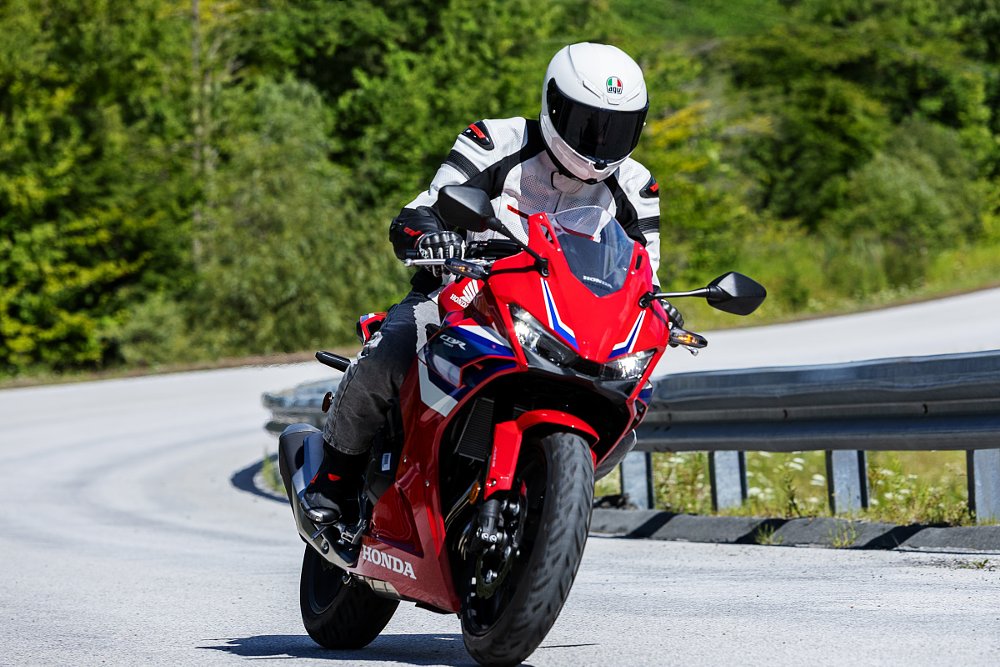
Of course we weren't having this conversation a year ago because the Honda's differences weren't enough to explain a price delta of more than $1,000. Now, it's a different calculation. And that's why the most important new feature on the 2026 Honda CBR500R is the price.
| 2026 Honda CBR500R | |
|---|---|
| Price (MSRP) | $6,399 |
| Engine | 471 cc, liquid-cooled, eight-valve, parallel twin |
|
Transmission, final drive |
Six-speed, chain |
| Claimed horsepower | NA |
| Claimed torque | NA |
| Frame | Steel tube |
| Front suspension | Showa SFF-BP 41 mm inverted fork; 4.7 inches of travel |
| Rear suspension | Pro-Link Showa shock, adjustable for preload; 4.7 inches of travel |
| Front brake | Dual Nissin four-piston calipers, 296 mm discs with ABS |
| Rear brake | Two-piston caliper, 240 mm disc with ABS |
| Rake, trail | 25.5 degrees, 4.0 inches |
| Wheelbase | 55.5 inches |
| Seat height | 31.1 inches |
| Fuel capacity | 4.5 gallons |
| Tires | Michelin Road 6, 120/70R17 front, 160/60R17 rear |
| Claimed weight | 421 pounds wet |
| Available | Now |
| Warranty | 12 months |
| More info | powersports.honda.com |