

 Membership
 Riders Preferred Membership
 Shop by Vehicle
 Track Order
 Contact Us
It's no secret that China has made significant progress over the years in terms of the quality and technological savvy of its manufacturing endeavors. No place is this more prevalent than the realm of motorcycles. Example of their manufacturing — as well as their business — acumen is China's acquisition of established brands (either defunct or hanging on by a thread), infusing them with a rejuvenation of build, and marketing new products at an affordable price.
One such brand is Benelli. The famous Italian marque, like many other European mainstays, suffered under the changing demands of customers, increased competition, and ballooning costs of operation. China stepped in to resurrect the brand in a clever move of association with Italian legend.
Benelli was founded in Pesaro, Italy in 1911 and built its reputation through a successful racing presence. After a stellar existence in its early years, Benelli suffered under the onslaught of offerings from emerging Japanese companies. The storied brand had all but vanished when Qianjiang Motorcycle stepped in to acquire Benelli in 2005. Ownership changed hands to another Chinese company, Geely Holding, in 2015, and the true re-emergence of the marque began. The arrangement retains Benelli's essential Italian blood by keeping all design work under the roof in the original Pesaro, Italy headquarters, while all manufacturing takes place in China. The result is an expanding line of motorcycles with emphasis on rideability, usability, and affordability.
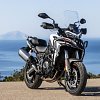
Part of Geely's strategy for success is addressing the increasingly popular adventure-touring segment, offering a budget motorcycle to those who fancy a street-going bike with some off-road capability. Enter the Benelli TRK line. The TRK series bikes, currently available in 502 and 702 engine displacements (with a 902 coming soon) possess all the attributes of the category: rugged appearance, ground clearance, crash bars, hand guards, and the all-important comfortable riding position.
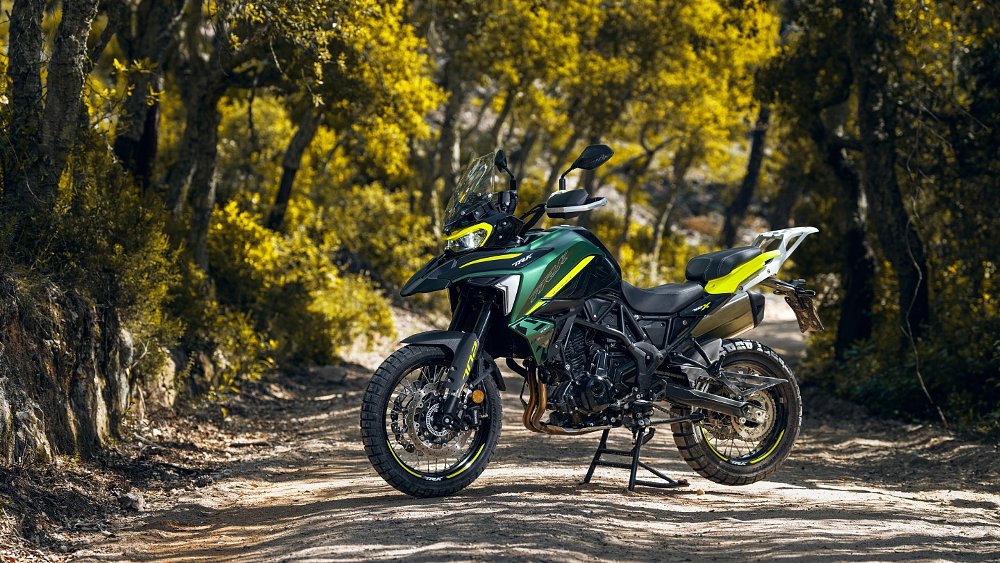
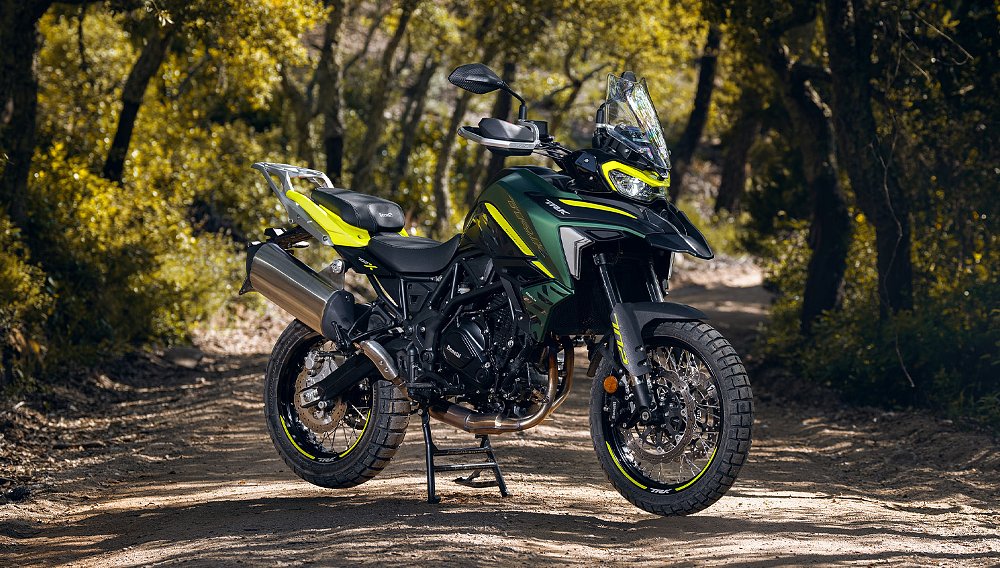
The TRK 502 and 702 machines come in standard trim as well as an X version, which leans a little more toward off-pavement use. The X model sports spoked wheels with a 19-inch up front instead of a 17-inch front, Pirelli Scorpion Rally STR tires, slightly revised suspension, almost an inch more seat height, and a center stand.
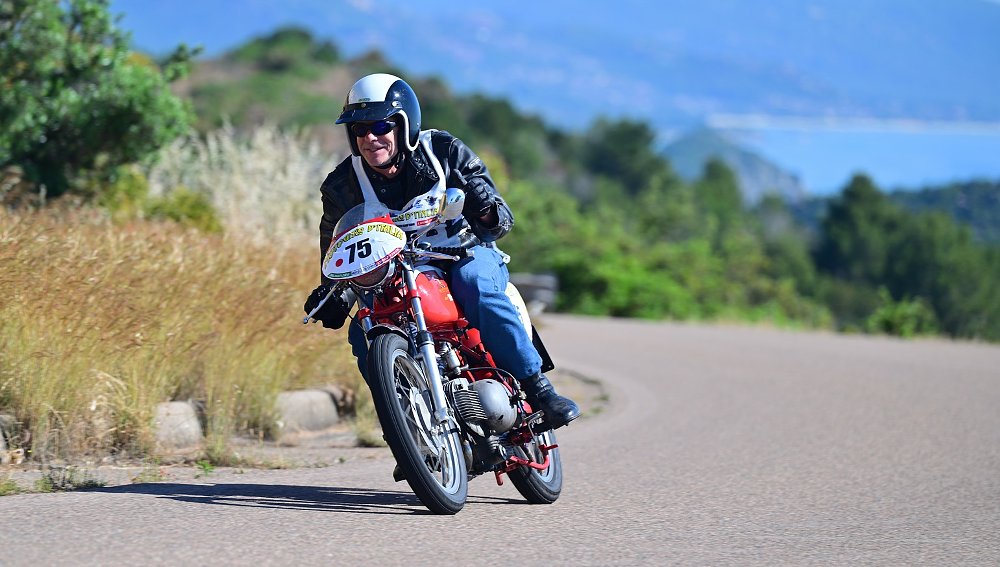
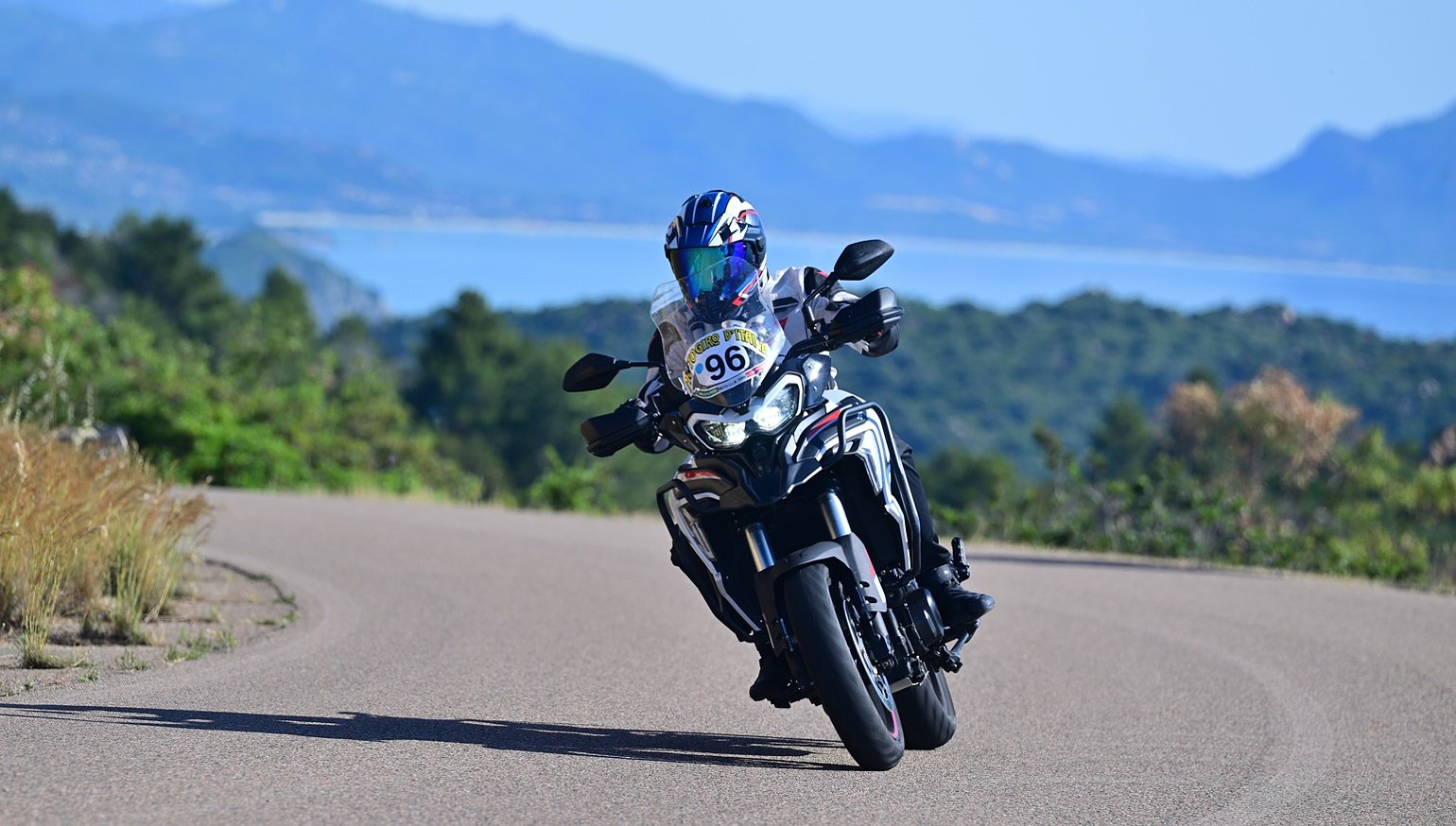
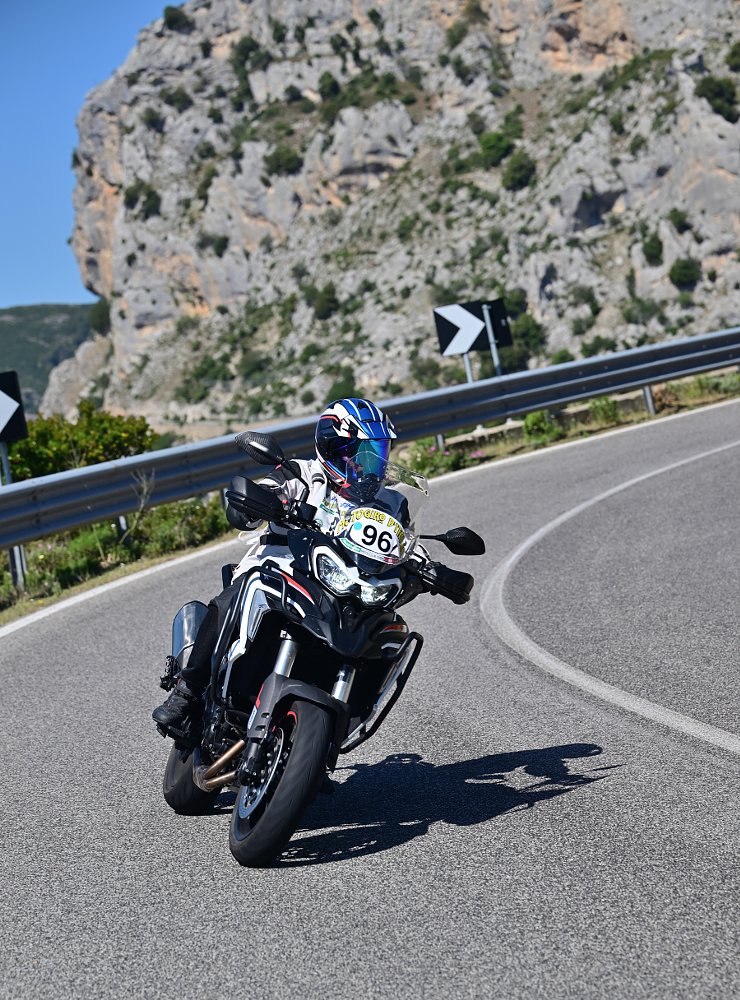
My test ride of the base model 2026 Benelli TRK 702 unfolded over six full days of riding in the MotoGiro d'Italia in Sardinia, providing over 1,800 kilometers (1,100 miles) of testing to garner an opinion. From twisting mountain passes to coastal roads, inner island highways, navigating small villages, and trudging through the congested traffic of the larger cities, I experienced how the bike fulfills its responsibilities.
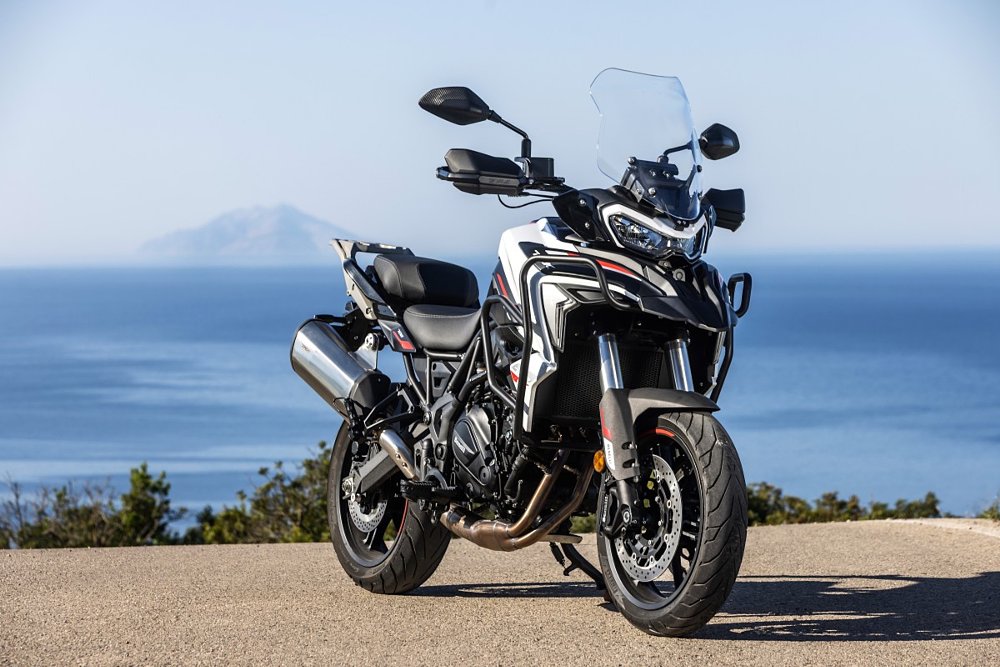
Benelli TRK 702: Engine and transmission
The Benelli TRK 702 is, in fact, a 698, delivering a claimed 70 horsepower (at 8,000 rpm) and 51.6 foot-pounds of torque (at 6,000 rpm) from its liquid-cooled DOHC parallel-twin engine with four valves per cylinder, fed by fuel injection with a 41 mm throttle body. A big, all-business aluminum muffler has a rugged aesthetic that suits the bike. Fairly loud header noise reaches the rider in the cockpit, however, the actual exhaust note is a great deal more charming.
Though peak power arrives at 8,000 rpm (on paper), the "sweet spot" is 5,000, allowing for a decent balance between usable horsepower and low-end torque. The TRK prefers this approach to screaming the engine at higher revs. Power delivery is mild and predictable, making the TRK a pleasant motorcycle for simple touring, with an ease of operation that will appeal to newer or less experienced riders. That said, in capable hands the Benelli has enough on tap to make things enjoyable.
Cold-blooded, the TRK appreciates a little warm-up before getting under way, with an initial hesitation and cough at low rpm. The tachometer lags a little behind the actual revs, like a slightly out of sync movie. There are no ride modes or engine-mapping choices. This is simple and straightforward operation: throttle, clutch, and gears, the TRK presenting a welcome, uncomplicated riding experience.
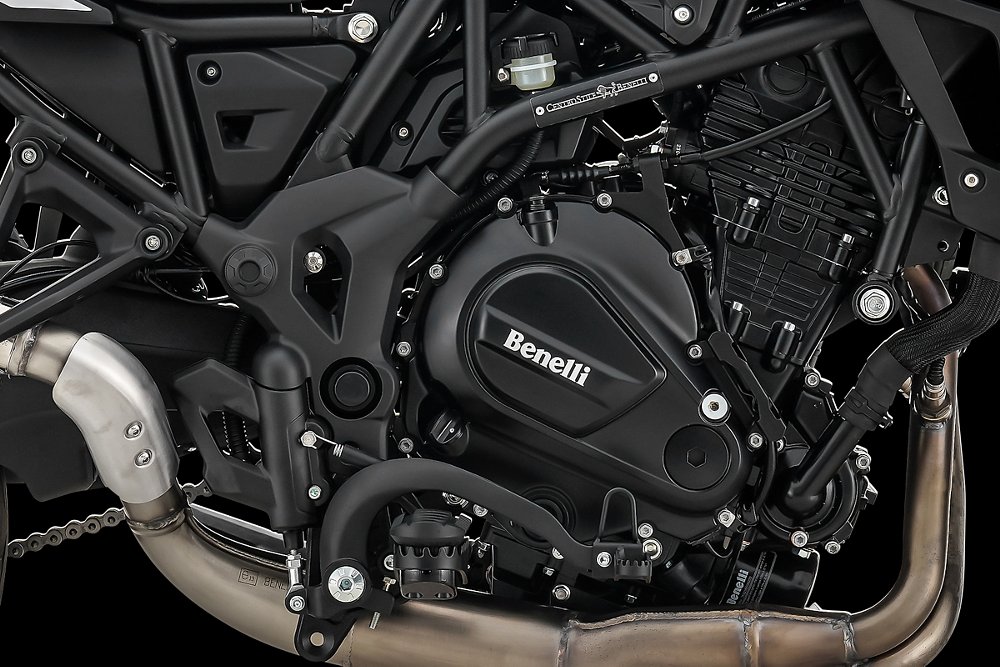
The six-speed transmission has evenly spaced ratios that suit the available power and shifting is precise, though under hard acceleration the tranny can be a little reluctant. Back off a bit and everything works fine. Downshifts are augmented by a wet, multi-plate slipper clutch to reduce rear wheel hop under aggressive downshifting. Power arrives at the rear wheel via chain drive (note: big machined aluminum block axle holders make for ease of chain adjustment).
Benelli TRK 702: Frame and suspension
A steel-tube trellis frame is mated to an aluminum swingarm, supporting a fully adjustable mono shock with 173 mm (6.8 inches) of rear wheel travel. The non-adjustable 50 mm diameter inverted fork provides 140 mm (5.5 inches) of travel at the front. Thankfully, suspension is optimized with good factory pre-sets. For the most part, the front and back end do an admirable job of soaking up road irregularities and make the transition to light off-road (think dirt service roads, not challenging single-track) efficiently enough. Just watch out for those nasty divots in the pavement that can sneak up and smack you out of the seat.
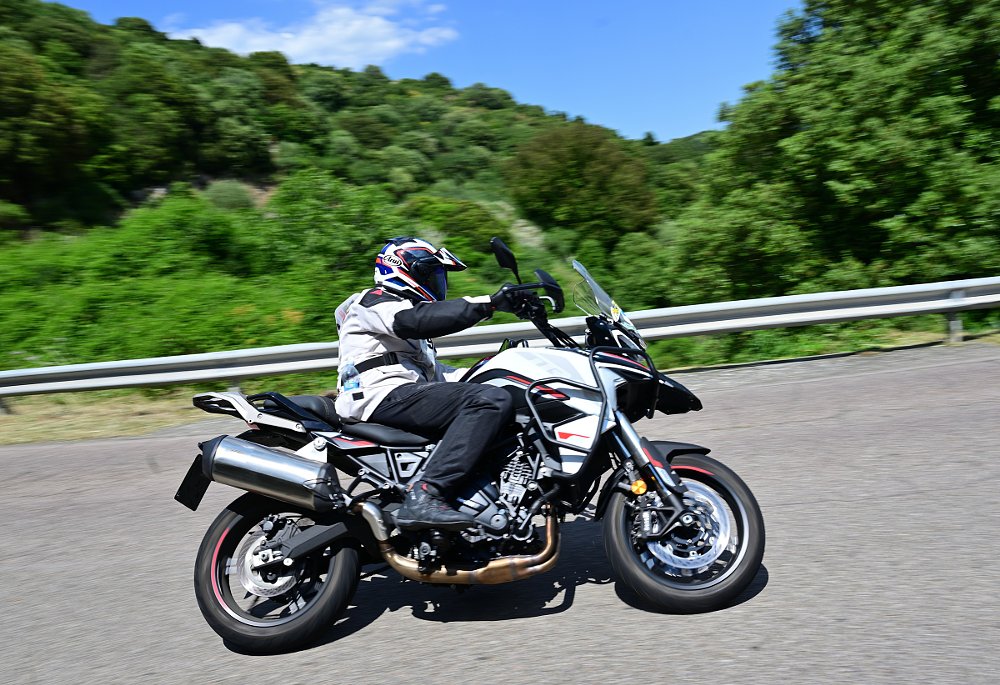
Relaxed ergonomics of the critical handlebar-seat-footpeg triad granted 1,800 kilometers (over six days) of no fatiguing quirks of discomfort or body strain and require minimal knee bend.
The TRK is imbued with good handling characteristics, excellent manners at speed or slow-going, with an intuitive ease of turn-in and stable attitude in corners. It's surprisingly stable under hard braking in a straight line and shows no tendency to stand up while trail braking in corners. The bike has a smooth, settled demeanor at freeway speeds.
Benelli TRK 702: Wheels and brakes
Brakes consist of dual 320 mm rotors with four-piston floating calipers in a radial mount on the front, with a single 260 mm, two-piston unit on the rear. This configuration serves the Benelli quite well, given the bike's moderate weight (482 pounds dry). ABS is standard and works well, with no noticeable oscillation between front and rear calipers under hard braking or on slippery/wet road surface. In hard riding, with constant braking, there was some brake fade. To be fair, that was encountered in an extremely long section of demanding, challenging corners where brakes were used prodigiously.
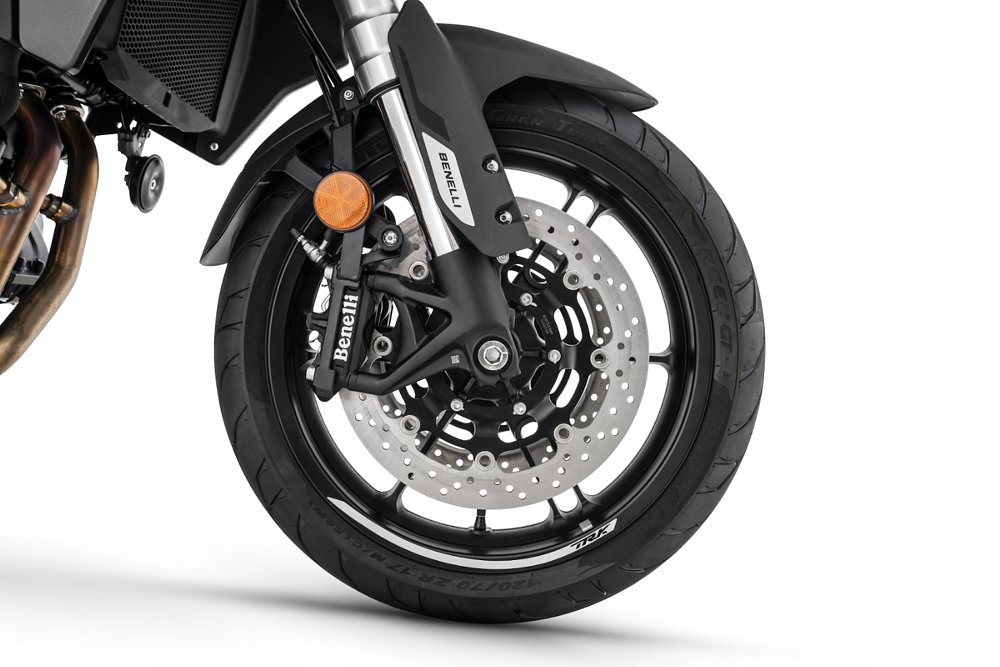
The standard TRK sports attractive 17-inch alloy wheels front and rear in a unique spoke pattern (the 702X model has a 19-inch front).
Bits and pieces
The wide handlebar provides generous maneuverability and a comfortable bend. Hand controls offer a good feel, fitting the fingers well and providing excellent play and movement, as do the gear shifter and rear brake pedal.
The seat (31.8 inches) is well shaped and comfortable, allowing for all-day riding without any ill effects. The small windscreen (fixed) provides plenty of protection at freeway speeds, augmented by small fixed winglets to divert wind away from the rider, keeping the cockpit relatively free of turbulence.
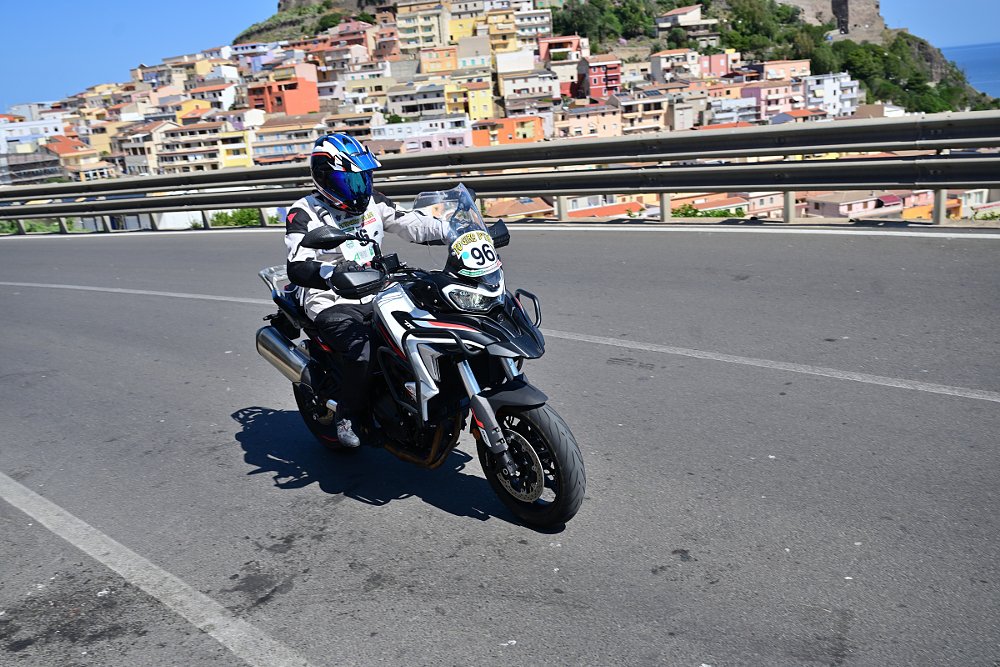
Riding off-road, where the rider's line of sight tends to drop lower than on the street, the top edge of the windscreen cut directly across my light of sight when I was in the seated position. For reference, I am five feet, 11 inches tall, and I also found the handlebar forced a slightly hunched-over posture when I was riding in the standing position off-road. It was fine for short stints, but fatiguing for long periods. Also, operating the rear brake and shift lever becomes a little bit of a trick in the standing position, with awkward foot reach and angle when compared to the sitting position. Foot pegs, (ribbed metal with removable rubber inserts) provide plenty of boot grip. The low seat height appeals to shorter riders, but an alternate setting for taller folks would be nice. The other alternative would be to consider the 702X.
I didn't carry a passenger or drop the Benelli, but the TRK has big, easy-to-find grab rails for the passenger that are also useful for picking the bike up or getting it unstuck. The bike tested was equipped with crash bars. Hand guards not only protect rider digits in the event of a fall or low-hanging branches, but also provide wind protection, which in winter will be welcome. The bike would benefit from a serious skid plate, as the chassis does not cradle the engine, leaving cases and the exhaust header susceptible to damage from rocks and debris.
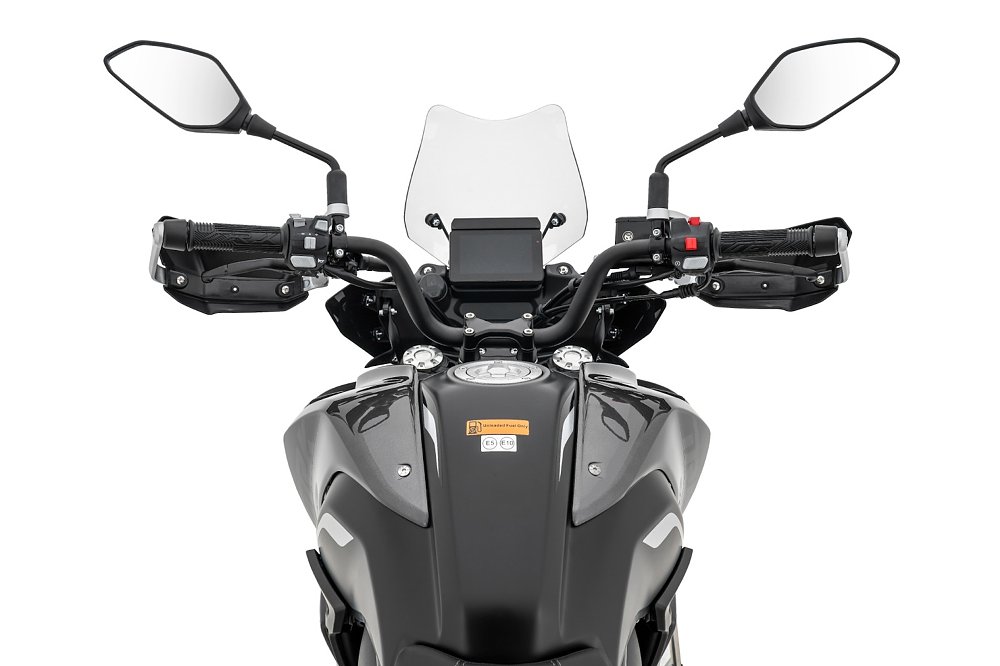
The headlight is a double LED module. Backlit handlebar controls are a nice touch in the dark and not often found at this price point. The five-inch, full-color TFT screen displays all the pertinent information clearly, easily found on the move. The neutral indicator likes to play with the rider at stop lights, showing the N when in fact the bike is in gear. After two embarrassing stalls when I released the clutch lever, I resorted to feel instead of relying on the indicator. The TRK offers Bluetooth connectivity with USB and USBC sockets.
In this day and age of keyless ride — making it possible to ride away and leave keys behind — I was thankful for the Benelli's traditional ignition key, knowing it's right there in the switch whenever you're moving.
Summing up the TRK 702
The 2026 Benelli TRK 702 manages to pack a lot into this medium-priced motorcycle. Functional, workable, capable, making it a good choice across a wide swath of riders and levels of experience. My only real complaint about the TRK is the fuel gauge. It becomes inconsistent beneath a half tank, sloshing fuel giving erroneous readings. One other review point, which most bikes suffer, is that sitting at long traffic lights in hot weather, the heat of the engine comes up into the cockpit and cooks the rider. Not much to be done about that, except to get going as soon as possible.
The entire Benelli line is reflective of the industry embracing smaller displacement motorcycles. There has been a marked downsizing in recent years, with more bikes available in smaller displacements, a shift from excess performance in favor of the experiential. After all, horsepower only goes so far; better to have a more compliant and usable machine under you than a fire-breathing race bike that rarely sees the long end of the throttle cable. To this point, the TRK can be ridden closer to its potential. Additionally, the more modest output means less fuel consumption (a very welcome attribute).
The bike tested, the 702 standard, is a surprisingly pleasant motorcycle to ride. To be fair, this review is respectful of the Benelli's price point, which negates a good deal of any criticisms one may want to throw at it. The TRK 702 is a great value. A budget ADV bike for all levels of riders, a sensible entry to test the segment, and an accommodating mount for new, beginning, or returning riders. In essence, it's a bike that can be grown into. The biggest selling point is going to be that relatively low price.
The Benelli TRK 702 is uncomplicated, good-looking, possessing great functionality, with a price point to put life's adventures within reach.
| 2026 Benelli TRK 702 | |
|---|---|
| Price (MSRP) | $7,899 |
| Engine | 698 cc, liquid-cooled, eight-valve, parallel twin |
|
Transmission, final drive |
Six-speed, chain |
| Claimed horsepower | 70 @ 8,000 rpm |
| Claimed torque | 51.6 foot-pounds @ 6,000 rpm |
| Frame | Steel trellis |
| Front suspension | 50 mm inverted fork, non-adjustable; 5.5 inches of travel |
| Rear suspension | Single shock, adjustable for preload, rebound, and compression damping; 6.8 inches of travel |
| Front brake | Four-piston radial-mount caliper, dual 320 mm discs with ABS |
| Rear brake | Two-piston caliper, 260 mm disc with ABS |
| Rake, trail | N/A |
| Wheelbase | 59.25 inches |
| Seat height | 31.9 inches |
| Fuel capacity | 5.2 gallons |
| Tires | Pirelli Angel GT 120/70/ZR17 front, 160/60/ZR17 rear |
| Claimed weight | 483 pounds |
| Available | Now |
| Warranty | 12 months |
| More info | benelli.com |